


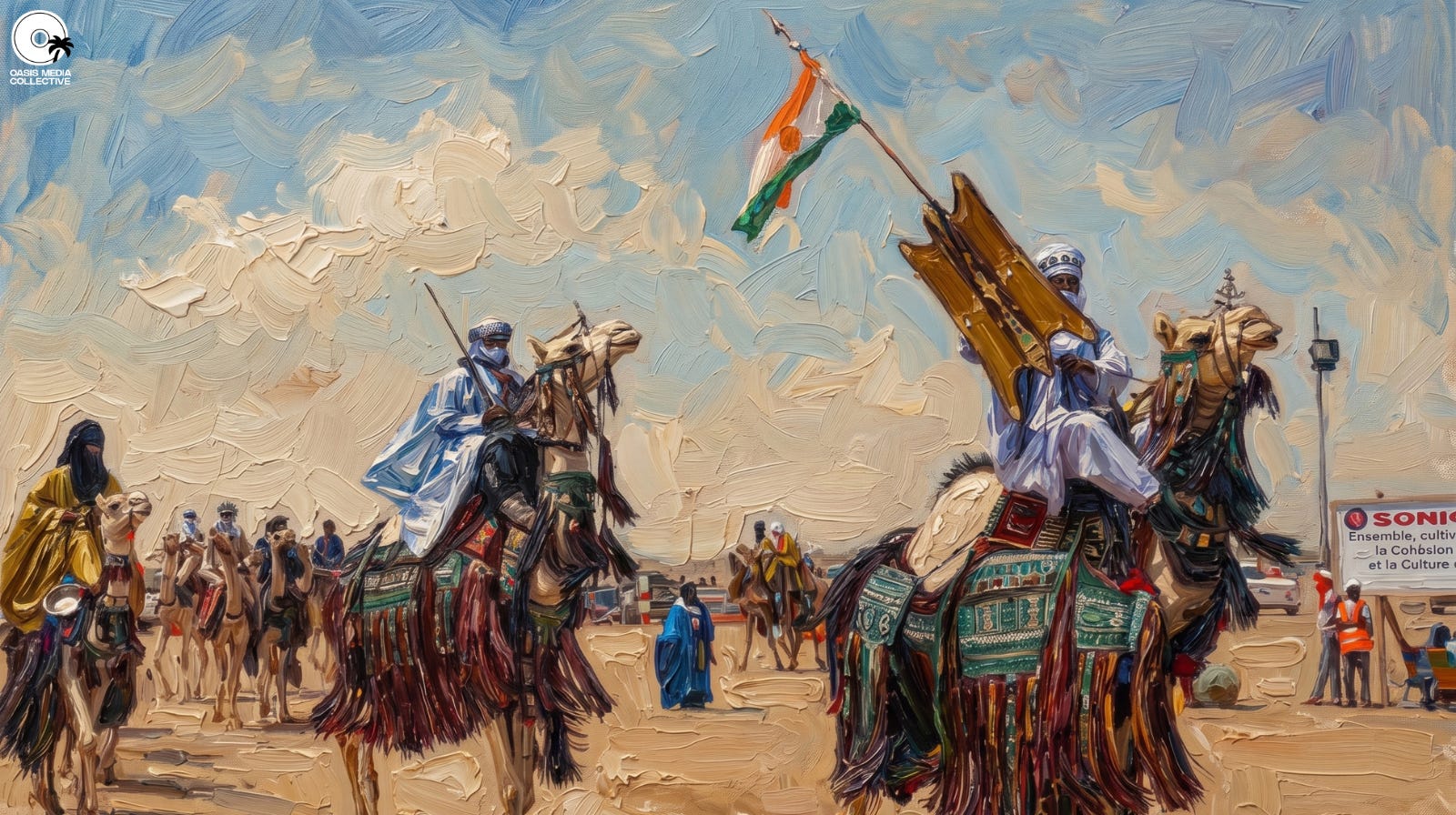
Saturday morning sent shockwaves across the Nigerien capital of Niamey, as gunshots were heard near the country’s airport. What followed was a string of attacks stemming from the military facility Base 101. Lasting several hours, state television and the military confirmed that the perpetrators—a group of renegade soldiers launching a mutiny—were contained.
In what is now described as a coup d’état, the attempted takeover marks the second in Niger following the 2023 ousting of then-President Mohamed Bazoum. Moreover, the attempt adds to the series of coups that have taken the West African region by storm since 2020, as military takeovers increasingly become the norm in countries such as Niger, Mali, Burkina Faso, and others.
In what has been described as a “Coup Belt,” 17 coup attempts (10 successful, 7 failed) have erupted across eight African countries, the majority of which are concentrated in West Africa.
At a time when Europe is increasingly turning to Northwest Africa as an alternative energy supplier, the Coup Belt is driving anxiety for investors and policymakers in Lisbon and Madrid. The same concerns apply to those in Dubai and Riyadh, as Gulf capital increasingly expands in and around West Africa.
Even more potent is how much global mining dynamics can be dictated by West Africa, the countries of which hold heavy deposits of key minerals, such as gold and lithium. It’s a key reason why Middle Eastern states, such as Turkey, have become big purchasers of West Africa’s minerals.
Niger, for instance, is home to the world’s seventh-largest reserve of uranium, a critical mineral used in nuclear energy. Niamey has long been a key uranium supplier to Europe, and in 2024, it revoked French state-owned Orano’s mining permit for the Imouraren mine, home to roughly 200,000 tonnes of uranium.
Multiplying Europe’s concerns are the tentacles of Russia in these coups. The BBC reported the assistance of the Africa Corps—a Russian-backed paramilitary group—in countering the mutiny in Niger. The group has also emerged as a key backer of the new military governments in countries such as Mali and Burkina Faso, following the expulsion of leadership previously aligned with France, West Africa’s former colonizer.
Despite the West African concentration, the Coup Belt phenomenon is emblematic of the wider global democratic decline taking place.
Since 2012, West Africa has faced a heavy jihadist insurgency that has deteriorated stability across the region’s nations, contributing to widespread electoral support for standing regimes. In the aftermath of elections that maintain the unpopular status quo, armed forces seize power on the basis of restoring security.
The mechanism is clear in recent cases. Mali’s 2020 coup followed legislative elections in which several corruption scandals surrounded then-President Ibrahim Boubacar Keïta. Guinea’s 2021 takeover came after President Alpha Condé engineered a constitutional change allowing himself a third term, then won an election the opposition rejected as fraudulent. Guinea-Bissau’s 2025 coup erupted when rival presidential candidates both declared victory, exposing the electoral process as theater rather than resolution.
Elections themselves have become coup triggers when perceived as rigged competitions that fail to address the country’s insecurity, rather than legitimate arbiters of power. Burkina Faso illustrates this dynamic with brutal clarity. The country experienced two coups in 2022 alone, the second justified by governmental failure to contain jihadist violence. Rather than breaking the cycle, military rule became part of it, with each set of officers promising the security their predecessors couldn’t deliver.
This is the “conflict trap” in action: a self-reinforcing cycle where insurgency leads to militarization, militarization leverages civilian frustration, and weakened regimes become vulnerable to intervention. The coup then deepens instability, creating conditions for the next seizure of power.
Amid it all, military leaders have seized on the tide of anti-French and anti-Western sentiment; the previous regimes’ failures to counter the wider insurgency have also drawn blame toward France and the United States, the key security partners of such governments. Russia’s involvement in such coup attempts is demonstrative of just that.
During a press briefing in Moscow between Ghana’s and Russia’s foreign ministers in August, Russian Foreign Minister Sergey Lavrov specifically pointed fingers at France for laying the groundwork of insecurity in West Africa.
While the U.S. is stepping up efforts to reconcile with West Africa, Russia’s footprint has become too deeply ingrained to simply abandon. The rising presence of China, too, complicates the risk factor for everyone involved, from policymakers in DC to investors in Doha.
Join the collective shaping the future of frontier markets. To partner with Oasis Media Collective, contact here.