


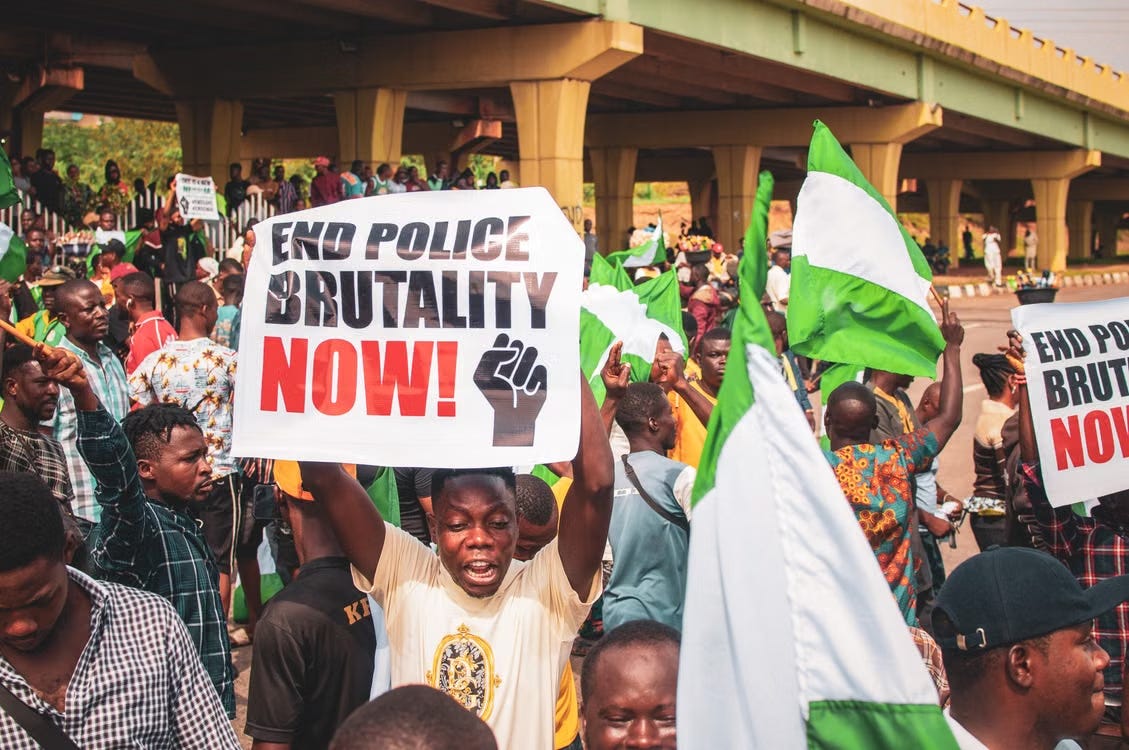
BEFORE YOU SCROLL
Youth-led protests have hit 20+ countries since 2024, and two governments fell in a matter of weeks.
The triggers varied, but the grievance underneath was the same: a blocked path to a stable adult life.
While some protests have limited consequences, others can be huge for the world and for you.
👋
Over the last week, Paris has been gripped by mass student protests. Teenagers have taken to the streets, police have been dispatched, and images of clashes and fires have spread online, all over the conditions of French schools.
The same dynamic is playing out in India, where this week saw some of the nation’s biggest protests since its predominantly youth-led “Cockroach” movement began in May. This time, Indian youth are opposing electoral commissioner Gyanesh Kumar, who reportedly dropped 130 million names from voter registration lists. The movement’s leader, Abhijeet Dipke, was arrested by police upon landing in New Delhi over the weekend.
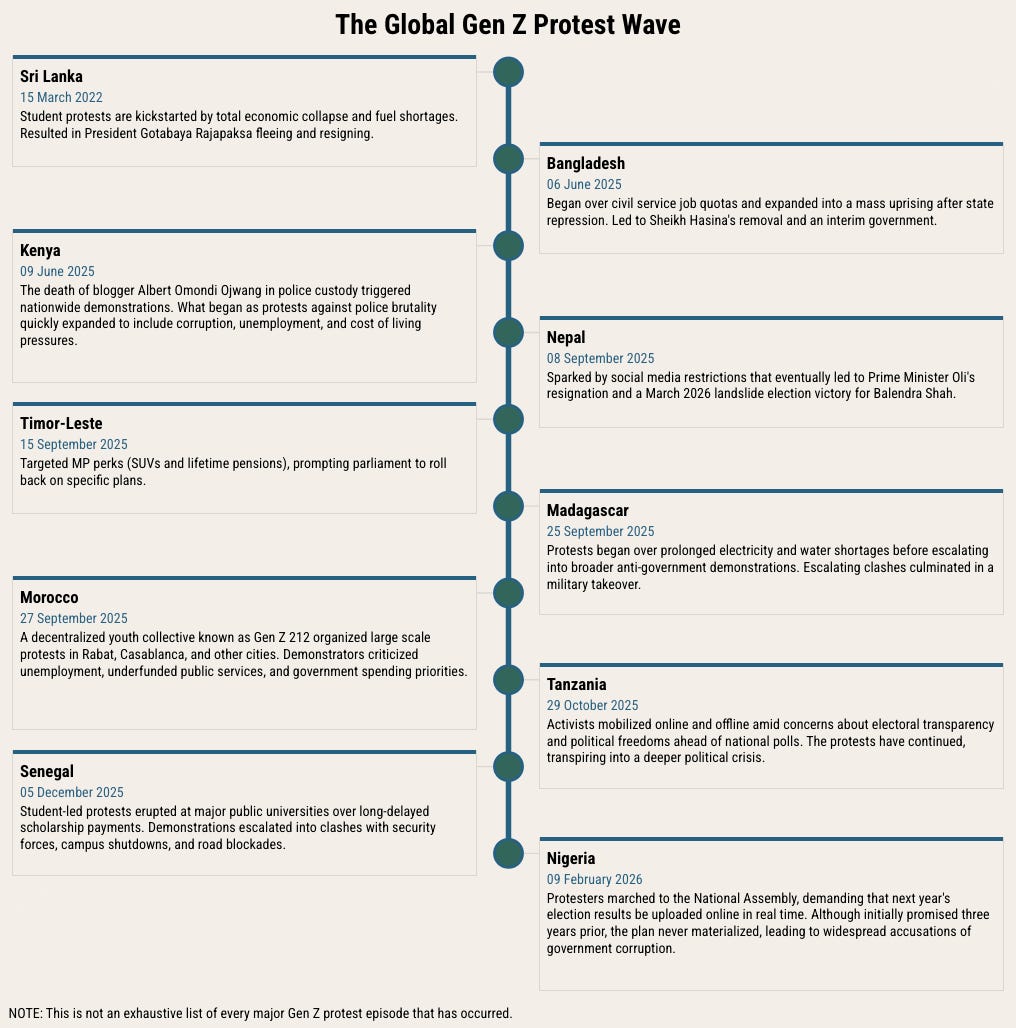
The same story is playing out everywhere. Nepal, Indonesia, the Philippines, Morocco, Madagascar, Peru, and several other countries have seen their youth rise up over the last few years. Different countries, same grievances.
Even the imagery is consistent: the straw-hat pirate flag from the One Piece manga keeps appearing across these protests. It’s a global symbol pointing to a far bigger crisis than poor schools or electoral corruption.
WHAT EVEN IS A “GEN Z PROTEST”?
While the protests vary by country, they usually share a few characteristics:
Predominantly youth-led, mainly comprising teenagers and those in their mid-to-late twenties.
Social media organization, especially on platforms like Discord, Reddit, and TikTok.
No single leader, although some, like India’s Cockroach movement, have notable faces.
What’s important to stress is that not every protest with young people qualifies as a “Gen Z protest.” Sri Lanka’s and Mexico’s protests, for instance, drew in older participants, too. So the term is partly a media construct.
Most of all, this isn’t a single organization; it’s a wave. Every country’s eruption has too many striking differences to be casually grouped together as one movement.
But the similarities do show a unifying thread, one that’s starting to spread across the world.
WHY NOW?
There are three broad threads that tie these protests together:
Elite Perks vs. Everyday Life. Economic inequality runs hard in developed economies, and even harder in developing ones. And that inequality is hard to tolerate long-term. In Timor-Leste, protests were driven by perks for Members of Parliament, including a $4.2 million plan to buy 65 Toyota Prado SUVs for all MPs and grant lifetime pensions. The plan was eventually scrapped because of this.
Services Failing, Corruption Accused. Gen Z across these countries are always looking to the future, and when that future looks bleak, the answer is to change the present. The protests in Morocco in late 2025 were largely a response to declining health and education infrastructure as Rabat continued to invest heavily in sports infrastructure ahead of the 2030 FIFA World Cup. That discrepancy pushed young Moroccans into the streets, prompting government agreements to boost health and education budgets.
The Jobs Picture. Global youth unemployment hit 12.4% in 2025, according to the ILO; that represents 67 million people. Combined with other factors, the international labor market poses steep hurdles for Gen Z trying to secure stable adult positions. Throw in other economic pressures like high inflation, and anger starts to rise, eventually exploding onto the streets.
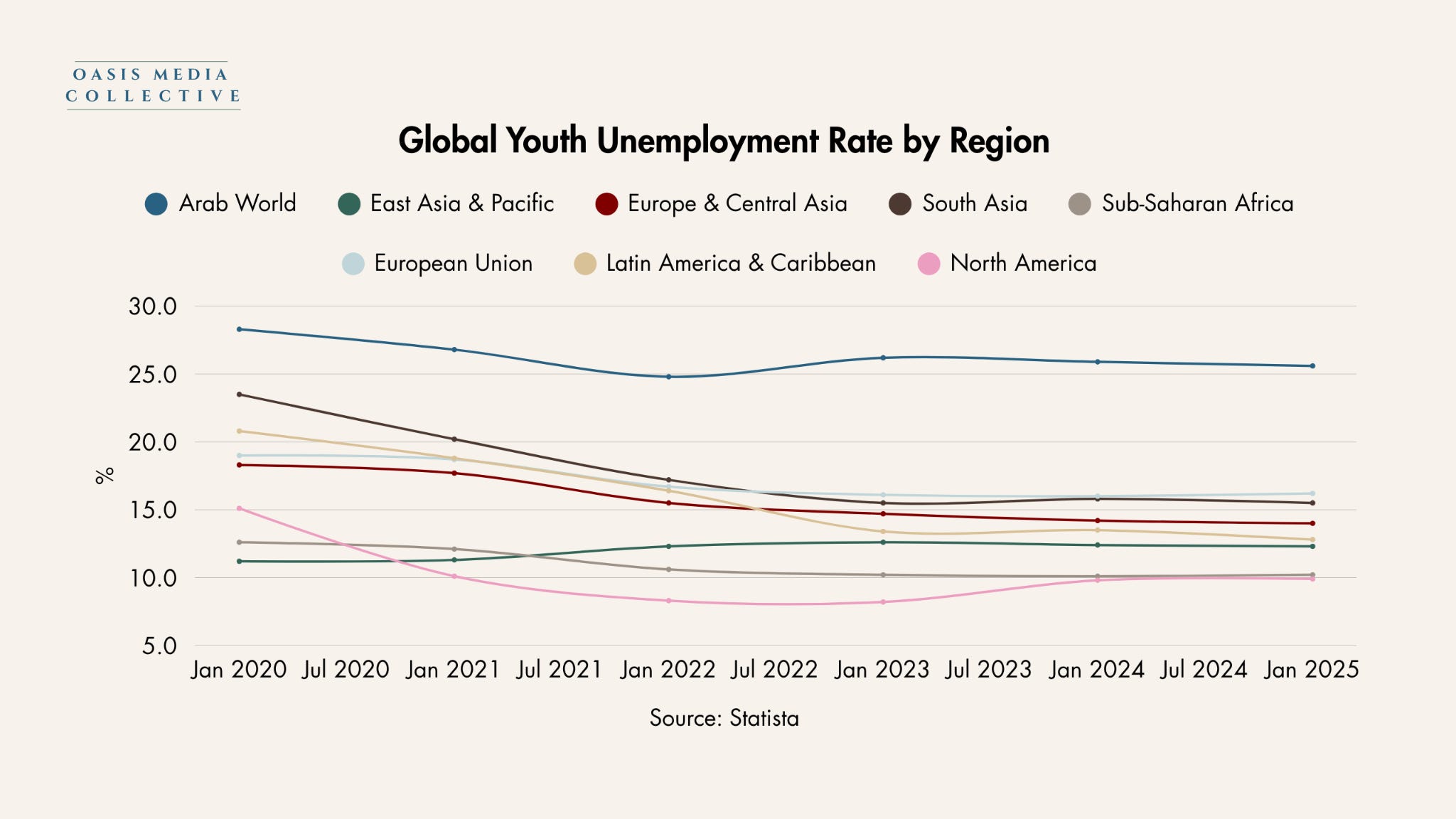
Of course, these are just umbrella factors. The data shows a correlation, not proof that these ingredients predict protests.
But they do show common grievances that young people worldwide can agree on. It’s why the One Piece flag has become a recurring symbol: it represents youth rejection of these deepening problems and what they perceive as their governments’ failure to respond.
SO… WHY DOES ANY OF THIS EVEN MATTER?
Protests, including those led by youth, are nothing new in human history. But at a time of rising inflation, geopolitical risk, climate change, and a host of other global issues, these Gen Z protests have the potential to add fuel to the fire.
As Madagascar and Nepal showed, protest waves can upend governments and shift the entire political status quo. This is even more concerning in countries integral to the global economy. France’s economic challenges have been a major reason as for why the euro has recently slid against the U.S. dollar, and they’re the same structural challenges French youth are rising up against.
As those issues deepen worldwide, so too will the wave, and with it, even more destabilization of governments and economies.
THE OASIS GAME PLAN
So as we move into 2027, and the global wave shows no signs of slowing, what should you do?
Well, no game plan or recommendations this time. The wave is too unpredictable to give general advice, and admittedly, many of the countries it has popped up in lack the same weight in the global financial system as larger, more developed economies.
Instead, as with any planning: hope for the best, but prepare for the worst. Start building an emergency fund that can last 3-6 months. That way, when chaos pops up and ripples to your wallet, you’ll at least have something to turn to, just in case.
TL;DR
A global wave of youth protests shares one grievance: a blocked path to a stable adult life. And depending on where that wave goes next, it can have a big domino effect for the world economy and your wallet.
VIDEO SHOWCASE
Join the Collective decoding markets, policy, and power for the investors of tomorrow.
To partner with Oasis Media Collective, contact here.