


BEFORE YOU SCROLL
Global youth unemployment is at an all-time high, and people are blaming AI.
AI may not be the real culprit, and thinking that it is is steering Gen Z toward the wrong fixes and career moves.
The jobpocalypse isn’t looking to go away anytime soon, but there are things that can be done.
Here’s the current job-hunting experience for the average fresh graduate in a nutshell:
Apply for over 200 jobs.
Be ghosted by most, rejected by a few, and barely reach a first interview for a handful.
Then get an email saying “you’re not the right fit,” with no further explanation.
Maybe your parents tell you to just apply on LinkedIn or Indeed. There are thousands of openings, so there are still tons of opportunities, right?
The catch: one in seven of those listings is a “ghost job,” according to Forbes. Basically, fake openings for roles the company doesn’t actually want to fill. It’s so bad that Texas Attorney General Ken Paxton is investigating LinkedIn over the issue.
Even worse, the few genuine listings demand “2 years of experience” while proudly labeling themselves “entry-level.”
I remember a TikTok video describing Gen Z job hunting in 2026 as an “embarrassment ritual” and it’s leaving a lot of young people worldwide frustrated.
The number one reason people are pointing to behind this “jobpocalypse” seems simple: AI.
As a first guess, it makes sense. Adobe, Meta, Oracle, and tons of other companies have laid off thousands of people internationally, and AI keeps being cited as the reason.
But a closer look at the numbers tells a messier story. AI may not be the leading cause of Gen Z’s jobpocalypse, and it’s definitely not because of iced coffees, either.
THE SCOREBOARD
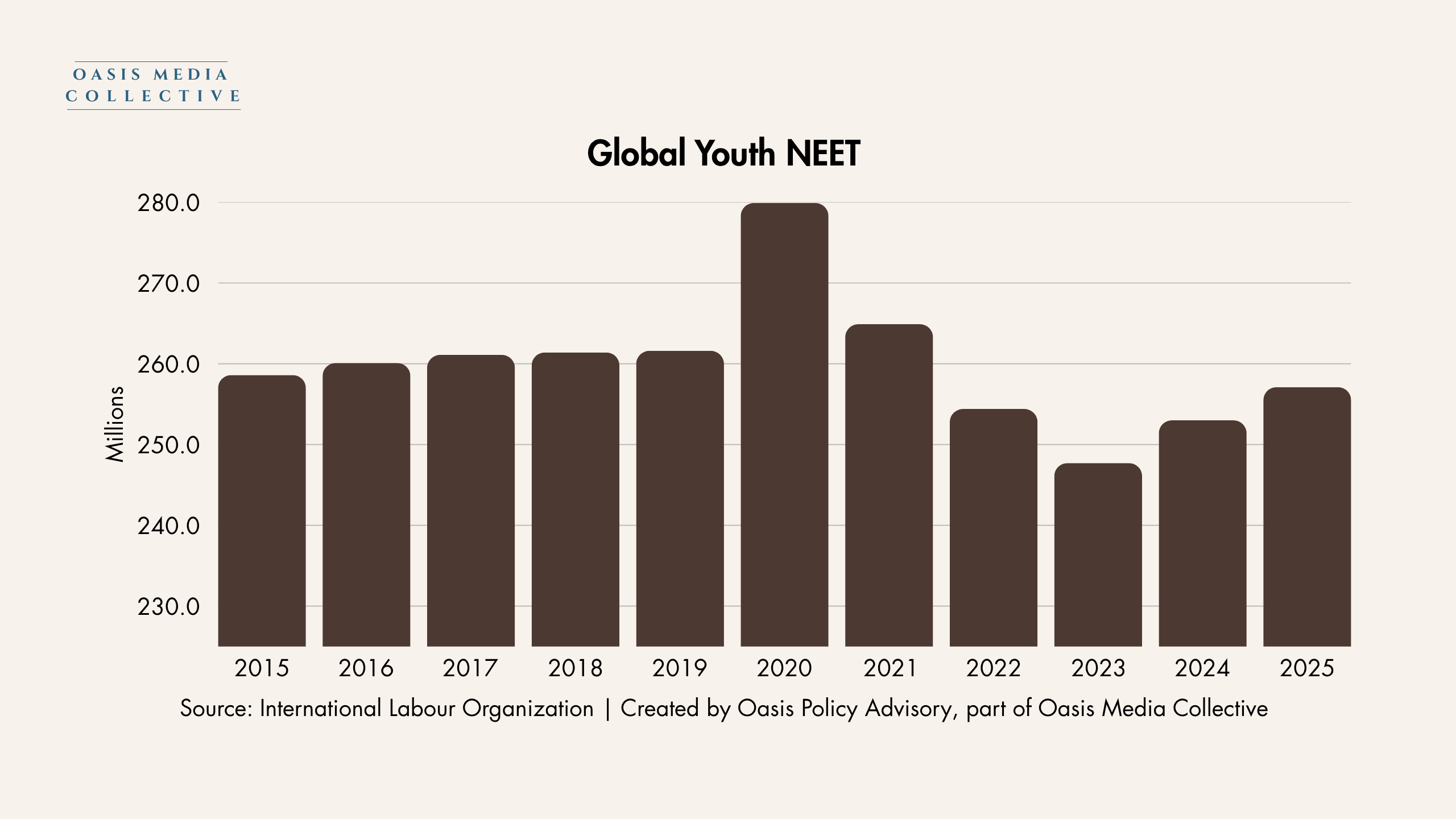
Before we dive in, here’s the data behind the jobpocalypse:
Global youth unemployment hit 12.4% in 2025, according to the International Labour Organization (ILO). That’s 67 million young people.
Entry-level job postings worldwide fell by 29%, according to the World Economic Forum.
42% of recent U.S. graduates are underemployed, while 5.6% are unemployed, according to the New York Federal Reserve.
And all of this is probably a big reason as to why the U.S. economy only added 29,000 jobs in September, far below the 89,000 economists predicted.
THE USUAL SUSPECT
Forbes reported that the junior hiring crash began in 2022, the same year ChatGPT launched.
Since then, Gemini, Claude, Perplexity, and countless other LLMs have arrived on the scene, each more capable of handling the tasks entry-level roles revolve around.
Whether it’s building an app with Claude Code or producing a market report with Gemini Deep Research, it feels like the career paths once seen as the prize, like programmer or consultant, are being snatched away with every new tool.
A Stanford study all but seems to prove it: workers aged 22-25 in the most AI-exposed jobs are about 19% below their expected employment path, while older colleagues in the same jobs are fine.
So, case solved. Right?
THE PLOT TWIST
While Stanford shows AI’s potential, a Yale Budget Lab study shows what’s actually happening: no discernible economy-wide AI disruption 33 months after ChatGPT’s release.
Forbes may have dated the jobpocalypse to 2022, but it didn’t pin it on ChatGPT. At the time, many executives didn’t know enough about AI to confidently roll back hiring en masse.
And a look at 2025’s mass layoffs suggests government spending cuts, not just AI, were the leading cause, according to Visual Capitalist.
Other countries tell the same story:
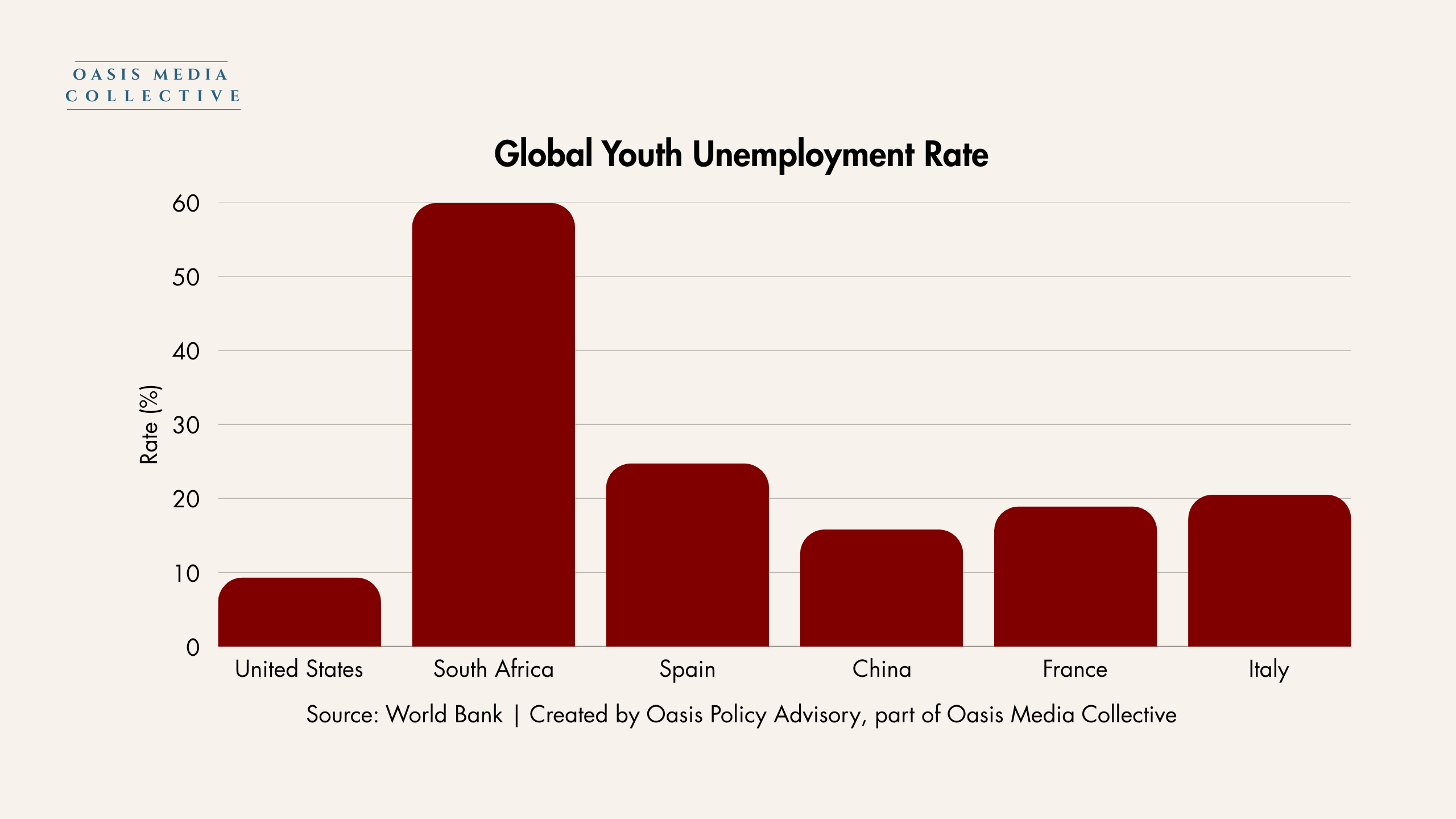
🇿🇦 South Africa: It has one of the highest youth unemployment rates in all of Africa, and the problem long predates ChatGPT.
🇪🇸 Spain: It has one of the EU’s highest rates, with no single explanation. Its economy leans on tourism, hospitality, and construction, which tend to produce unstable, short-term jobs.
🇨🇳 China: Youth unemployment has climbed rapidly since 2024, with everything from economic slowdown to hiring reluctance blamed.
So if AI were the main cause, why is the pain worse where it has barely arrived?
THE REAL CULPRIT
More likely, the jobpocalypse comes down to one word: uncertainty.
The pandemic, tariffs, and wars are colliding to create one of the most unpredictable times to be alive. And if there’s anything businesses hate, it’s uncertainty.
ChatGPT wasn’t the only thing shaking the world in 2022. Russia’s invasion of Ukraine sent energy costs soaring, pushing up shipping costs, inflation, and interest rates, too.
The war in Iran has doubled down on the mayhem, and businesses are hedging against even more turbulence.
The easy way out: not hire at all. Companies are shedding many people, holding on to the rest, and barring everyone else from boarding.
AI, and more recently bringing iced coffee to your interview, is more than likely a convenient excuse masking the real reasons the job market is in shambles.
THE OASIS GAME PLAN
This is not financial advice.
With the dust settled, how does Gen Z navigate a market that seems stacked against them?
Ditch the job boards. Platforms like Indeed just don’t work like they used to. Go straight to the source and message hiring managers on LinkedIn to introduce yourself.
Stand out from the crowd. An internship alone won’t cut it. Pick up a side hustle that showcases your skills, like starting a newsletter.
Learn to work with the tools. AI is a growing reality of work, whether you like it or not. The WEF found that 68% of entry-level workers say AI boosts their productivity, so keep learning to use it to your advantage.
TL;DR
Young people are struggling to get hired worldwide, and AI is the easy scapegoat. But a deeper look finds that the likelier culprit is global uncertainty, which has companies simply not hiring.
SAY LESS
NEET: Not in employment, education, or training.
Low-hire, low-fire: Few people get hired, few get fired.
Underemployment: Working a job that doesn’t require your degree.
VIDEO SHOWCASE
Join the Collective decoding markets, policy, and power for the investors of tomorrow.
To partner with Oasis Media Collective, contact here.