


KEY QUESTIONS
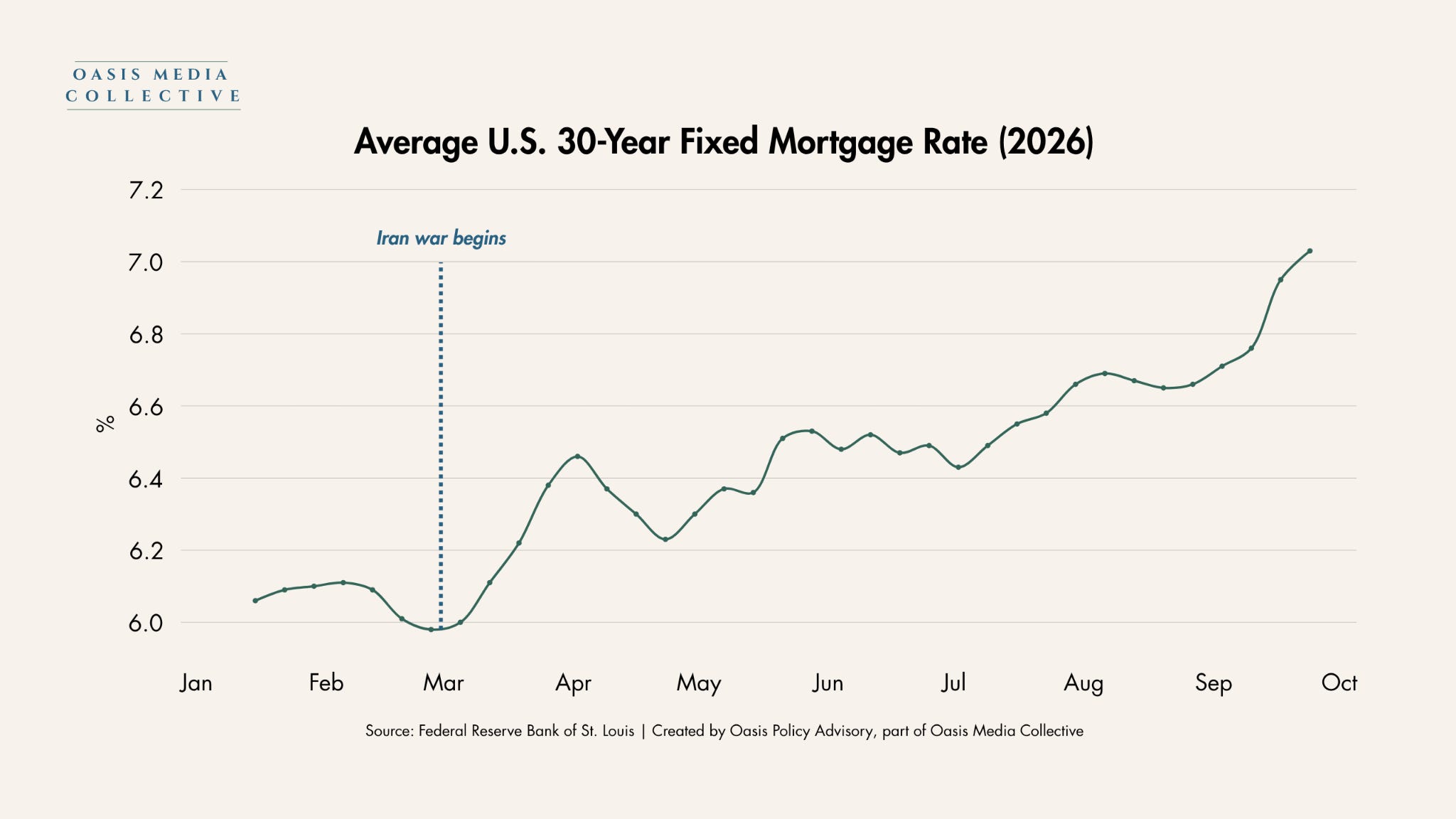
WHAT HAPPENED? U.S. 30-year mortgage rates just topped 7% for the first time since 2025, as the Fed hiked rates and 10-year Treasury yields blew past 5%.
WHY IT MATTERS? This isn’t just a U.S. story, as countries around the world struggle with surging housing prices.
WHAT’S NEXT? More Fed hikes look likely, Japan shows no sign of slowing its selloff, and new home construction is too squeezed to offer relief anytime soon.
For decades, buying a home in the suburbs has been the anchor of the American Dream. For first-time buyers today, it’s starting to look more like a fantasy.
Last week, the average U.S. 30-year fixed mortgage rate topped 7%, after the Federal Reserve hiked rates for the first time since 2023 and the 10-year Treasury yield pushed past 5%. Meanwhile, the median U.S. single-family home price sits at $398,400, according to the National Association of Realtors, marking 20 straight months of year-over-year price growth last February, per Bankrate.
It’s not just an American problem, either:
In the UK, two-year fixed mortgage rates climbed to just under 6% in September, adding roughly £131 a month to a £250,000 loan, according to Moneyfacts data.
In Germany, the 10-year fixed rate jumped from 3.84% to 4.43% in six months, as reported by Hypofriend.
In Canada, owners who were locked in at 1.49% to 2.29% in 2020-21 are now renewing at 4.29% to 4.99%, according to Lendsimpl.
Globally, 3.4 billion people now live in inadequate or insecure housing, and the worldwide price-to-income ratio has jumped from 9.3 to 11.2 since 2010, according to UN-Habitat’s 2026 World Cities Report.
What’s Actually Driving This
War and oil. Since the U.S.-Iran conflict escalated in February, energy prices have climbed, and inflation with them. The Congressional Budget Office expects inflation to run half a point higher through 2027 than it would have been without the war, and with President Trump rejecting Iran’s latest ceasefire offer and a second Fed hike likely by year’s end, that pressure isn’t easing.
A global bond selloff. Mortgage rates track bond yields, and yields are surging everywhere: Japan’s 10-year hit a 30-year high of 3.05%, while France’s has climbed to match Italy’s, around 4.1% to 4.15%. As government borrowing costs rise, so does the cost of your mortgage.
Your mortgage is set in Tokyo. Japan’s ongoing economic troubles are quietly steering U.S. rates. After the yen crashed through ¥160 in April, Japan’s Ministry of Finance spent ¥6.28 trillion in a single day to defend it. A second intervention in July, with U.S. help, still didn’t stop the yen’s slide. To raise cash, Japan, the world’s largest foreign holder of U.S. Treasuries have been dumping them, adding to the oversupply pushing yields higher. Commentator Kyla Scanlon estimates a half-point yield increase from Japan’s selloff alone could add $100 a month to a 30-year, $400,000 loan.
Why New Homes Won’t Save Us
The obvious fix–build more housing–isn’t coming fast. The Financial Times points to a labor shortage as builders shift crews toward data-center construction instead of houses, which also competes with homebuilders for materials, raising costs.
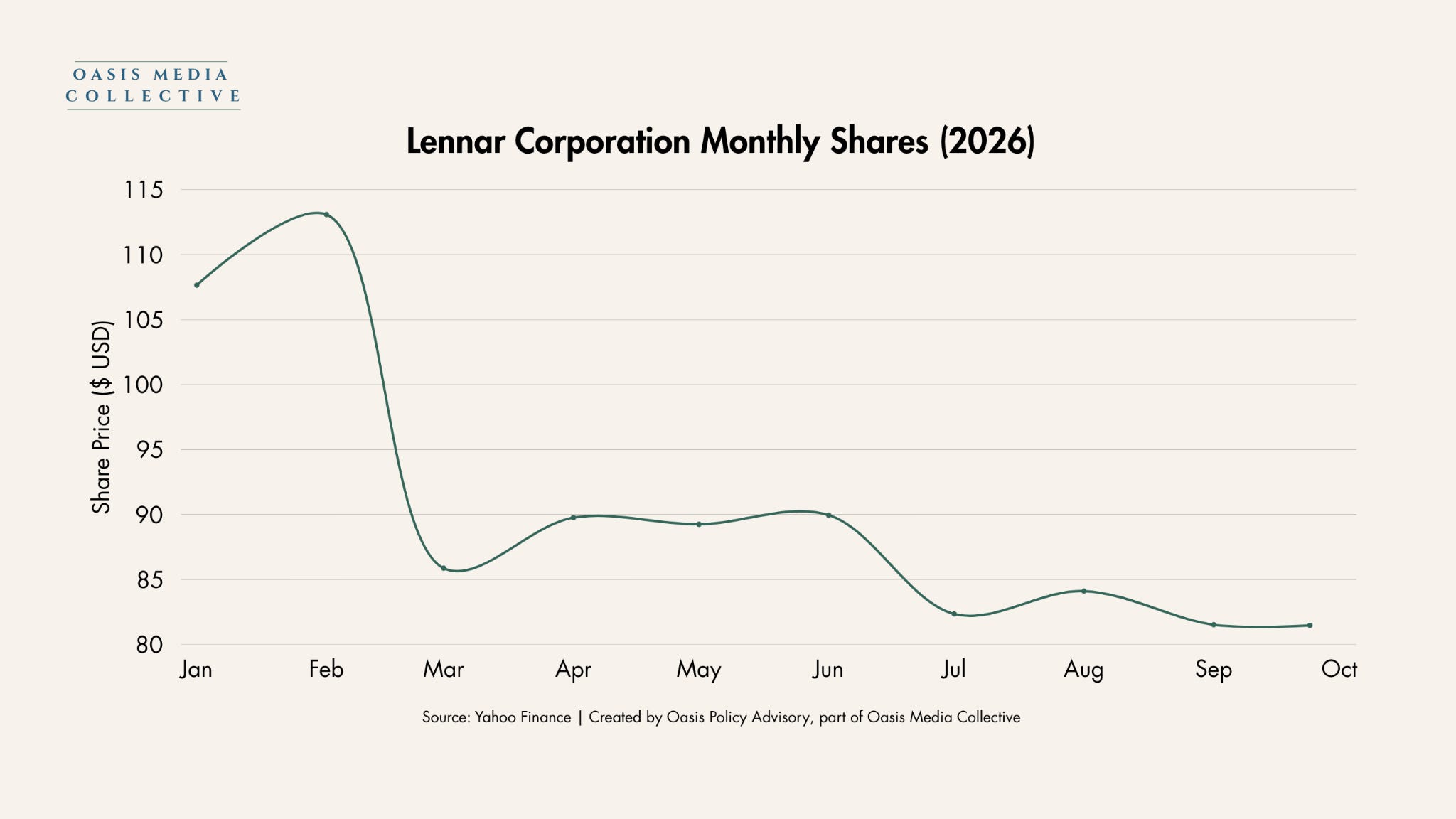
Higher rates and oil prices are squeezing builders from the cost side while demand cools, and it’s showing: shares of Lennar Corporation, the country’s second-largest homebuilder, have plunged this year.
How First-Time Buyers Can Still Navigate It
While the housing market isn’t set to get any better, it doesn’t mean that buying a house is a fantasy. For first time buyers, whether you’re looking to live or view it as an investment, here are some general tips to survive:
Budget beyond the price tag. Taxes, closing costs, agent commissions, and title fees add up fast, so make sure to build a budget that covers them, plus an emergency cushion.
Consider a co-signer. A partner or parent can strengthen a thin credit file and improve your approval odds.
Negotiate closing costs. Shop for a cheaper title company or push back on agent commissions. It’s often more negotiable than buyers realize.
TL;DR: U.S. mortgage rates just topped 7% as the Fed hikes and global bond yields surge, fueled partly by war-driven inflation and partly by Japan, which is dumping the U.S. Treasuries to defend a collapsing yen. The selloff is quietly pushing up borrowing costs worldwide, and with new construction too squeezed to add relief, first-time buyers should plan around today’s rates rather than wait for them to drop.
Join the Collective decoding markets, policy, and power for the investors of today and tomorrow.
To partner with Oasis Media Collective, contact here.