



KEY QUESTIONS
WHAT HAPPENED? Japan just hiked interest rates to a 31-year high and the yen dropped anyway, pushing Japan’s economy into one of its most volatile periods yet.
WHY IT MATTERS? Japan is one of the world’s biggest holders of foreign debt. With it unwinding those debt holdings, it’s quietly boosting global borrowing costs, commodity prices, and even the interest rate on your next car loan.
WHAT’S NEXT? More rate hikes look likely on both sides of the Pacific, and Japan’s retreat from foreign bonds shows no signs of slowing.
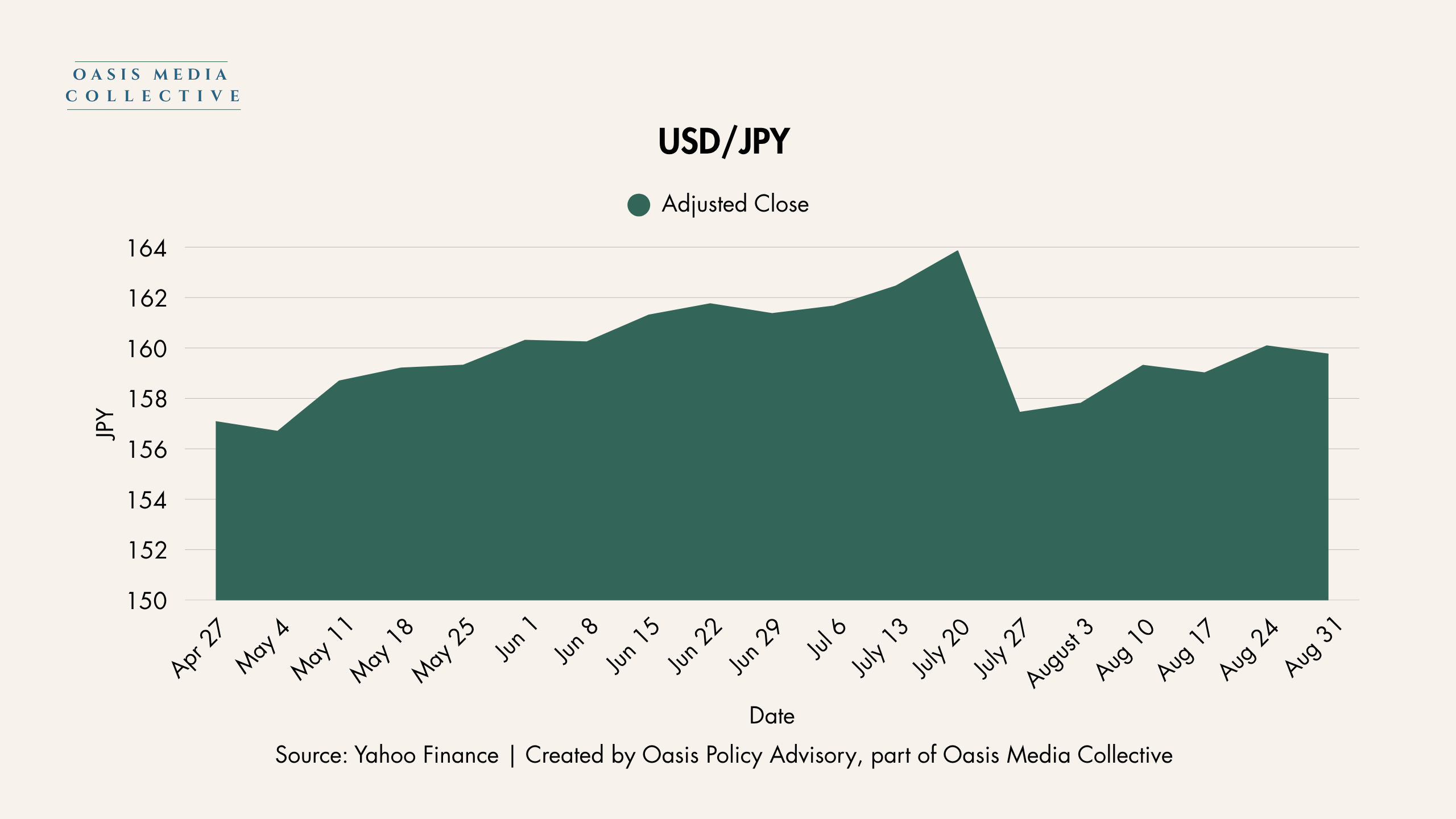
On Friday, the Bank of Japan raised its interest rate by 0.25% to 1.25%, a 31-year high. Right after, the yen dropped 1.3% against the dollar, falling to ¥158.
That’s the latest chapter in a rough year. Back on April 30, 2026, the yen crashed through ¥160, forcing Japan’s Ministry of Finance to spend ¥6.28 trillion in a single day just to prop it up, one of the largest one-day currency interventions ever recorded.
Then in late July, Japan stepped in again, this time with U.S. help, after the yen hit a 40-year low. However, the intervention wasn’t enough to stave off the yen’s downward drop.
Japan’s economy, in short, is facing one of its biggest challenges yet. And this isn’t a matter confined to trading desks. It reaches into mortgage rates, retirement portfolios, and the price of everyday goods.
Why is the yen so important?
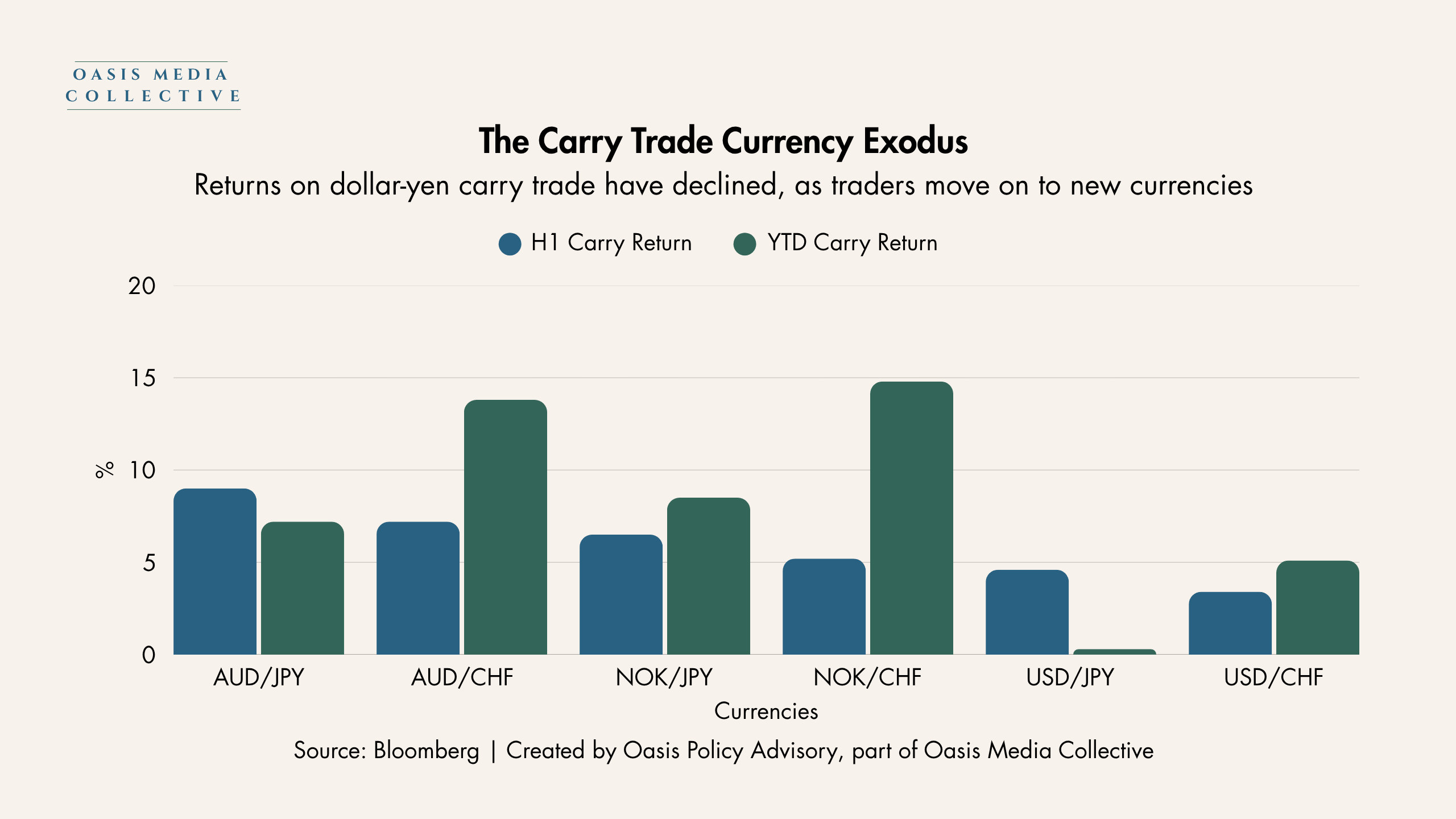
The answer comes down to a cheat code investors, from Wall Street pros to everyday retail traders, have leaned on for decades: the carry trade.
Here’s the playbook: with Japan’s interest rates historically near zero, traders borrow cheap yen, convert it into U.S. dollars, and use that cash to buy up booming American assets, most notably in tech stocks. In effect, it’s a cheap loan to cover a very expensive bet, so long as the yen remains stable.
But that playbook is breaking. An ongoing Iran-driven energy crisis is keeping global inflation elevated heading into 2027, pushing both the U.S. and Japan into historic rate hikes. That’s putting the yen in a bind: rates are still relatively low compared to other major currencies, but the volatility around those rates is spooking traders, who are increasingly rotating into currencies like the Canadian dollar and Chinese yuan instead. With more hikes likely on the way, the yen’s slide out of favor looks far from over.
What’s happening with Japan’s bond market?
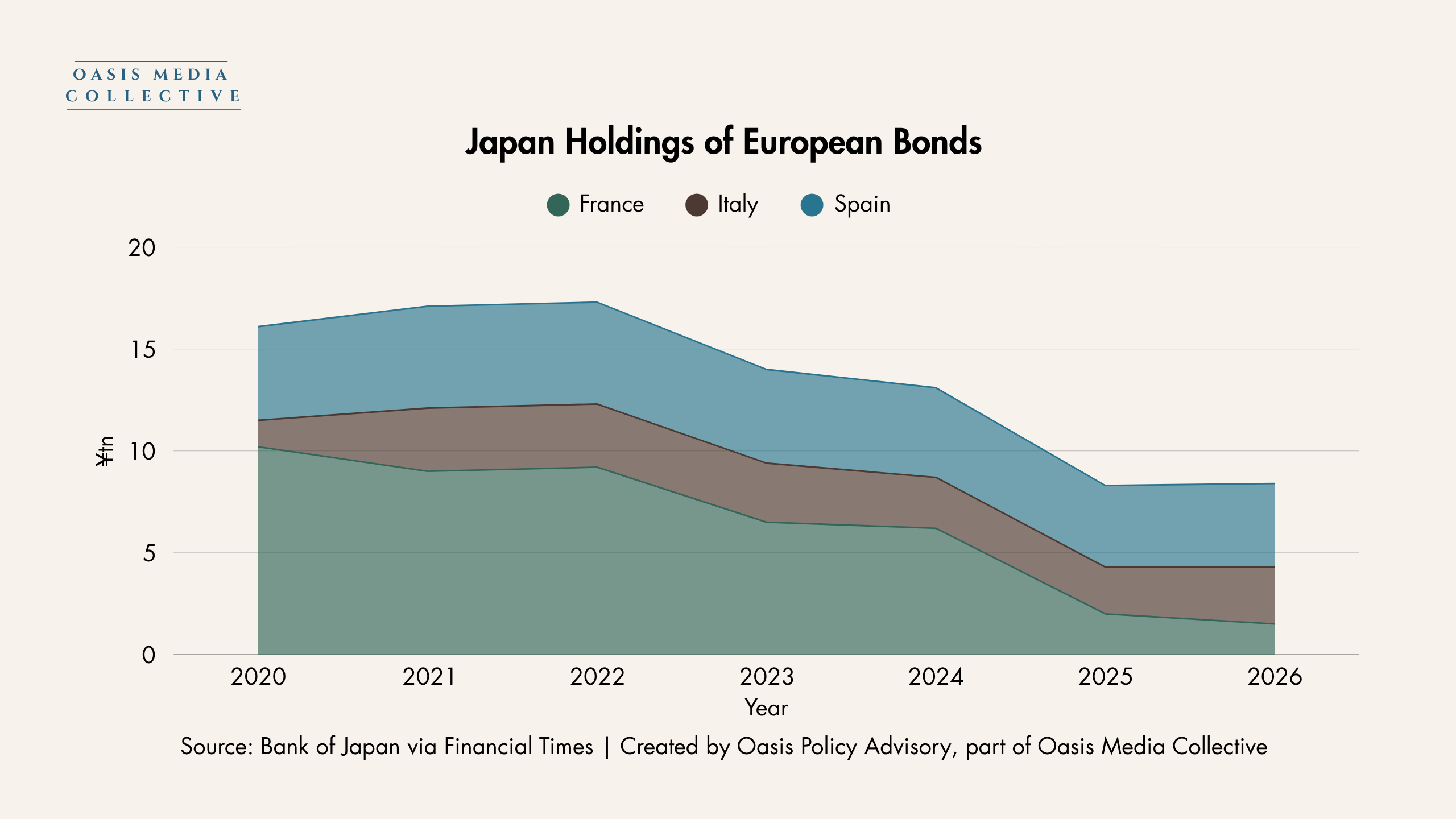
Compounding the pressure: Japan is dumping government bonds, the instruments by which governments borrow from investors, at home and abroad, in exchange for repayment with interest.
Bond yields are climbing worldwide right now, making it more expensive for governments everywhere to borrow. But Japan is the red flag keeping economists up at night. Tokyo has long been one of the world’s biggest buyers of foreign government debt, including U.S. Treasuries. To fund its yen-defense, Japan has been selling off those very holdings at record pace, leaving other governments scrambling to find new buyers to fill the gap.
France is a case study in what that fallout looks like. Yahoo Finance reported the country narrowly dodged a recession last quarter, with GDP shrinking 0.2% in Q1, badly missing the 0.7% growth French policymakers had forecast. One major driver: borrowing costs spiking, in part because Japan, historically one of France’s biggest debt buyers, has been offloading its French bond holdings in record numbers.
What does this mean for you?
Japan’s interventions may have bought time, but they haven’t resolved the underlying instability. And that instability won’t remain confined to Tokyo.
As Japan reduces its holdings of American debt, demand for U.S. Treasuries weaken, pushing their borrowing costs higher. That, in turn, ripples outward into the borrowing costs on mortgages, credit cards, and auto loans.
The effect extends to everyday goods, as well. Most global commodities, like oil, are priced in U.S. dollars rather than yen. Yet when the yen weakens, the cost of oil in Japan rises even if the dollar price hasn’t moved at all. It’s a cost that’s ultimately passed downstream, surfacing in fuel prices and consumer goods well beyond Japan’s own borders.
What’s next?
Inflation looks likely to stay elevated heading into the new year, and much like the Federal Reserve, the Bank of Japan has signaled more rate hikes aren’t off the table.
Japan’s economic strain shows no signs of easing up soon. And wherever it goes next, the consequences, wherever they land next, are likely to follow close behind.
TL;DR: Japan raised rates to a 31-year high, and the yen fell anyway. To defend its currency, Japan has been offloading foreign bonds at a record pace, quietly pushing up borrowing costs worldwide. It’s a trend likely to continue into 2027.
Join the Collective decoding markets, policy, and power for the investors of today and tomorrow.
To partner with Oasis Media Collective, contact here.