



KEY FACTS
WHAT HAPPENED? Leading shipping giant Maersk is abandoning the Red Sea amid the Gulf crisis, rerouting around South Africa’s Cape of Good Hope
WHY IT MATTERS? South African port activity is surging, but the country is caught in a bind: record revenues and new investment on one side, an oil price spike and a sliding currency on the other
WHAT’S NEXT? Because of investor uncertainty, Gulf capital turning inward, and a widening diplomatic rift with Europe, Pretoria’s maritime windfall may be short-lived
What Happened
Danish shipping giant Maersk announced last week it would reroute its vessels away from the Arabian Gulf. The move comes as both the Strait of Hormuz and the Red Sea—two maritime chokepoints critical to global energy trade—face mounting pressure from the escalating Middle East crisis.
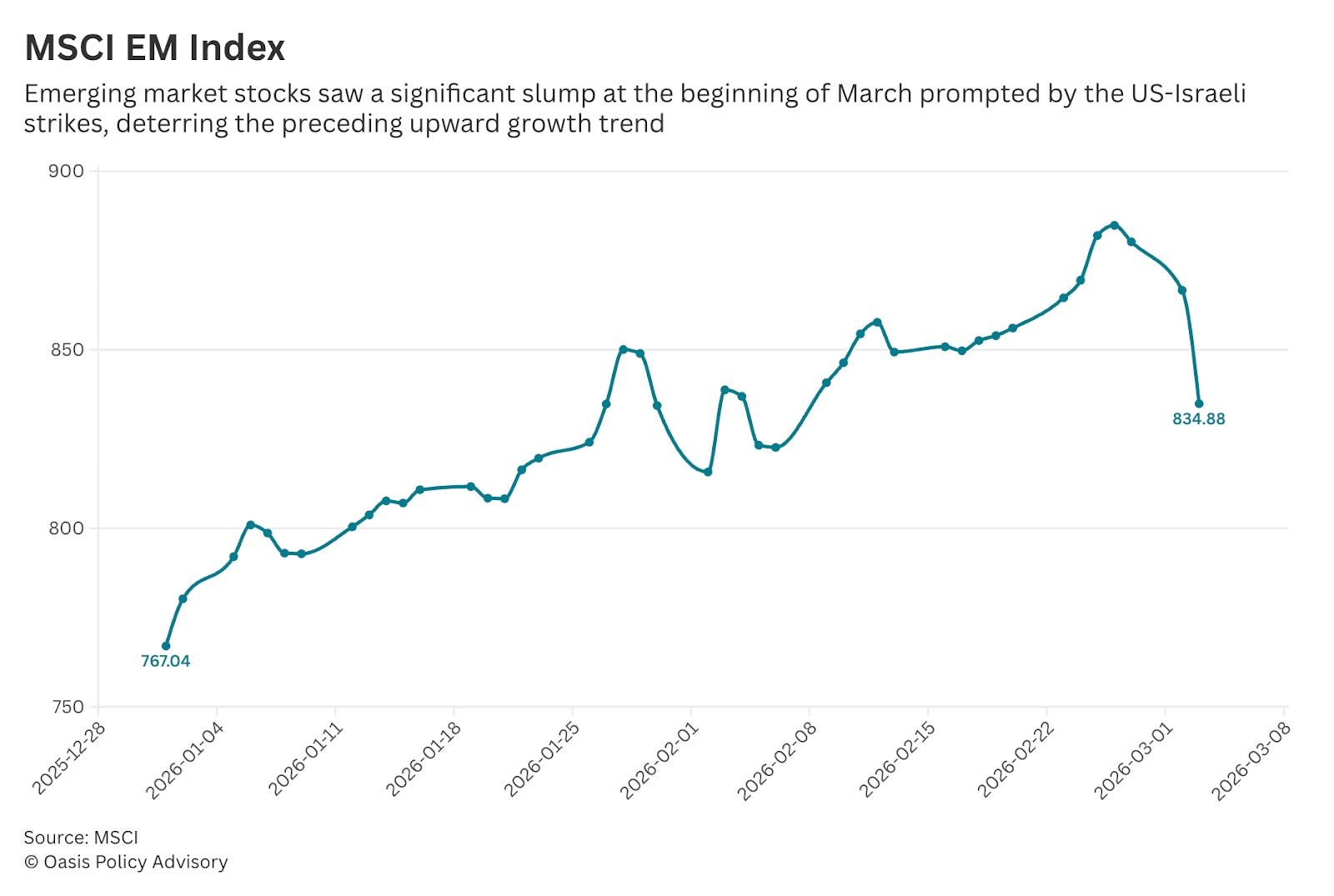
Following American and Israeli strikes on Iran on February 28, Tehran moved swiftly to impose a blockade on the Strait of Hormuz, through which roughly 20% of the world’s oil flows. Simultaneously, the Yemeni Houthis, an Iran-aligned militia, have threatened to resume attacks on Red Sea shipping. The Houthis waged a similar campaign from late 2023 through 2025; at its peak, they drove a 30% surge in container freight rates and added an average of two weeks to shipping times.
With the Red Sea off the table, Maersk is heading southward, routing off the Cape of Good Hope and going through ports including Durban, Cape Town, and Ngqura in South Africa. The detour extends average transit times from 25 to 34 days, according to Maritime Analytica.
For South Africa, it’s a geopolitical win—but one masking deep economic vulnerabilities.
Why It Matters
The numbers are striking. Between December 2023 and March 2024, arrivals at South African ports surged 328%, according to UN Trade and Development. Seaborne traffic around the Cape rose 53% from October 2023 to February 2024. Transnet Port Terminals, a South African logistical management organization, reported revenue growth of 11.6%, reaching R76.7 billion ($4.26 billion) for the financial year ending March 2024.
Increased traffic is drawing new investment. Astron Energy recently deployed its Pearl Kate bunkering tanker to supply low-sulphur marine fuel along the coast. In August 2024, Transnet secured a R5 billion ($283 million) loan from the BRICS-backed New Development Bank to modernize freight rail infrastructure.
Strategically, becoming a key transit point for global energy flows hands Pretoria newfound diplomatic leverage, particularly over Europe, which has grown increasingly dependent on Gulf energy since Russia’s 2022 invasion of Ukraine.
But there’s a cost. Higher transit times are pushing Brent crude oil demand up, and with it, prices: going from roughly $72.48 per barrel on February 28 to over $90 as of most recently. And as global market volatility sends investors fleeing to the US dollar, the South African Rand is feeling the pressure, sliding to 16.85 against the dollar on Monday, a 3-month low, according to Reuters.
What’s Next
Maritime analytics firm Xeneta predicts that more shippers will follow Maersk’s lead and that none will return to the Red Sea for the remainder of the year.
The surge in traffic demands urgent port infrastructure investment, but investor uncertainty clouds the outlook. A $3 billion LNG plant announced for Durban, backed by Swiss commodity trader Vitol, now hangs in the balance as geopolitical tensions spark unease.
The Gulf states are among South Africa’s most active port investors, with the UAE alone committing over $1.3 billion in 2024. Yet the ongoing regional crisis is likely to direct their capital inward. A report from EnterpriseAM predicts “moderate” capital outflows from the UAE for the foreseeable future.
Diplomacy adds another layer of risk. South Africa’s deepening ties with BRICS nations, its ICJ case against Israel, and its public criticism of the joint American-Israeli operation have strained relations with Europe, its primary customer for Cape-routed energy. A diplomatic spat could quickly bleed into trade friction, undermining the very opportunity the crisis has created.
South Africa finds itself at a crossroads: positioned to capitalize on a historic maritime rerouting, but hemmed in by economic fragility and a foreign policy posture that may cost it its most valuable customers.
This reporting may be cited with attribution to Oasis Media Collective. For licensing, republication, or extended use, contact here.