


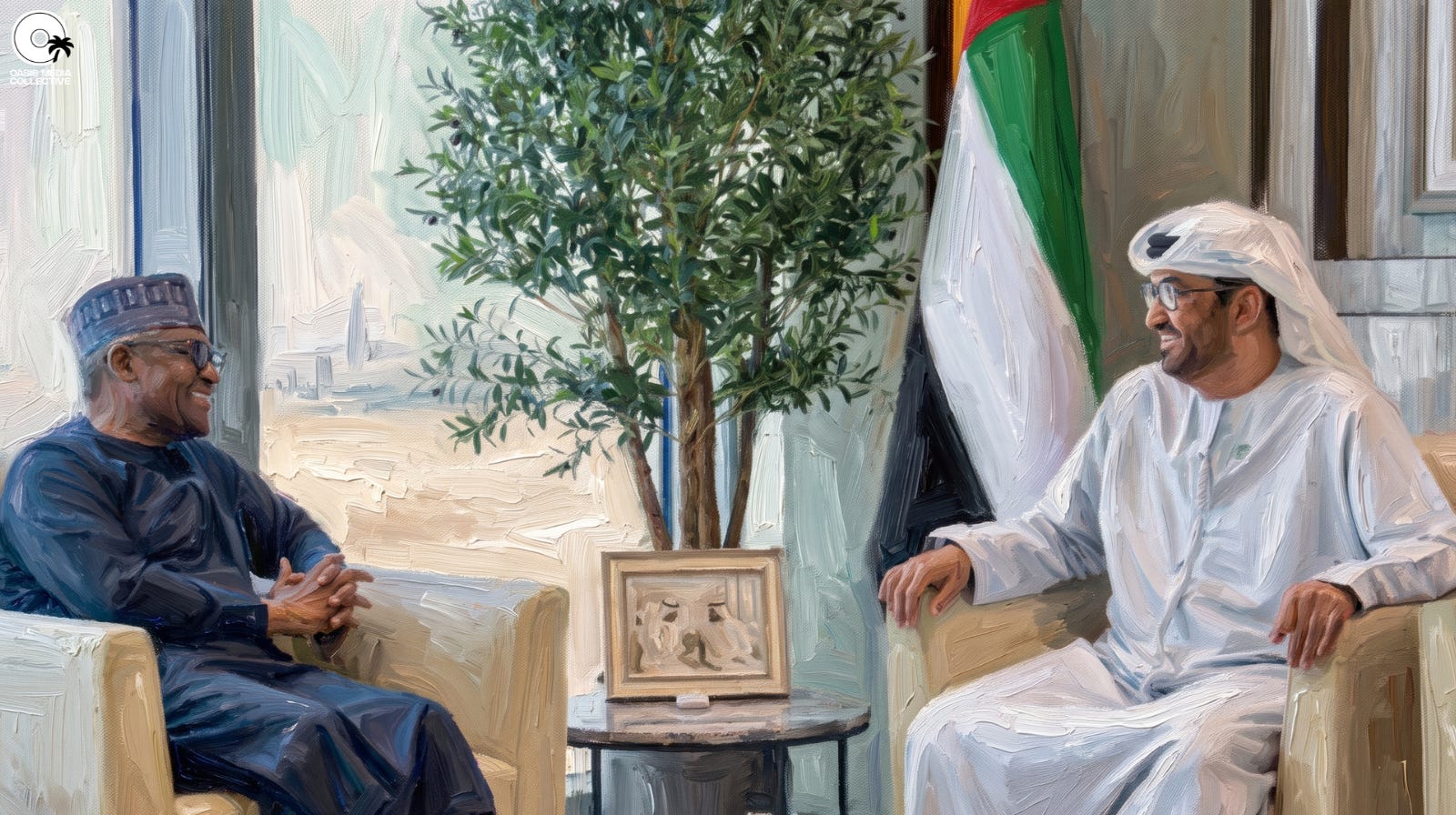
The end of 2021 cast a shadow over relations between the United Arab Emirates and Nigeria. The UAE’s General Civil Aviation Authority restricted Nigeria’s sole international carrier, Air Peace, to a single weekly slot at Sharjah International Airport. Nigeria’s Civil Aviation Authority retaliated, slashing Emirates Airlines’ winter schedule from 21 weekly flights to one. Emirates suspended all passenger flights to Nigeria outright.
The spat didn’t stay in the skies. Nigeria’s central bank blocked airlines from repatriating ticket revenue in American dollars, trapping $85 million of Emirates’ earnings by July 2022. By October of that year, Abu Dhabi had imposed a visa ban on Nigerian nationals.
Flash forward to 2026, and that shadow has been illuminated.
Nigeria has drawn the first tranche of a $5 billion financing arrangement from First Abu Dhabi Bank, Bloomberg reported. Days after Dangote Group founder Aliko Dangote met with ADNOC Group CEO Sultan Ahmed Al Jaber in Abu Dhabi, the Dangote Refinery purchased two cargoes of Emirati crude, according to S&P Global. And in an interview with BusinessDay, UAE Minister of Foreign Trade Thani Al Zeyoudi called Nigeria a cornerstone of Emirati investment in Africa, pointing to a record $5 billion in bilateral trade in 2025.
The Abuja-Abu Dhabi relationship went from frozen to foundational in record time. As the UAE’s African ambitions expand beyond its traditional foothold in the northeast of the continent, Nigeria is emerging as the linchpin of its push westward.
A Rocky Start, A Rapid Thaw
The UAE and Nigeria established diplomatic relations in 1982, but it wasn’t until 2009, after the UAE opened an embassy in Abuja, that ties began to deepen in earnest.
The real turning point came in January 2016, when then-Nigerian President Muhammadu Buhari traveled to Abu Dhabi for a state visit. The two countries signed six foundational treaties covering everything from double taxation to extradition, a framework meant to stimulate capital flows between the two governments.
The Air Peace-Emirates standoff threatened to undo years of that groundwork. Instead, what followed was the emergence of something bigger: a West Africa-Gulf trade corridor, with Nigeria at the helm.
Bilateral trade has nearly tripled since 2019, climbing from $1.45 billion to $4.8 billion in 2025, according to BusinessDay. A 2024 breakdown by the Observatory of Economic Complexity tells a deeper story: UAE exports to Nigeria totaled $1.49 billion—nearly $1 billion of it refined petroleum—while Nigeria’s exports to the UAE reached just $148 million, largely raw petroleum gas. Nigeria, in other words, is still exporting the raw input and buying back the refined product.
That’s starting to change. The 700-kilometer Lagos-Calabar Coastal Highway, linking major economic zones along Nigeria’s Atlantic coast, secured $1.126 billion in financing in December 2025, $626 million of which was underwritten by First Abu Dhabi Bank. In April, Nigeria struck a separate partnership with DP World and AD Ports Group to launch a new national shipping line, a bid to boost its maritime trade.
Betting on a Younger, Bigger Nigeria
Nigeria’s appeal to Abu Dhabi isn’t just about today’s trade figures, it’s about who’s about to enter the workforce. As Africa’s most populous country, with a median age of just 18.1 years according to the World Economic Forum, Nigeria is heading into a demographic boom that’s expected to accelerate growth in gas, mining, and maritime industries—exactly the sectors the UAE has staked its African strategy on.
Abu Dhabi’s investments on the continent have historically clustered in the north and east. West Africa’s mineral wealth and proximity to European markets are changing that calculus, and Nigeria is positioning itself as the anchor of the UAE’s pivot west.
The next phase of the relationship looks set to run through renewable energy. Emirati state-owned Masdar has named Nigeria a target market in its Africa-wide clean energy push, part of a plan to deploy 20,000 megawatts of renewable capacity across the continent over the next twelve years.
And as for who’s brokering the deals on the ground: expect Dangote Group to keep doing it. Dangote himself has emerged as the UAE’s go-to local partner, and with his refinery now buying Emirati crude directly, it’s a fair bet he won’t be the last Nigerian businessman making the trip to Abu Dhabi.