


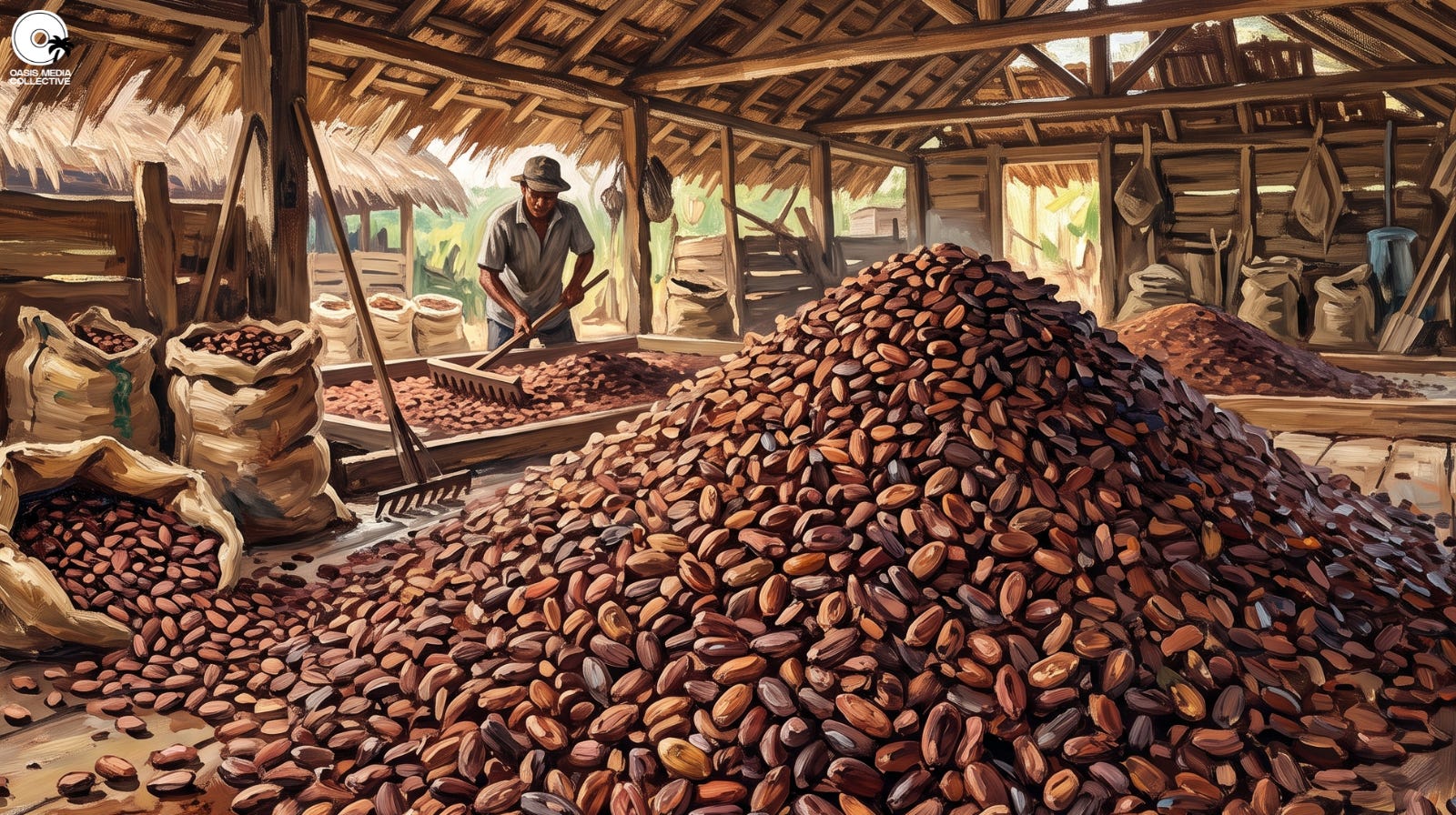
My most recent trip to the African continent was in Côte d’Ivoire. Between the busy roads, dazzling night sky, and energetic music that gripped everyday life, one thing stuck out to me: just how little sun the largest city, Abidjan, was getting.
Gray clouds and heavy rain were a constant throughout my weeklong trip, from the moment I landed until I took off.
For me, it was a small downside to an otherwise stellar trip. For farmers across the country, though, it’s been a nightmare.
Cocoa Under Pressure
A report from Reuters in early June detailed the adoption of increased premiums on new export contracts by the Abidjan-based Coffee and Cocoa Council (CCC), in an effort to slow down cocoa sales.
The reason: weather. The rainy season has made harvesting cocoa more difficult than ever, with global broker XTB reporting preliminary estimates that the country’s cocoa exports could fall by roughly 0.4 million tonnes beginning this September, compared to the current season.
Compounding those fears is El Niño, the weather phenomenon pushing Pacific Ocean temperatures up and sparking ripple effects worldwide. In the case of Côte d’Ivoire, the effect is expected to be drier and hotter weather, further derailing harvesting efforts.
The end result: limited supply facing skyrocketing cocoa demand. That clash is now showing up in the markets.
This year has been a rollercoaster ride for the commodity, with ICE cocoa futures having climbed back above $5,000 per tonne earlier this month, according to XTB. The climb comes off a similar rally in February.
That hit is being felt by the companies most reliant on cocoa. Swiss chocolatier Lindt has seen its shares fall by 29% this past year, while Nestlé’s shares dropped 7% last Thursday, prompted by lower sales tied to higher cocoa prices.
When Cocoa Sneezes, Chocolate Catches a Cold
What happens with cocoa doesn’t just stay with cocoa. Everybody’s favorite sweet treat, chocolate, is feeling the pressure of the volatility, too.
Accounting for roughly 40% of the global supply, Côte d’Ivoire is the world’s largest cocoa exporter, with the commodity at the core of the country’s agricultural sector.
Those cocoa beans, shipped to both Europe and Asia, are the backbone of chocolate production, serving as the foundational base and creating the core flavor, texture, and identity. Simply put, without cocoa, chocolate wouldn’t exist, leaving our sweet tooth craving something else.
All of which is why chocolate was inevitably going to feel the pressure of the ongoing cocoa crisis. ABC News reported a 14.4% rise in chocolate prices at the start of 2026 compared to the same time last year. Similarly, The Times reported that UK chocolate prices soared 27% between 2023 and 2025. It’s part of the reason Nestlé, according to Times, has reduced the concentration of cocoa butter in its products.
Analysts are pointing to weather difficulties and harvest delays in Côte d’Ivoire and the wider West African region as the root cause. Throw in climate change into the picture, it may not be a crisis that ends anytime soon.
Dubai Chocolate: The Canary in the Coal Mine
Arguably the chocolate product most exposed to this is Dubai chocolate, bars filled with both kunafa and pistachio cream. Since going viral online in 2023, demand for Dubai chocolate has soared, and with it, pistachio prices. Compartes Chocolatier reports that in just under a year, U.S. pistachio prices jumped from $7.65 a pound to over $10.30, driven in part by the craze over Dubai chocolate.
Given that demand, Dubai chocolate is likely to feel the pressure of the heightening cocoa crisis stemming from Côte d’Ivoire on top of an existing squeeze. According to Financial Times, the war in Iran has already disrupted pistachio trade, given that Iran exports roughly a fifth of the world’s supply. Côte d’Ivoire’s own difficulties are set to compound that.
For all of us chocolate lovers with a sweet tooth: be prepared to drop more bank for your favorite late-night dessert.