

Trump to Reshape Nile River Control as U.S. Exits Iraq and Armenia Makes Historic Peace Moves
From Africa's water wars to Middle Eastern withdrawals, three regions face pivotal diplomatic shifts that could redraw decades of conflict and cooperation.

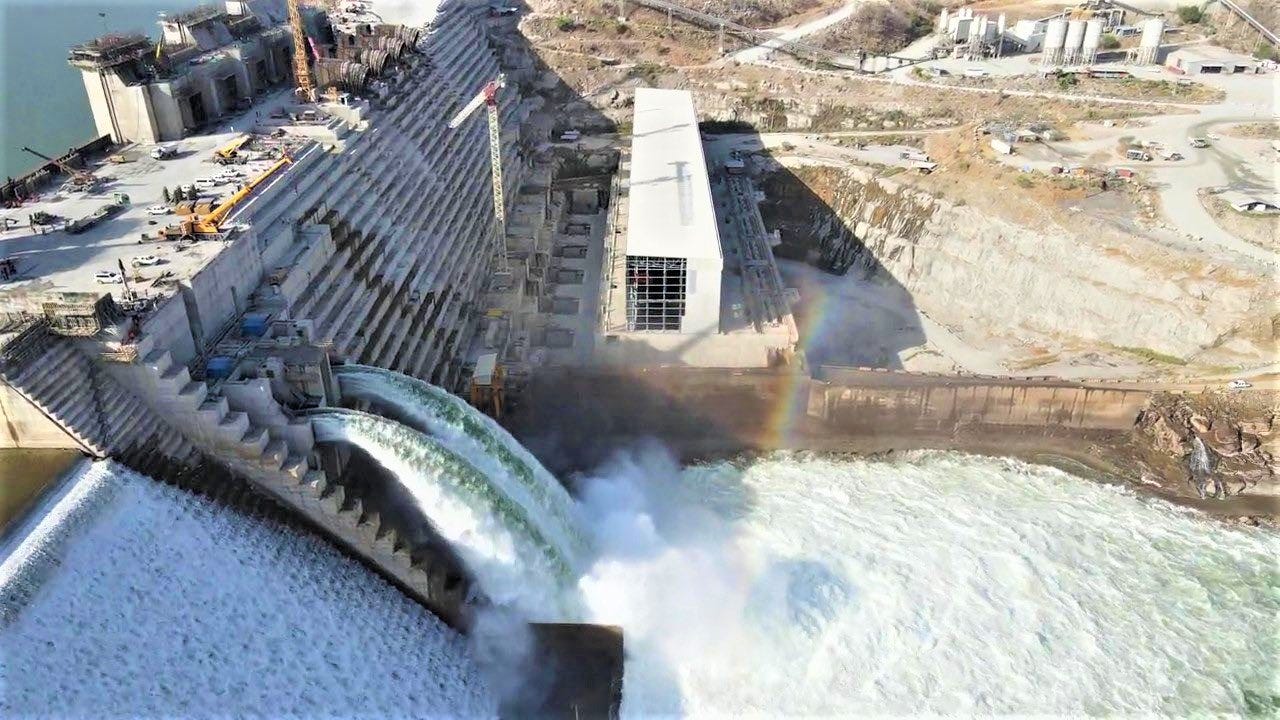
Trump Proposes Mediation in Nile Dam Dispute, Backs Egypt’s Position
President Donald Trump has announced plans to restart U.S. mediation in the long-running dispute over Ethiopia’s Grand Ethiopian Renaissance Dam, appearing to align with Egypt’s concerns while proposing that Ethiopia export electricity to its downstream neighbors.
In a letter to Egyptian President Abdel Fattah El-Sisi, Trump outlined a framework that would guarantee predictable water releases during droughts for Egypt and Sudan, while allowing Ethiopia to generate substantial electricity that could be given or sold to Egypt. The proposal effectively reframes the massive hydroelectric project as a regional power plant rather than solely an Ethiopian strategic asset.
Trump declared that “no state in this region should unilaterally control the precious resources of the Nile, putting its neighbors at a disadvantage,” echoing Egypt’s longstanding position on the dam. He described resolving the GERD dispute as “at the very top of my agenda” and expressed hope the matter would not escalate into military conflict.
The GERD, completed in 2025, stands as Africa’s largest hydroelectric project with a generating capacity of 6,450 megawatts. While Ethiopia views the dam as essential for economic development and providing electricity to millions of its citizens, Egypt and Sudan regard it as an existential threat to their water security. Previous negotiations led by the African Union have failed to produce a comprehensive agreement satisfactory to all parties. The ongoing war in Sudan has derailed tripartite efforts to resolve the dispute.
Iraqi Army Assumes Full Control of Ain al-Asad Base Following U.S. Withdrawal
U.S. forces have completed their withdrawal from the Ain al-Asad air base in western Iraq, with the Iraqi army taking full control of the strategically important facility on Saturday. Iraqi Army Chief of Staff Lt. Gen. Abdul Amir Rashid Yarallah oversaw the transfer of duties to Iraqi military units, and Iraq’s Ministry of Defense confirmed that all American personnel and equipment have departed the base.
The withdrawal follows a 2024 agreement between Washington and Baghdad to wind down the U.S.-led coalition that has been fighting ISIS in Iraq. The handover had originally been scheduled for September 2025 but was delayed due to developments in neighboring Syria. A small contingent of 250 to 350 American advisers and security personnel had remained at the base temporarily before the final withdrawal.
While the U.S. military has not issued an official statement regarding the departure, American forces continue to maintain a presence in northern Iraq’s Kurdish region and in Syria, where they remain engaged in counter-terrorism operations.
The development comes amid rising tensions in the Middle East, prompting a wider regional American military withdrawal. Washington recently withdrew some military personnel from its key bases in the region, most notably the Al Udeid airbase in Qatar, over concerns of an Iranian attack. Tehran had previously threatened to attack American military assets across the region in the event of an American strike on Iran in response to the ongoing protestor crackdown.
“Tehran has told regional countries—from Saudi Arabia and UAE to Turkiye—that US bases in those countries will be attacked if US targets Iran … asking these countries to prevent Washington from attacking Iran,” an unnamed senior Iranian official told to Reuters.
Armenia’s Improving Regional Ties Could Boost Economic Prospects
Armenia is experiencing a notable thaw in its relations with regional neighbors, a diplomatic shift that international observers believe could bring significant economic benefits to the South Caucasus nation.
Relations between Armenia and Turkey are showing substantial improvement, with the Turkish government reportedly considering reopening its land border with Armenia, which has been closed for decades since April 3, 1993. More significantly, progress in the peace process with Azerbaijan, following years of conflict over the Nagorno-Karabakh region, appears to be gaining momentum.
Fitch ratings agency has taken notice of these diplomatic developments, suggesting that meaningful progress in negotiations with Azerbaijan could lead to positive action on Armenia’s credit rating through a sustainable decline in geopolitical risk and domestic political uncertainty. The agency raised the Outlook on Armenia’s Long-Term Foreign-Currency (LTFC) Issuer Default Rating (IDR) from Stable to Positive; it noted the potential upside to Armenia’s medium-term growth forecast emerging from sustained implementation of a peace agreement with Azerbaijan and the reopening of the Turkish border.
However, Fitch cautioned that any derailment of the current peace process could have the opposite effect, potentially leading to negative rating action by increasing geopolitical risks and undermining political and economic stability. The developments represent a delicate balancing act for Armenia as it navigates its relationships with neighbors after decades of tension and conflict.
Oasis Media Collective goes where the headlines don’t by reporting on overlooked conflicts and geopolitical shifts with a data-driven lens. Follow for more to receive our intelligence briefs, visual explainers, and deep-dive reporting.
Have questions or want to discuss opportunities directly? Connect with us here.
,