


BEFORE YOU SCROLL
“Skinimalism” has been an international viral trend, sold as “do less, spend less.”
But the numbers tell us the opposite: American skincare sales are growing, and a “minimalist” skincare brand just sold for up to $1 billion.
That said, the core idea of skinimalism is there; you just have to do it right.
👋
Since 2023, I’ve dropped more money than I care to admit on skincare.
Skin issues like acne and hyperpigmentation have been persistent ones for me since I was a teenager and into young adulthood, and with them have come far too many visits to the dermatologist and far too many swaps from one set of skincare products to another.
And I’m far from alone: Advanced Dermatology reports that Americans spend on average $897 per year on their appearance, $492 of which goes to skincare alone. For women, the average is even higher: $600.
For some, the answer to this financial skincare craze is obvious: simply do less.
That’s what Hailey Bieber’s Rhode was all about: selling just four essential products (cleanser, essence, serum, moisturizer).
And it was clearly an idea that resonated with people: net sales for the 12 months ending March 31, 2025 were $212 million, according to an announcement from e.l.f. Beauty, in which it said it would acquire Rhode for up to $1 billion.
It’s this minimalistic approach to skincare, “skinimalism,” that has financially pressed youth going all-in.
But while “less is more” may make sense for your face, does that also play out when it comes to your wallet?
WHAT EVEN IS SKINIMALISM?
“Skinimalism” is exactly what it sounds like: a simplified skincare routine that focuses on just a few core products instead of a long list.
The idea is both for health and financial reasons: dermatologists routinely say that your face doesn’t need to be splattered with one skincare product after the next, and (in theory) that means less money leaving your bank account when you walk out of Sephora.
The numbers back it up. A 2025 Northwestern University study looked at 100 skincare videos on TikTok, featuring mainly teenage creators. What they found was that each video on average recommended six products with a combined average cost of $168; some routines even went beyond $500. Of those 100 videos, the top 25 most viewed had an average of 11 ingredients that could irritate your skin.
But in practice, skinimalism falls short because people conflate four things:
Fewer products used.
Fewer products bought.
Lower spending.
Less makeup.
Most skinimalism advice assumes these are all the same thing. When you hit the checkout, they aren’t.
IS GEN Z ACTUALLY SPENDING LESS?
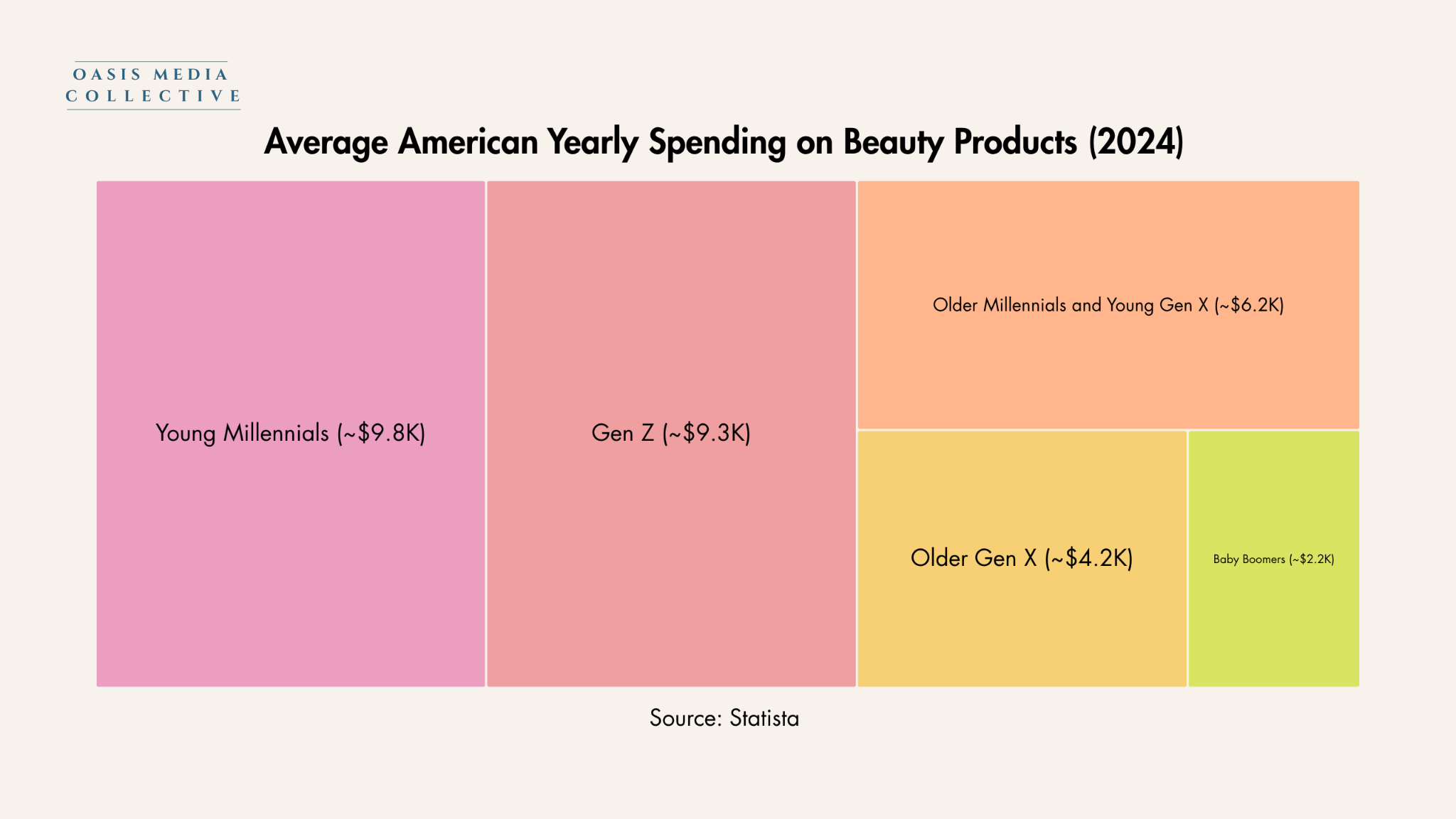
The U.S. BLS reports that American personal care spending per household rose from $786 in 2019 to $978 in 2024.
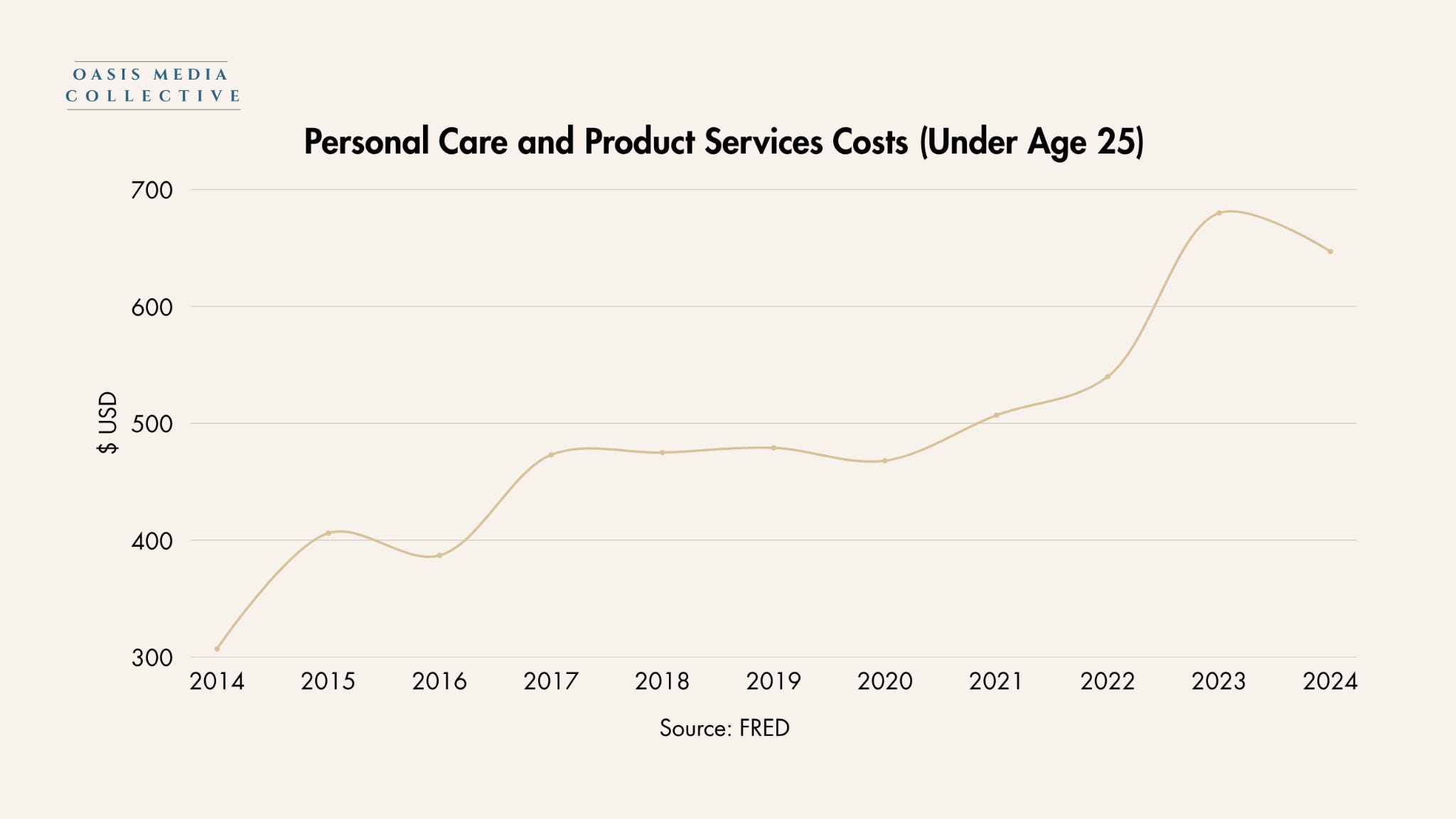
And when it comes to younger people, spending on personal care products and services for households headed by someone under 25 went up by roughly 38% from 2020 to 2024, according to numbers from the Federal Reserve Bank of St. Louis.
On top of that, BeautyMatter reported that American female teen beauty spending hit a record high in spring 2025: $374 annually, up 10% year-over-year.
If skinimalism was working in practice, you’d expect the entire industry to be moving toward fewer products on shelves. But the numbers show the exact opposite: Circana reported that U.S. mass skincare units grew 6% in 2025, while prestige skincare units grew by double digits in the first half of 2026.
All of this, despite IML Research stating that 75% of consumers now purchase three or fewer skincare products.
FOLLOW THE RECEIPTS
What seems to be a paradox is actually very simple: fewer products doesn’t automatically mean lower prices.
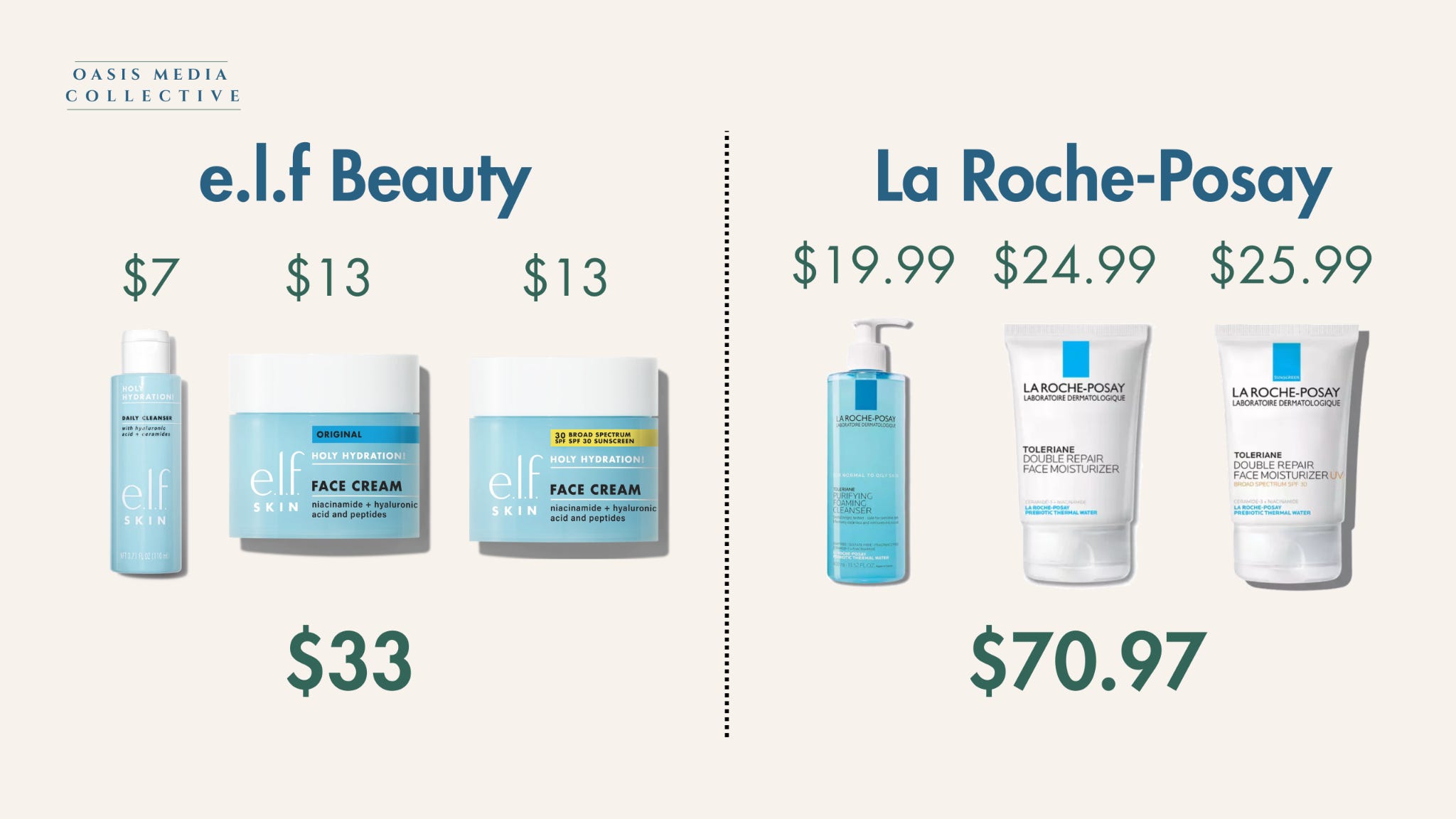
And it all comes down to the exact products and brands you select from. A cleanser from e.l.f. can cost you $7, while a similar one from La Roche-Posay can be up to $20. And while different sizes and ingredients obviously play a role, for those financially pressed, it generally makes more sense to opt for the cheaper options. Especially since dermatologists agree you only need to apply a small amount of these products to your face, meaning they could last you a long time.
The takeaway: skinimalism only saves money if what you cut costs more than what you swap in. And that’s an angle the movement hasn’t emphasized enough.
THE OASIS GAME PLAN
This is not financial advice.
Just because the numbers cast doubt on it in practice doesn’t mean skinimalism is a myth.
Intentional spending and a more selective approach to skincare shopping are what will save your face and your wallet:
Pay for Function, Not the Fancy Bottle. The AAD has said that expensive isn’t necessary. So while big name brands, especially those with celebrity backing, may seem to be superior, even brands you can find at your local pharmacy will still get the job done for your skin and help your credit card.
Beware the Bundle. A “four-product essentials kit” is still a four-product purchase. If you’re able to buy the same products individually and for less, always go for that option.
Patience is 🔑. Don’t expect your new minimalistic skincare routine to automatically do the trick. SKIN|CYCLES states that it typically takes one full cycle, lasting 4-6 weeks, before you see noticeable effects. So if your simpler routine takes a while, just don’t throw it out the window and default back to the pricier products, thinking they’ll accelerate the process.
Be Minimalistic, Not Reductive. Don’t let a trend tell you what to cut. Everybody’s skin is different, so your routine should be tailored to your needs.
TL;DR
Skinimalism is a real marketing wave, but unproven as a spending cut. That said, it can work in practice when you take a more selective approach to your purchases.
SAY LESS
Skinimalism: Cutting back on the number of skincare products and focus on the bare essentials.
AAD: American Academy of Dermatology.
Join the Collective decoding markets, policy, and power for the investors of tomorrow.
To partner with Oasis Media Collective, contact here.