


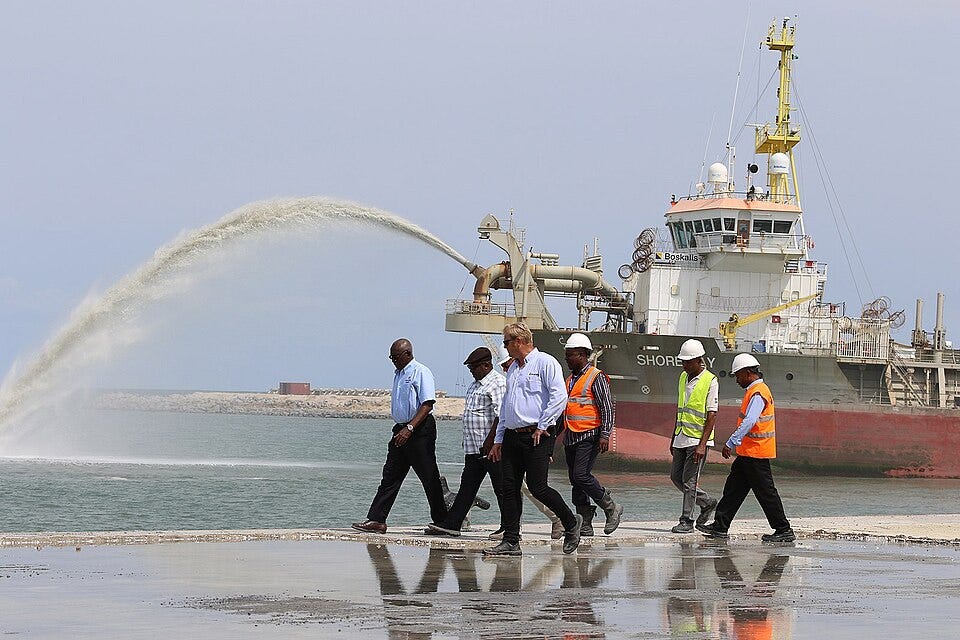
On September 14, history was made in Africa as the continent’s largest oil refinery—the Dangote Refinery in Nigeria—went public for the first time. With a fundraising goal of ₦2.15 trillion ($1.6 billion), the initial public offering (IPO) puts the company at a valuation of ₦65.22 trillion ($47.8 billion).
Taken all together, it marks the biggest IPO in African history, so much so that some Nigerian trading platforms crashed amid the flood of users looking to buy in.
The IPO is making major headlines far beyond West Africa, and Aliko Dangote, the businessman behind the refinery, has already revealed he has his eyes set on listing the company on the U.S. stock exchange.
Here is a guide decoding both the math and the significance behind this record-breaking IPO.
What is the Dangote Refinery?
Announced in 2013 with construction beginning in 2016, the Dangote Refinery was officially inaugurated in 2023 in Lekki, near Lagos.
At a cost of roughly $20 billion, the refinery currently operates at a capacity of 700,000 barrels per day as of mid-2026, making it the largest in Africa and supplying effectively all of Nigeria’s domestically produced petrol.
The facility has flipped the region’s historical energy dynamic. Nigeria previously exported crude oil while importing refined fuel, a costly paradox that the refinery was built to break.
The Numbers Behind the IPO
The IPO offers 4.1 billion new shares at ₦525 ($0.40) each on the Nigerian Exchange Group (NGX). The subscription period opened on September 14 and is scheduled to close on October 13, with trading projected to begin in November.
The public sale has been dubbed an “IPO for the people,” given that the minimum subscription is just 10 shares, allowing retail investors to participate for as little as ₦5,250 ($4.00). However, this public float represents only 3.3% of the company; Dangote’s entities retain roughly 78%, while 6.6% remains under the state-owned Nigerian National Petroleum Company Limited (NNPC).
Why Now?
In its initial two years of operation, the Dangote Refinery posted losses accumulating to nearly $2 billion across 2024 and 2025. However, 2026 brought a major turnaround: the refinery posted $1.82 billion in profit in just the first half of the year.
The ensuing war in Iran choked off critical Gulf oil supplies to global markets, forcing nations across Africa and Europe to pivot to alternative suppliers, chief among them Nigeria. This uptick in demand coincided with a surge in energy prices, driving refinery margins as high as $33.7 per barrel in Q1 before cooling to roughly $18 per barrel in Q2.
Ongoing turmoil in the Red Sea is further sharpening demand, meaning the IPO comes at a high point for the business. However, a long-term ceasefire in Iran could eventually cool the refinery’s financial reach.
Why It Matters Globally
Nigeria’s shift from a crude exporter to a refined-fuel supplier has made it a key energy lifeline for Europe. The Dangote Refinery has become Europe’s largest external supplier of jet fuel, offsetting lost supply from the Gulf.
Given its massive capacity and geographic proximity to Europe, the refinery is likely to attract external investment from European entities looking to bolster production and secure exports, particularly ahead of the winter months.
Beyond Europe, the IPO is poised to attract deep-pocketed energy investors from the Gulf. In June, Dangote met with ADNOC Group CEO Sultan Ahmed Al Jaber in Abu Dhabi to discuss collaboration on joint energy projects.
With Dangote currently in talks to construct a similar facility in Kenya to service East Africa, the refinery’s financial weight is set to translate into significant diplomatic leverage across the continent.
What’s Next?
The refinery’s long-term success will hinge on everything from the NNPC’s ability to reliably supply domestic crude to how the geopolitical landscape evolves.
The Dangote Refinery IPO is nothing short of historic. Whether the refinery itself remains a central fixture in African history will ultimate be decided on the trading floor.
Join the Collective decoding markets, policy, and power for the investors of today and tomorrow.
To partner with Oasis Media Collective, contact here.