


KEY FACTS
WHAT HAPPENED? Gold prices have surged since 2025, converting Sudan’s mines into a war-finance engine that has attracted both Russia and Ukraine
WHY IT MATTERS? The higher the price climbs, the more economically rational it becomes for foreign powers to engage with Sudan
WHAT’S NEXT? With prices still elevated and enforcement uneven, the cycle shows no signs of breaking
When gold breached $3,000 per ounce in early 2025, financial markets cheered. By year’s end, Reuters reported the metal had surged 64% and prices have climbed a further 17% into 2026. Now, the Iran war is spurring that upward trend forward, as investors worldwide flock to gold as a safe haven asset.
For investors, it is the commodity story of the decade. For Sudan, it’s something far grimmer: a strategic amplifier prolonging one of the world’s most destructive conflicts, now marking its third anniversary this month.
The forces driving gold’s ascent are well understood. Central banks added 1,045 tonnes to reserves in 2024 alone, with a World Gold Council survey finding that 95% of central bankers expected holdings to increase further. The result is a metal that has become less a commodity and more of a sanctions-proof reserve currency, and that quality is precisely what makes it so dangerous in conflict zones.
Sudan’s Golden War Economy
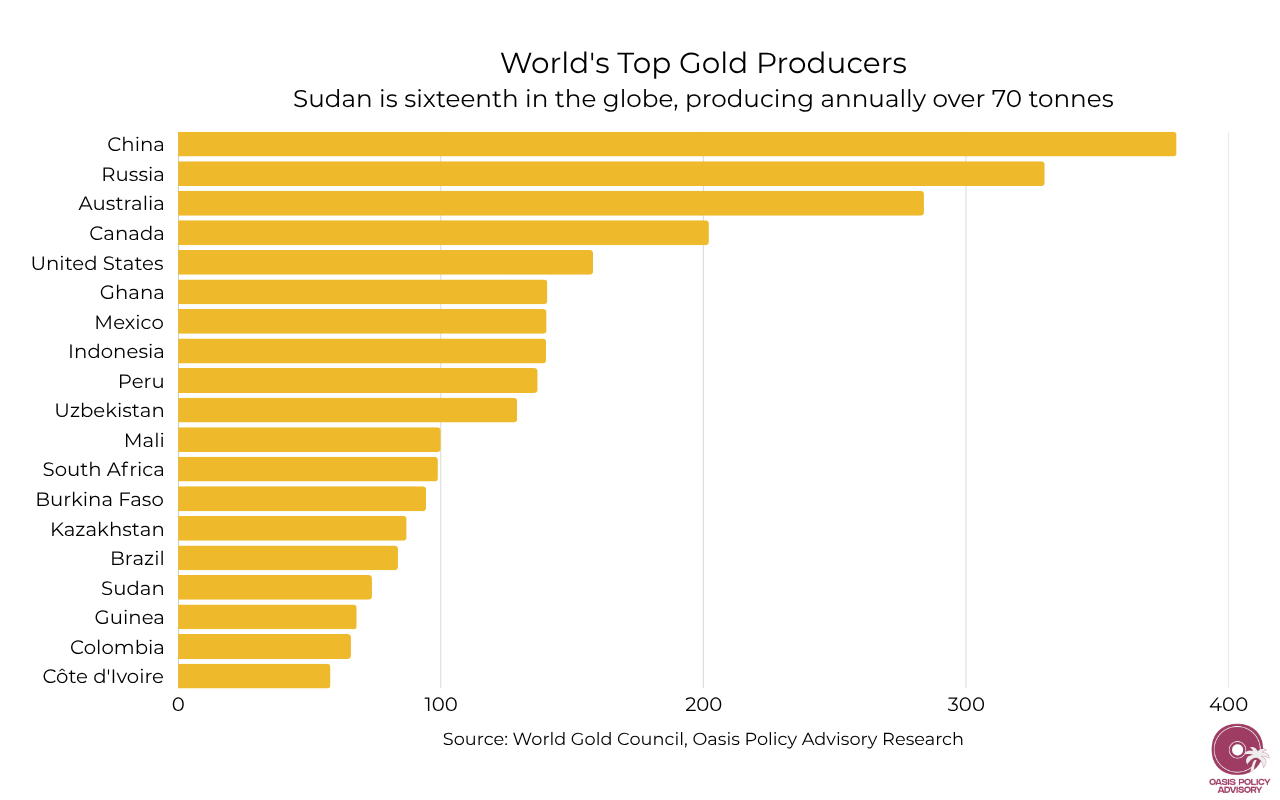
Sudan produces roughly 70 tonnes of gold annually, generating $1.57 billion in official export revenues in 2024. But official figures are almost certainly an undercount; estimates suggest smuggled gold runs at roughly four times the legal export volume. Sudan ranks fifth across the continent in terms of gold production and sixteenth worldwide.
It’s for this reason the ongoing war has turned Sudan’s mining sector into a de facto battlefield. Both the Sudanese Armed Forces (SAF) and the Rapid Support Forces (RSF) extract revenue through direct mine control, militia taxation, and smuggling protection rackets. The RSF appears structurally more dependent on gold, particularly given its domination of Sudan’s western territories, where the country’s gold wealth is plentiful.
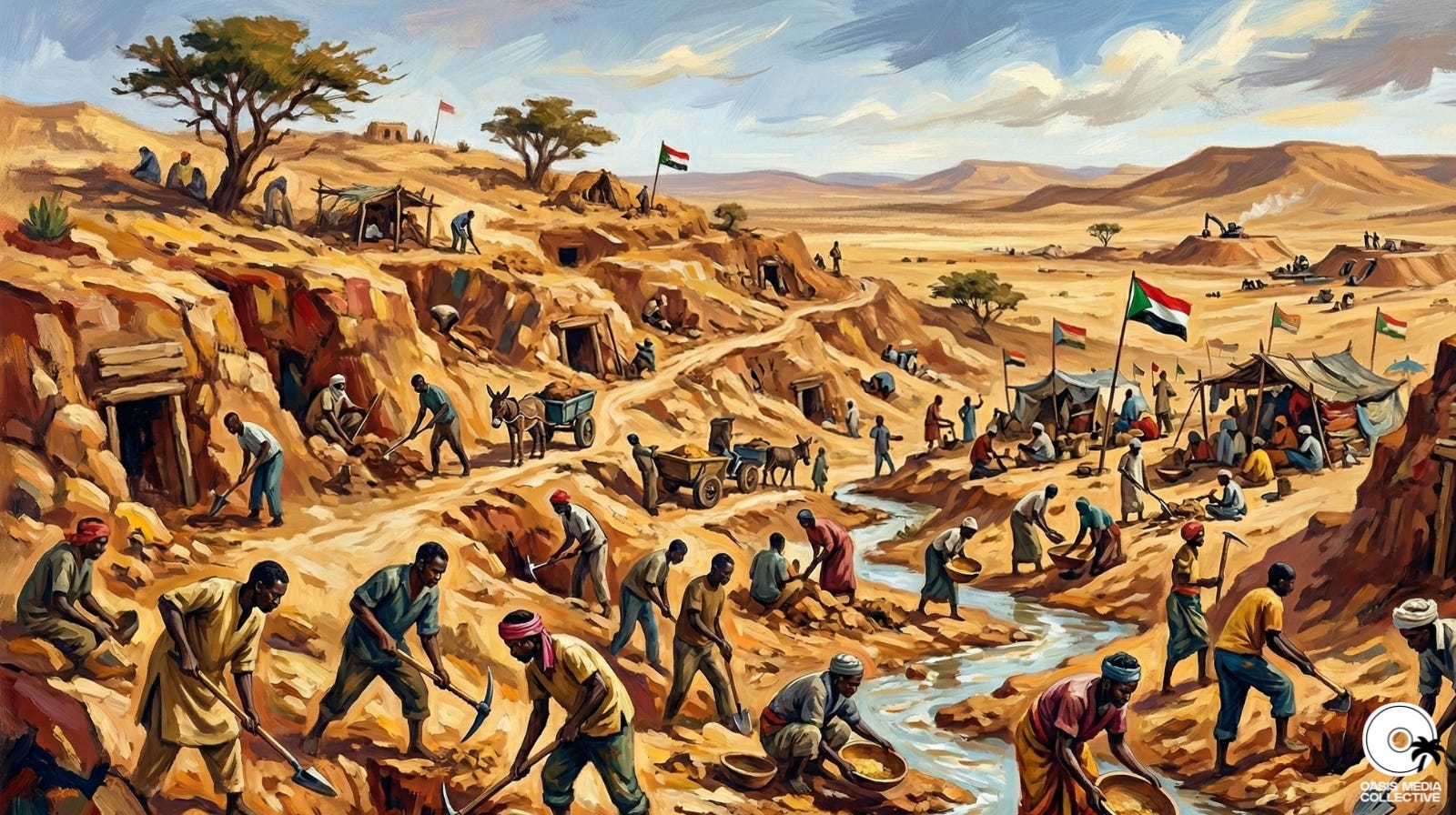
The economics are brutally straightforward. Higher gold prices raise the stakes of controlling a minefield or smuggling corridor, making territorial competition more significant than ever. Artisanal mining, the dominant mode in Sudan, is the primary interface between armed actors and the gold economy and it scales with price. When bullion rises, more miners arrive, militia “protection” becomes more lucrative, and the incentive to contest corridors intensifies. Sudan is not just a country with a gold problem; it’s a country where the battlefield and the goldfield increasingly overlap.
The Forgotten Russia-Ukraine Connection
Yet the link between Sudanese gold extends far beyond the realm of Northeast Africa. Russia transferred 40% of its National Welfare Fund holdings into gold in 2022, a pre-emptive hedge against Western sanctions that has since helped insulate Moscow from complete economic isolation. It now holds approximately 2,333 tonnes in reserves, up roughly 125% from 2013.
On the day Russia invaded Ukraine in February 2022, RSF commander Mohamed Hamdan Dagalo flew to Moscow. Within weeks, large quantities of Sudanese gold were reportedly transferred to Russia via the Moscow-backed paramilitary Wagner Group, which had embedded itself in RSF networks.
Investigative reporting has traced alleged shipments routed through Syria, with proceeds helping finance Russian operations in Ukraine. The EU sanctioned Meroe Gold and related Russian-linked entities, but enforcement has remained uneven; gold is compact, fungible, and easily re-labeled after refining.
Ukraine has responded in kind. Following an unscheduled September 2023 meeting between SAF General Abdel Fattah al-Burhan and President Zelenskyy, where both discussed countering groups “financed by Russia”, Ukrainian forces were allegedly deployed in support of the SAF. Footage surfaced of Ukrainian drone strikes targeting Wagner personnel near gold mining sites. The Guardian described it as part of an “emerging campaign” by Kyiv to impose costs on Russian networks beyond Eastern Europe, with Africa becoming a key battleground.
The Feedback Loop
The most dangerous insight here is the self-reinforcing cycle at work. Higher prices attract more miners, raise the value of militia protection, and improve the payoff from smuggling, all without any shift in political conditions. Sanctions have struggled to interrupt this system because gold’s physical properties make it uniquely hard to police.
For investors, this dynamic carries a specific warning: gold’s safe-haven status can itself destabilize producer states when armed actors monetize a price rally faster than governments can tax it. Sudan is the clearest current example, but the pattern holds across conflict-affected Sahelian producers.
The critical variable to watch is not price alone, but whether higher gold prices coincide with deeper smuggling volumes, increased mine-area violence, and sharper Russian-Ukrainian covert competition in Africa. All three are currently trending in the same direction. One ounce at a time, the bullion rally is being converted into something markets rarely price: the extended duration of wars that might otherwise have ended.
This reporting may be cited with attribution to Oasis Media Collective. For licensing, republication, or extended use, contact here.