

Welcome to the Friday edition of Insights Dispatch, our flagship brief of the three latest developments connecting Africa and the Gulf
SOUTH AFRICA: $5.8 Billion Hydrogen Project Moves Closer to Production
WHAT HAPPENED?
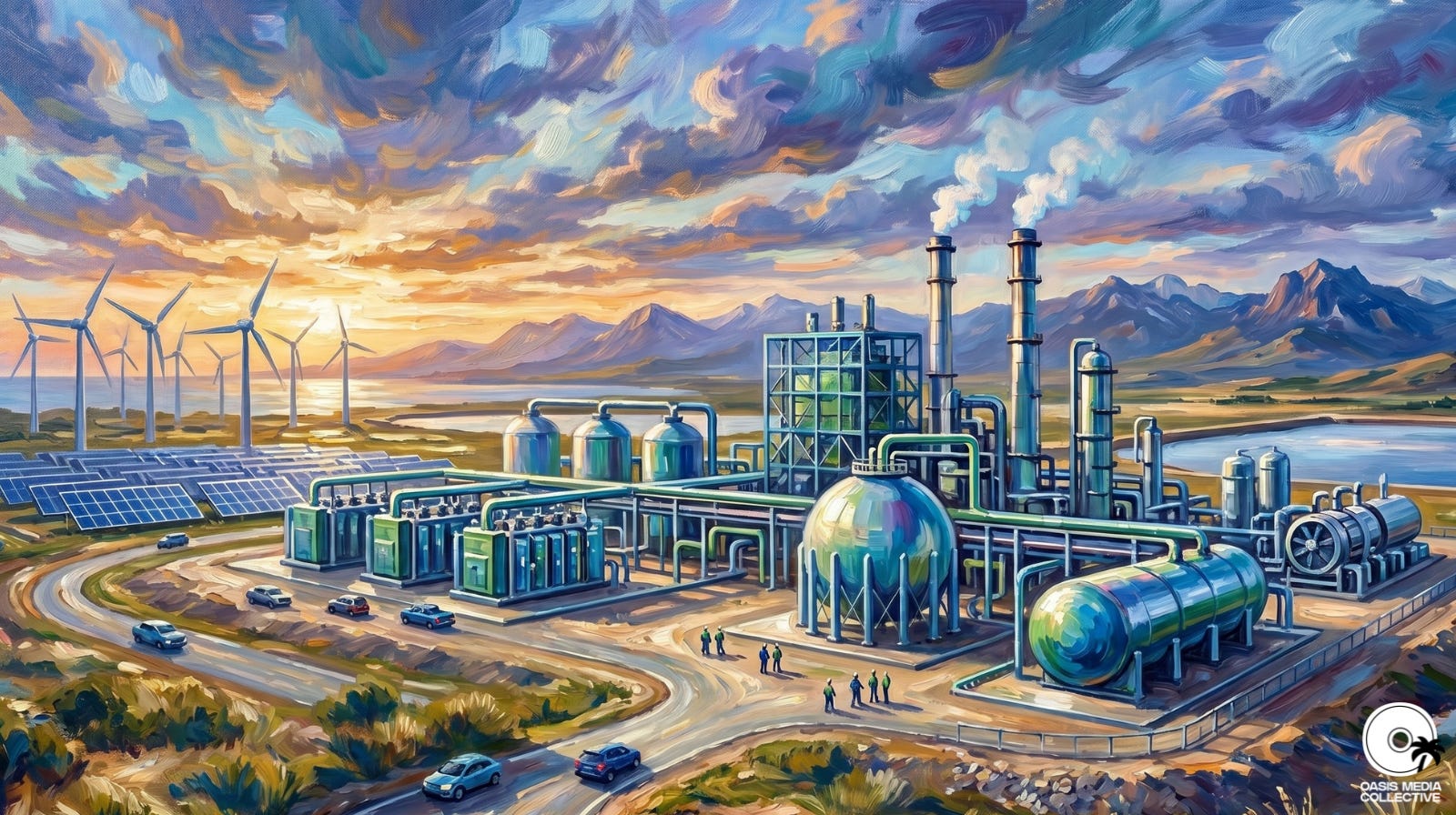
South Africa’s flagship clean energy project, Hive Hydrogen, selected a $1 billion electrolyzer and ammonia production solution able to produce one million tonnes of green ammonia annually. The project, worth $5.8 billion, will be powered by both wind and solar energy, reducing electricity expenses by 25%.
WHY IT MATTERS?
Green ammonia has increasingly become an important maritime fuel source and is a core focus of various hydrogen projects worldwide, of which the Hydrogen Council and McKinsey estimate to be over 500. South Africa’s recent move positions it as a leading hydrogen powerhouse in Africa.
WHAT’S NEXT?
Pretoria hopes that the project will open up new investment opportunities, providing pathways for Gulf investors to collaborate. The UAE in particular has much to gain; with Abu Dhabi emerging as a leading investor in South Africa’s maritime sector, the shipping value provided by Hive Hydrogen may deepen its maritime partnership with Pretoria.
DR CONGO: Government-Backed Incursion In Cobalt Deposit
WHAT HAPPENED?
Congolese businessman Fatou Ntete Etumba launched a takeover of a large section of Eurasian Resources Group’s cobalt deposit near the city of Kolwezi. Etumba claimed that he received government authorization to do so, with the aim of cleaning up the surrounding river basin. ERG however has described the incursion as an “illegal invasion”, according to Bloomberg.
WHY IT MATTERS?
Despite the DR Congo’s vast mineral wealth, the country’s rich deposits are also fraught with insecurity, a trend seen elsewhere in Sub-Saharan Africa. For Gulf mining companies, it highlights the significance of security initiatives tied to investments. The UAE, for instance, is reportedly backing a security force in DR Congo to protect mines.
WHAT’S NEXT?
Gulf investors are likely to watch the incident unfold to guide their own security assessments regarding future mining projects and investments in DR Congo and elsewhere in the region.
NIGER: Government Secures 45% State in China-Backed Pipeline
WHAT HAPPENED?
After rounds of negotiations, the government of Niger gained a 45% stake in the West African Oil Pipeline Company, the organization which oversees the Niger-Benin crude export pipeline, majority-owned by China.
WHY IT MATTERS?
The move secures greater export revenues to Niger, serving as a strategic income stream for a military regime that still remains largely internationally isolated. The move also marks the wider trend of West African governments asserting greater control over their natural resources and the adjoining infrastructure.
WHAT’S NEXT?
Such steps toward resource nationalism will still remain unrealized without the supporting infrastructure to tap into resources. As Niger and other West African countries seek to diversify partners beyond Russia and China, the Gulf states are positioned well to provide backing.
This reporting may be cited with attribution to Oasis Media Collective. For licensing, republication, or extended use, contact here