


Welcome to the Monday edition of Insights Dispatch, our flagship brief of the three latest developments at the intersection of markets, policy, and power across the Middle East & Africa
SOUTH AFRICA: Critical Mineral Discussions Hosted with US
WHAT HAPPENED?
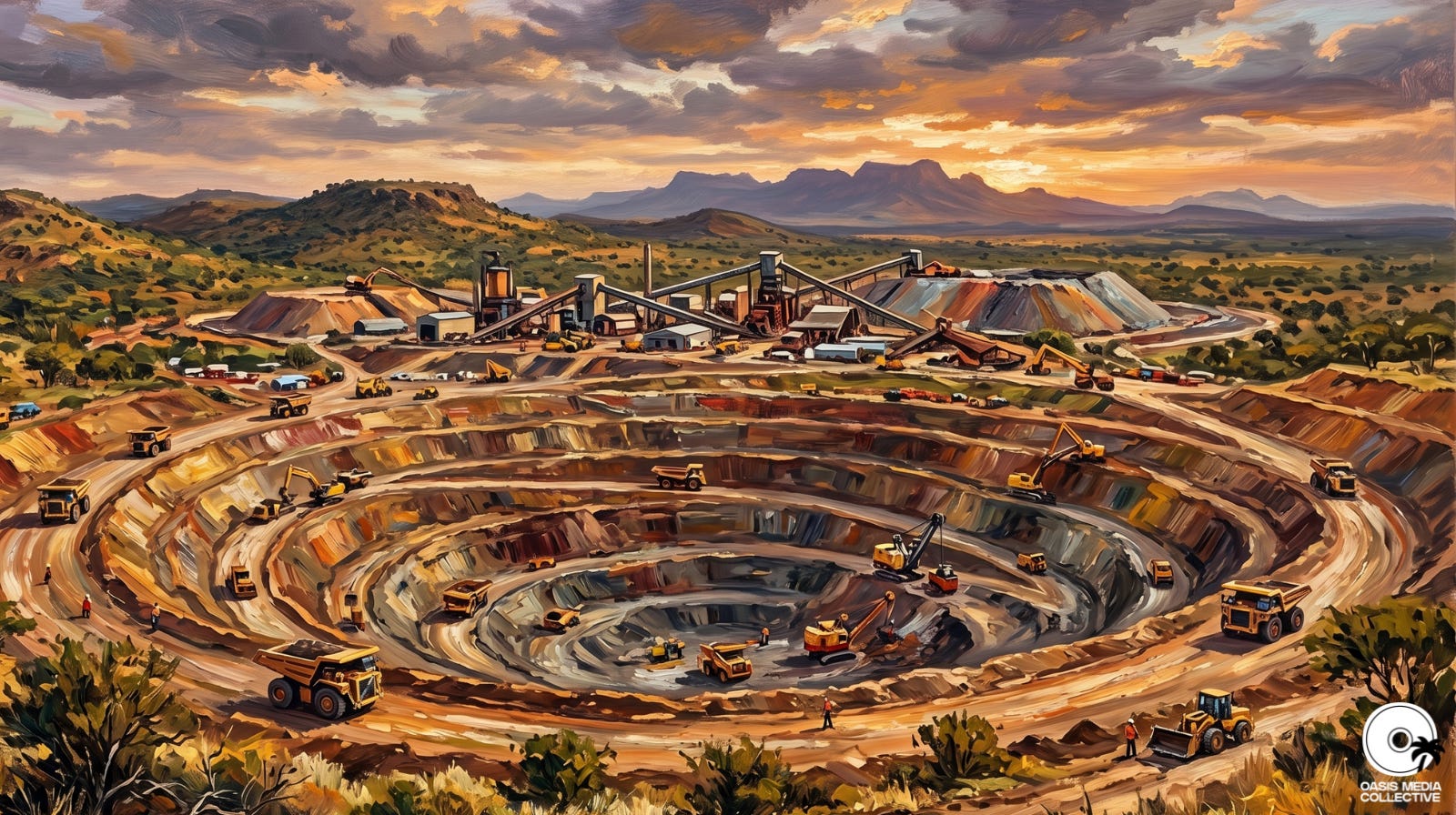
Preliminary discussions took place in Johannesburg last Wednesday between South Africa and the United States, focused on joint critical minerals projects. Hosted by the Washington-based think tank the Center for Strategic and International Studies, the discussions identified various South African mining projects for the US to collaborate with.
WHY IT MATTERS?
The discussions mark the thawing of relations between South Africa and the US, which have been turbulent since President Donald Trump took office last year. It also marks another American push to break China’s grip over African critical minerals, with South Africa being a major producer of minerals such as manganese.
WHAT’S NEXT?
A list of priority projects is currently in development, which would include the Phalaborwa rare earths project. Further discussions are likely to take place this summer to formalize the list.
MALI: French Gold Contractor Withdraws
WHAT HAPPENED?
Gounkoto Mining Services, a Malian mining contractor linked to French Bouygues Construction, will not have its contract renewed with Canadian mining organization Barrick Mining in 2026. The withdrawal has resulted in layoffs of 600 personnel.
WHY IT MATTERS?
Mali is Africa’s second largest gold producer, producing roughly 100 tonnes yearly; the Loulo-Gounkoto complex, owned by Barrick Gold, is among the continent’s most prominent gold mines. Yet, operations have slowed down severely, leading to a 23% drop in Mali’s gold output last year.
WHAT’S NEXT?
With Mali having recently faced a prominent militant attack, it’s unlikely that Barrick Gold or any other mining company will be racing back to Mali to kickstart operations once more, over fears of destabilization.
SUDAN: Urea Fertilizer Up $11 As Iran War Destabilizes Agriculture
WHAT HAPPENED?
Sudan is experiencing acute agricultural price pressures due to the Iran war. A 50 kilogram (110 pound) bag of urea fertilizer is up $11 from last year; meanwhile, vegetables and dairy have risen by roughly 40%. The price spikes are attributed to supply chain shortages by the Iran war, given that the Gulf supplies over half of Sudan’s fertilizer.
WHY IT MATTERS?
Agriculture has long been Sudan’s leading sector and has become vital both for farmer communities and everyday citizens as the people grapple with a famine crisis impacting millions. Such price jumps are contributing to more expensive agricultural production, worsening the crisis.
WHAT’S NEXT?
As we move into the summer months, agricultural demand is likely to rise in conjunction with famine spreading across the nation. Unless the Iran crisis ends in the immediate short-term, Sudan’s agricultural difficulties are likely to continue.
This reporting may be cited with attribution to Oasis Media Collective. For licensing, republication, or extended use, contact here