


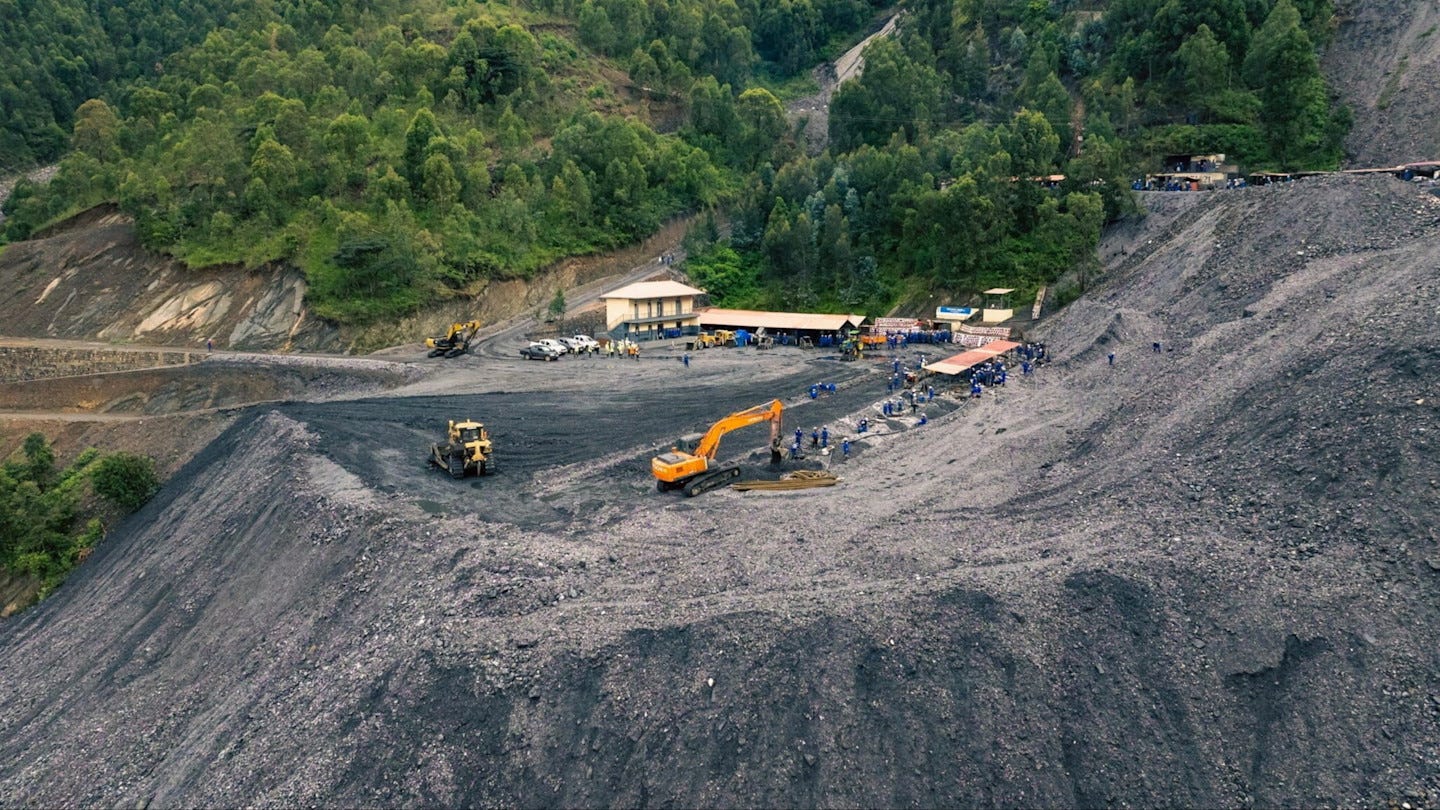
While Washington and Beijing trade blows over semiconductors and EVs, a quieter, high-stakes battle is unfolding in the granite hills of Rwanda. The Nyakabingo mine, now Africa’s largest tungsten producer, has become a frontline in the U.S. effort to de-risk from Chinese supply chains. But a look into the data and the "3T" (tin, tungsten, tantalum) corridors reveals a complex web of geopolitical maneuvering and persistent transparency gaps.
For the U.S. defense sector, tungsten goes beyond just a critical mineral. It’s a necessity for armor-piercing ammunition and aerospace heat shields. Currently, China controls roughly 83% of global tungsten mine production. With Beijing’s export restrictions on rare earth minerals having only recently been relaxed, Washington is turning to Africa to counter Chinese dominance in global mineral trade.
It’s in this competitive theater that Nyakabingo—which yields more than 1,200 tons of high-grade tungsten annually—is a battleground. Operated by U.S.-backed Trinity Metals Group, the mine’s output has significantly scaled up since its acquisition by Trinity in 2022.
Accounting for 15% of global tantalum production, Rwanda is accelerating efforts to transform its mining industry into a major global source of critical minerals. Yet this ambition comes with a cost. United Nations experts and industry observers note ongoing concerns about mineral flows from conflict-affected eastern DR Congo being mixed with Rwandan production, pointing to a potential laundering scheme into the Rwandan supply chain involving the Congolese M23 rebel group. An investigation by Global Witness revealed that Rwandan minerals exporter African Panther Resources Limited purchased coltan smuggled from the DRC into Rwanda by M23, which demanded a 15% sales tax.
For the U.S. and other Western powers hoping to bet big on Rwanda’s mineral supply, this creates a moral and legal paradox: funding a "clean" alternative to China that may be fueled by the very regional instability the West claims to oppose.
For more on the intersection of geopolitical strategy and venture capital across Africa, follow and share Oasis Media Collective.