


Welcome to the Wednesday edition of Insights Dispatch, our flagship morning brief overviewing the three latest geopolitical & market developments connecting Africa to the world.
LIBYA: Russian Shadow Fleet Towed
WHAT HAPPENED?
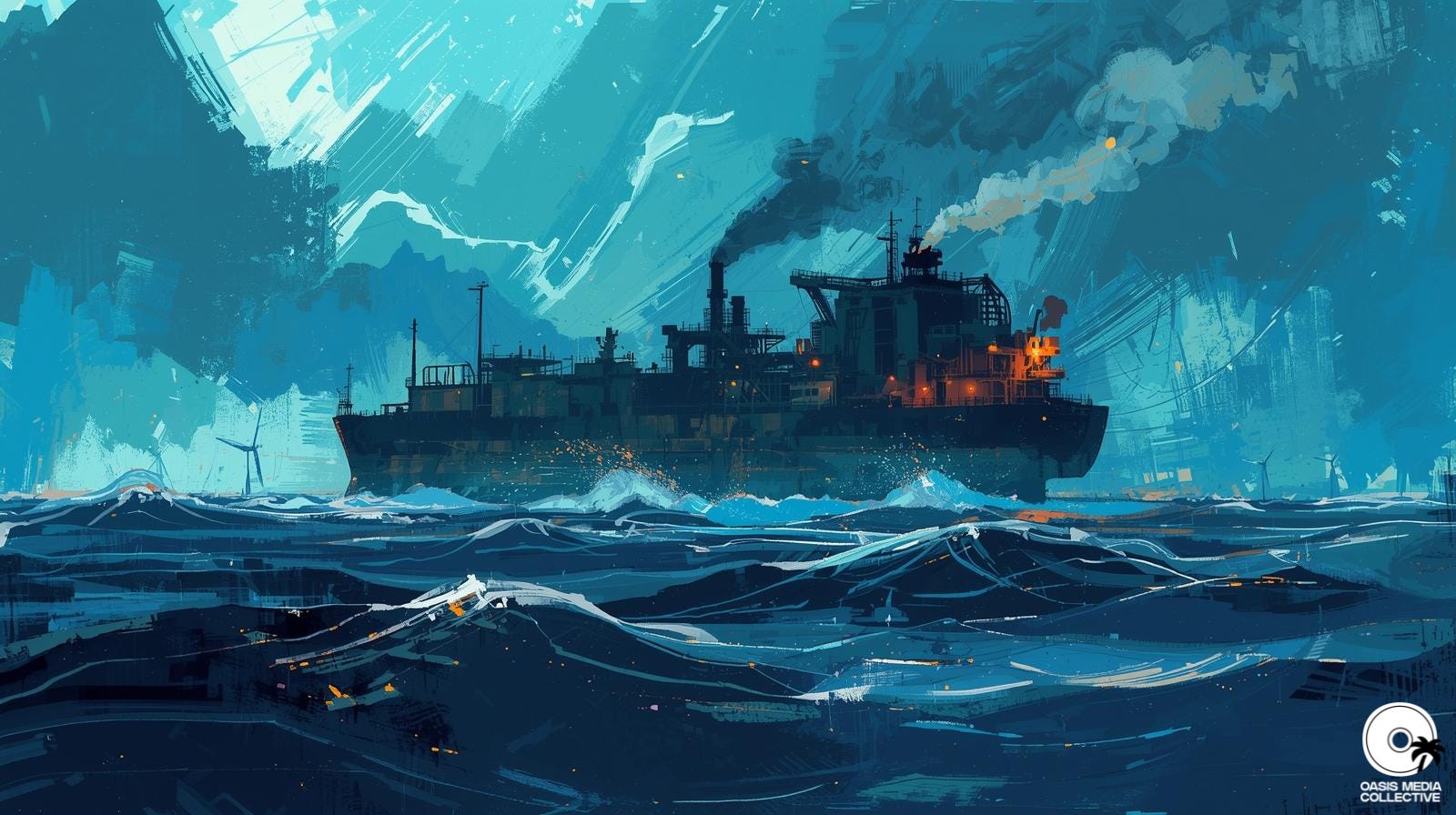
Libya is towing a damaged Russian shadow fleet LNG tanker drifting off its Mediterranean coast after a drone strike. Known as the “Arctic Metagaz,” the tanker was towed in coordination with Eni to prevent an environmental disaster.
WHY IT MATTERS?
With global attention fixed on the Strait of Hormuz and Red Sea disruptions, the Mediterranean has received far less attention. Russia is exploiting this gap, continuing naval operations and energy exports through the region, signaling a strategic shift in its maritime approach.
WHAT’S NEXT?
More shadow fleets are likely to emerge as global oil markets and supply chains remain volatile, due to the Iran crisis. Libya’s own oil exports may stagnate, constrained by concerns over proximity to these vessels.
MOZAMBIQUE: Ukraine’s New Energy Lifeline
WHAT HAPPENED?
Ukraine’s prolonged conflict with Russia has slashed its domestic gas production, pushing Kyiv to seek liquefied natural gas (LNG) imports from Mozambique and other African gas producers to address acute energy shortages.
WHY IT MATTERS?
With energy supply chains under pressure, Ukraine is diversifying its sources far beyond Europe. Africa’s gas giants—especially Mozambique—are being eyed as strategic suppliers. This marks a shift in energy flows that could deepen African producers’ influence while tying African LNG markets more directly to European energy security dynamics.
WHAT’S NEXT?
Expect heightened diplomacy between Kyiv and African energy exporters, potential security‑linked energy deals, and renewed investor scrutiny of African LNG projects as Europe and Ukraine seek alternatives to both Russian and Gulf gas.
SUDAN: War Spreads to Ethiopian Border
WHAT HAPPENED?
The Rapid Support Forces (RSF) and allied Sudan People’s Liberation Movement-North (SPLM‑N) forces captured the strategic town of Kurmuk on Sudan’s Blue Nile border with Ethiopia after heavy fighting with the Sudanese army.
WHY IT MATTERS?
Kurmuk’s fall signals yet another case of spillover in Sudan’s civil war. With allegations of Ethiopian logistical support to the RSF, including training and drones, the conflict may be widening beyond Sudan’s borders, complicating peace efforts and regional stability. The escalation comes amid rising tensions between Ethiopia and Eritrea over the Red Sea, which threatens key commodity supply chains.
WHAT’S NEXT?
If conflict breaks out between Ethiopia and Eritrea, amalgamation could occur with the war in Sudan as it continues to spread to neighbors. The result would be regional disruption of supply chains and routes connecting critical commodities to global markets via the Red Sea.
This reporting may be cited with attribution to Oasis Media Collective. For licensing, republication, or extended use, contact here.
Strong brief, especially in how it connects localized developments to broader energy and security dynamics. One thread that ties these together is how Africa is increasingly becoming a space where external conflicts are being routed rather than resolved.
Russian logistics, Ukrainian energy needs, and regional spillovers in Sudan are all interacting with the same underlying systems of supply, transit, and control. The result is less about isolated events and more about overlapping pressures accumulating in the same geographies. It gives the sense that energy and conflict are no longer just intersecting in Africa, but being actively redistributed through it.