


KEY FACTS
WHAT HAPPENED? The Iran war has disrupted diamond trade to Dubai, squeezing the natural diamond pipeline from both the supply and demand sides
WHY IT MATTERS? Natural diamonds were already losing demand to cheaper, lab-grown alternatives before the conflict began. The Gulf crisis is now accelerating that pressure
WHAT’S NEXT? Even if the conflict is temporary, the buyers and jewelers who pivot toward lab-grown diamonds during this window may not pivot back
Engagement season will be here before you know it. But the ring you buy this year may look and cost very differently than the one your parents bought.
The global diamond trade was already navigating one of its most consequential debates in decades: whether natural diamonds can hold their ground against the surging appeal of synthetic, lab-grown alternatives. Then the Iran war arrived, and the question became more urgent. The Gulf crisis is throwing fuel into the fire that is the natural diamond pipeline.
A Trade Hub Under Siege
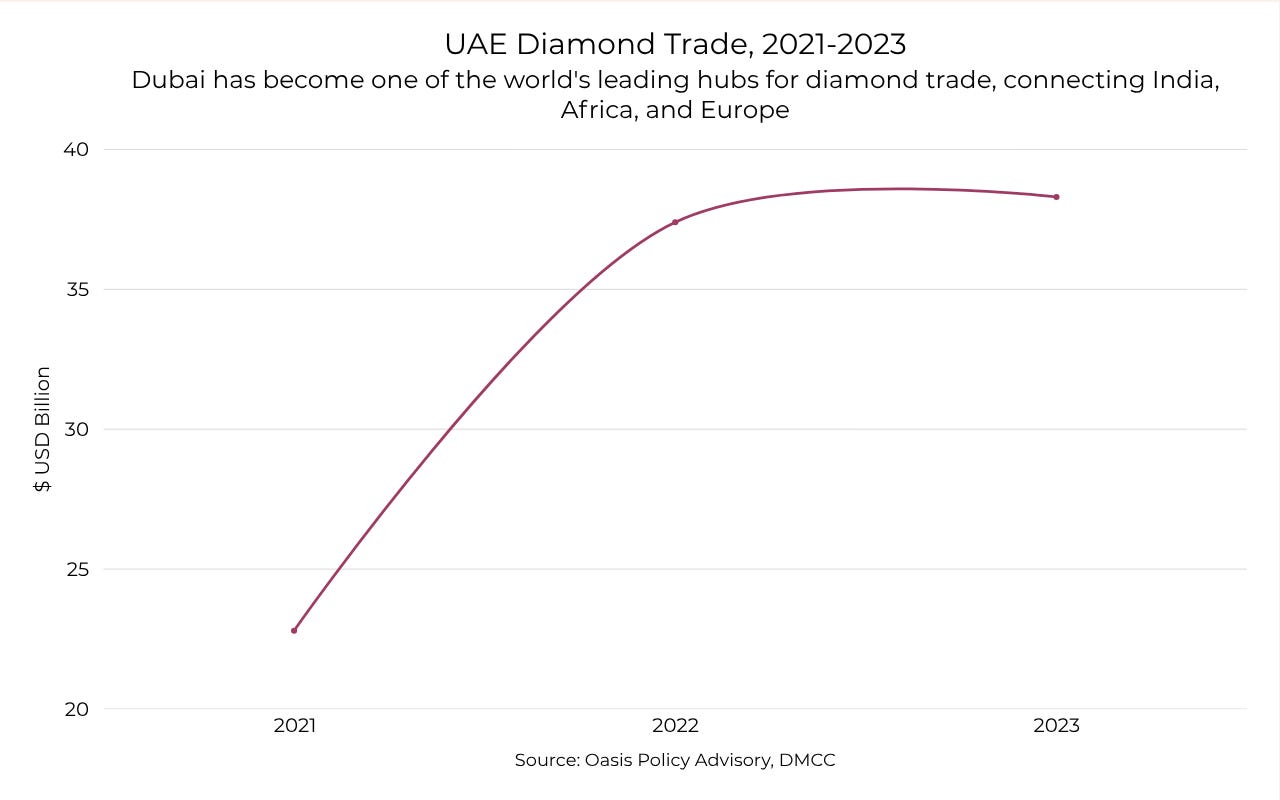
To understand the stakes, you need to understand how central Dubai has become to the global diamond economy, which is ironic given that the UAE has no mines of its own. In 2021, the UAE emerged as the world’s largest rough-diamond trading hub, with $22.8 billion traded. By 2024, it was exporting $9.83 billion in rough diamonds, rivaling Antwerp.
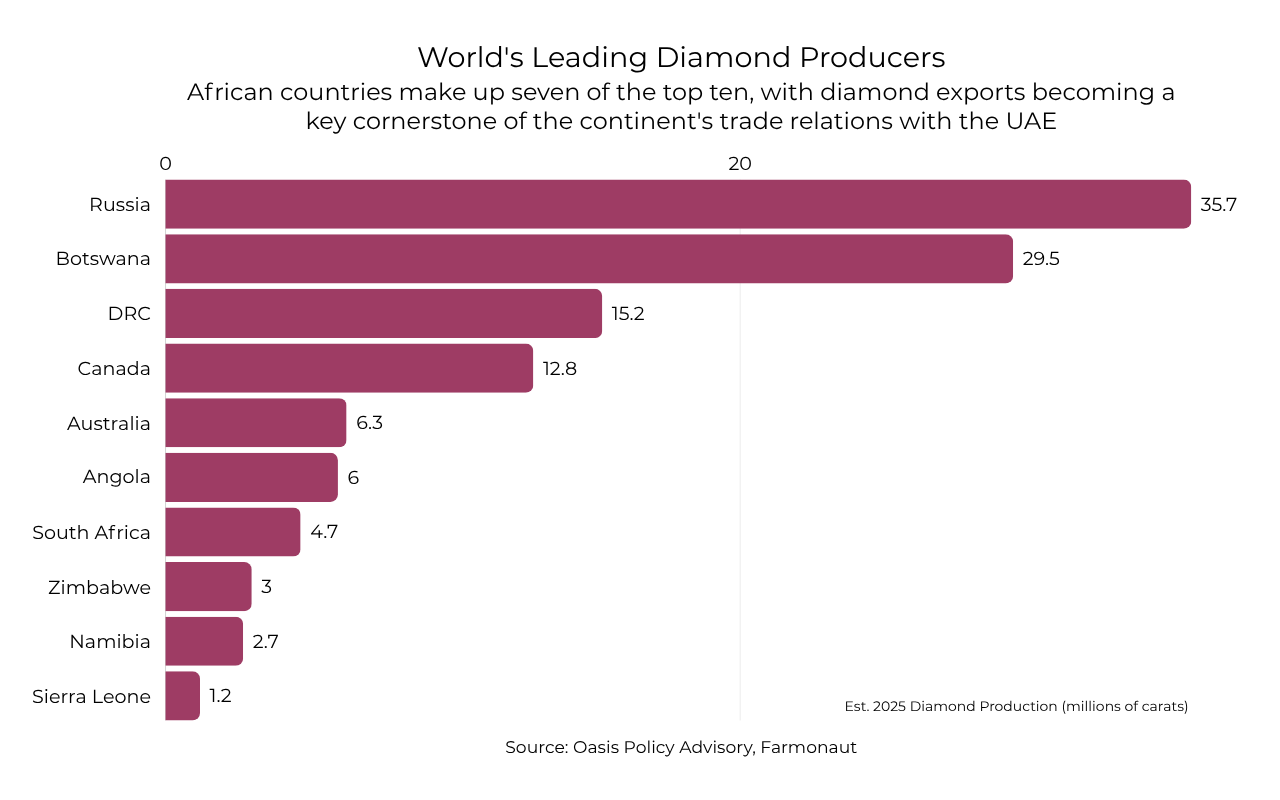
That role has shaped the UAE’s diplomatic footprint across Africa, home to seven of the world’s ten largest diamond-producing countries. Angola, for instance, directed 78.6% of its diamond exports to the UAE in 2025, more than any other destination including Antwerp.
Now that connective tissue is under strain. Jewelry intelligence firm Rapaport reported that diamond dealers postponed rough-diamond tenders in Dubai following the escalation of the Iran conflict, a significant signal, since even a brief pause disrupts price discovery and manufacturer planning across the whole midstream. The UAE supplies over two-thirds of India’s diamond imports, making India, the world’s largest diamond cutting and polishing hub, directly exposed to any Gulf friction.
The supply disruptions bleed into the demand side, too. Reuters reported that luxury brands at Mall of the Emirates saw sales drops of 30-50% in March versus the prior year. In a region accounting for roughly 5% of global luxury sales, that’s not a rounding error. Add maritime war-risk insurance premiums surging over 1,000% on Gulf shipping routes, and the cost of moving natural diamonds through their primary corridor has become materially more expensive almost overnight.
What makes this moment particularly consequential is that the Iran war arrived on top of a natural diamond industry already under serious pressure. India’s cut and polished diamond exports fell to their lowest level in over two decades in 2024, dropping 16.8% to $13.3 billion according to the Gems and Jewellery Export Promotion Council. Botswana, the world’s second-largest diamond producer saw rough sales fall roughly 52% in 2024. The Iran war isn’t the origin of these problems; it’s an accelerant.
The Synthetic Wildcard
While the war tightens the screws on natural diamonds, synthetic alternatives are operating in an almost parallel universe. Lab-grown diamonds are manufactured in controlled environments; China alone contributes 40-50% of global synthetic diamond production according to Coherent Market Insights.
The value proposition for synthetic diamonds has always rested on price: synthetic stones can cost 80-90% less than comparable natural diamonds, according to Fyne Jewellery. That gap has widened as production scaled up. Now, with natural prices facing upward pressure from Gulf logistics costs and supply disruptions, the differential stands to become even more pronounced. For a buyer weighing a $3,000 lab-grown stone against a $15,000 natural equivalent, the Iran war goes beyond geopolitics, it becomes a price signal.
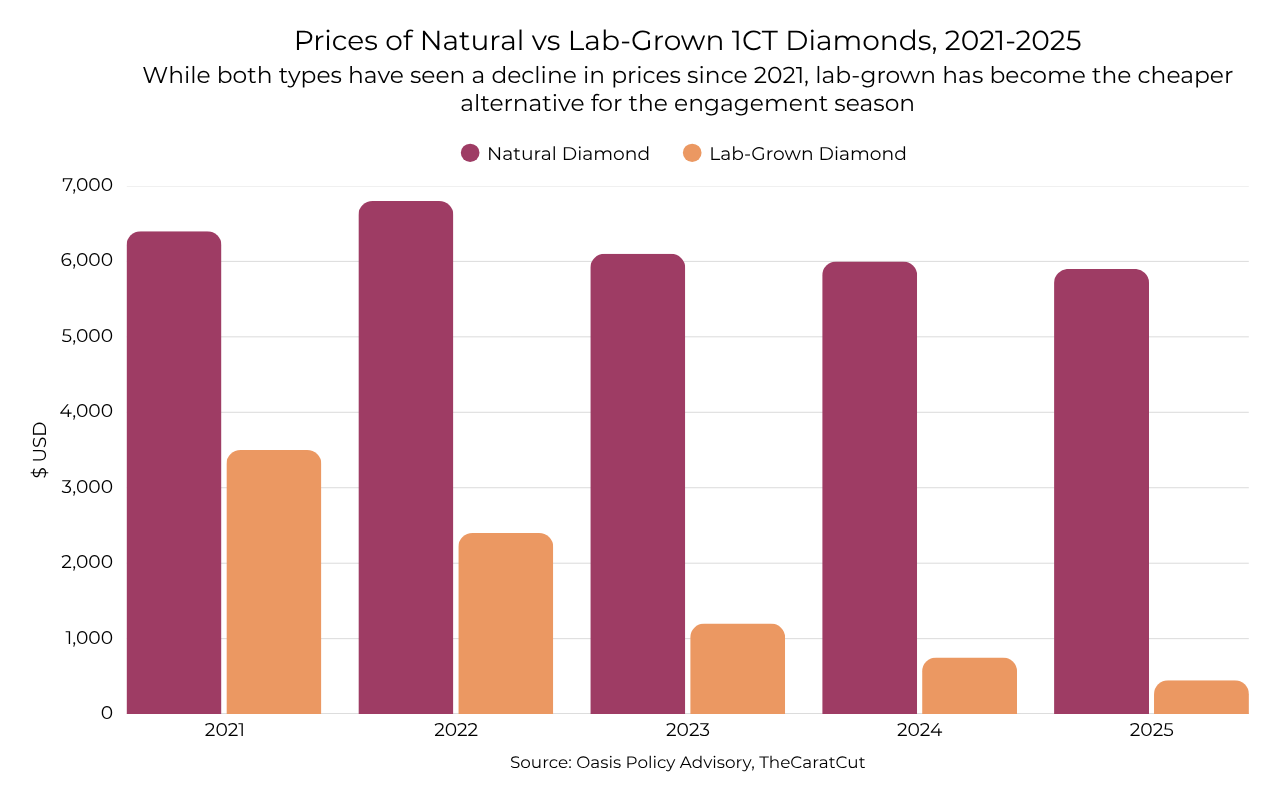
The Iran conflict may be temporary, and Dubai’s role as the world’s dominant diamond trading hub is unlikely to evaporate. But the structural shift toward synthetic diamonds was already underway, and the war is accelerating the very conditions that make lab-grown alternatives more attractive.
The luxury-trade model the diamond industry relied on for decades assumed frictionless mobility: stones moving quickly through a stable corridor to affluent consumers. That assumption no longer holds. Whether the conflict resolves sooner or later, buyers who discover synthetic diamonds during this window are unlikely to forget the lesson.
When you shop for that engagement ring this season, the most consequential question may no longer be how many carats or what cut. It may simply be: natural or synthetic?
This reporting may be cited with attribution to Oasis Media Collective. For licensing, republication, or extended use, contact here.
“may look and cost very differently than the one your parents bought” ..
No, lab diamonds are physically, chemically and structurally identical to the ones dug up. A flawless lab-grown is identical in every way to a natural except its formation location. They are both pure carbon atoms bonded together in a tetrahedral lattice under enormous heat and pressure.
Grades vary in both cases but the idea that lab growns look different is a fallacy spread by De Beers to justify the exorbitant costs.
The single differentiation is cost, not structure.
What this surfaces is not just pressure on natural diamonds, but a change in how substitution happens. Earlier, lab-grown diamonds competed on price and perception. Now disruption in trade routes and rising transaction costs are doing part of that work for them. When substitution is driven by system friction rather than consumer preference alone, it tends to stick. The question then is not whether natural demand recovers, but whether the conditions that sustained it can.