


Welcome to the Friday edition of Insights Dispatch, our flagship brief overviewing the three latest geopolitical & market developments connecting the Middle East & Africa to the world.
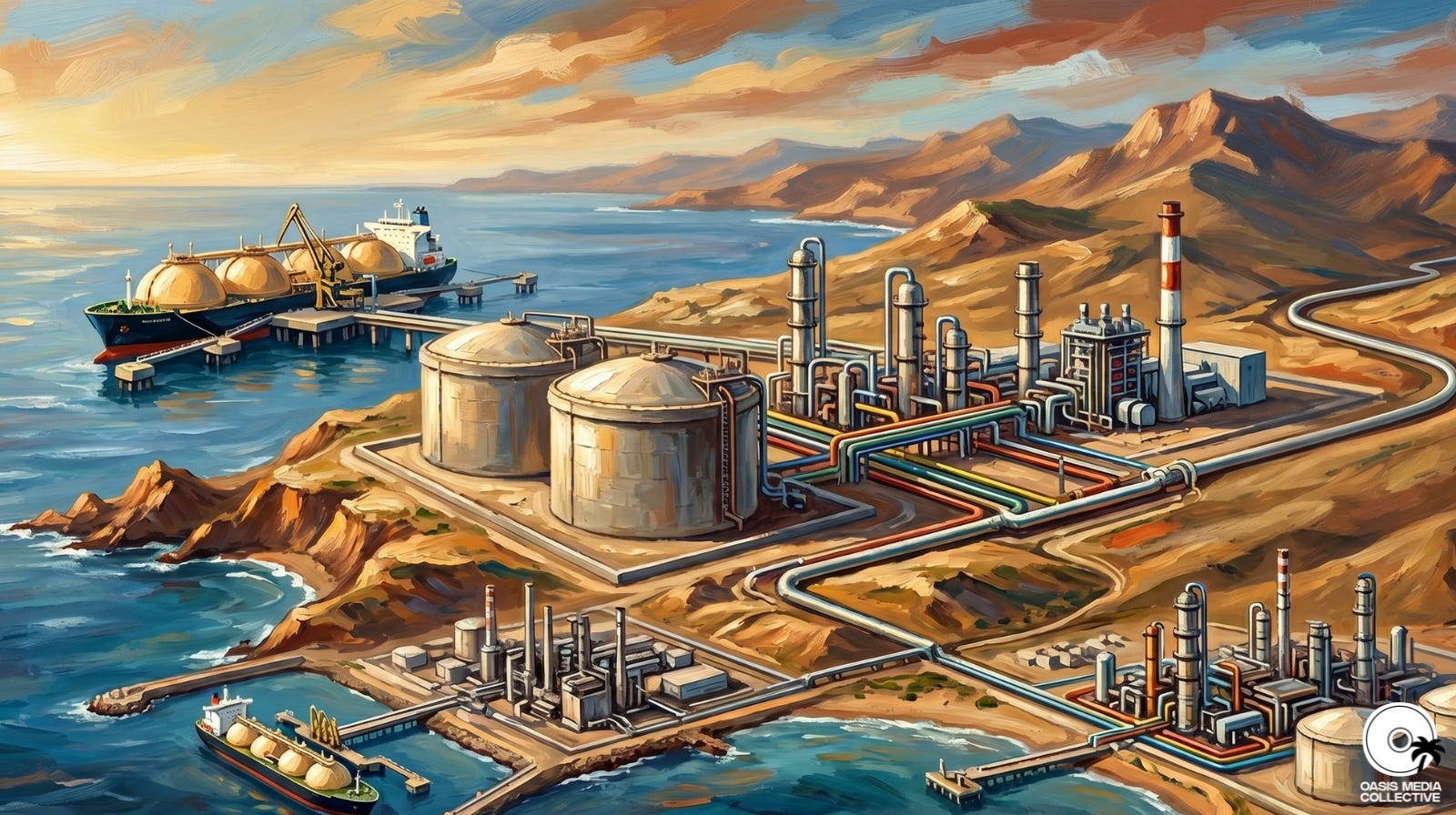
MOROCCO: New LNG Terminals to Enhance Energy Security
WHAT HAPPENED?
Morocco announced plans to construct seven new liquefied natural gas (LNG) terminals in an effort to diversify energy sources, accelerate low-carbon transition, and deepen energy security. Developing along the country’s coastlines, the terminals will be at the ports of Nador West Med, Tanger, Mohammedia, Jorf Lasfar, and Dakhla.
WHY IT MATTERS?
As a net energy importer, Morocco has faced strain due to the Iran crisis; earlier this month, the Kingdom saw fuel costs increase by roughly 30%. Construction of new LNG terminals will expand Rabat’s energy sources amid growing demand for gas.
WHAT’S NEXT?
The terminals will be connected to both strategic industrial hubs and the Nigeria-Morocco gas pipeline. Consequently, expect to see further energy projects across the Kingdom integrated with one another.
ZAMBIA: BHP Making an African Comeback with Copper Exploration
WHAT HAPPENED?
Global miner BHP is set to conduct large-scale copper exploration in Zambia. The announcement came from the Zambian Ministry of Mines and Minerals Development, which stated that BHP will target large copper deposits.
WHY IT MATTERS?
The announcement shows growing interest from both public and private actors in Africa’s mineral wealth. The move also marks BHP’s comeback in Africa following spinning off South32 in 2015.
WHAT’S NEXT?
As the second largest copper producer in the continent, Zambia is likely to see increasing interest from other mining organizations, particularly as copper demand rises, with an S&P Global report in January predicting a surge in demand of 50% by 2040.
SUDAN: Saudi Arabia Pauses Pakistan Arms Deal
WHAT HAPPENED?
Saudi Arabia has requested Pakistan to pause its $1.5 billion arms deal with the Sudanese Armed Forces (SAF), which includes ten Karakoram-8 light-attack aircraft, over 200 surveillance drones, and possibly additional JF-17 fighters. Saudi Arabia had initially agreed to finance the deal, according to Business Insider Africa.
WHY IT MATTERS?
The ongoing Iran crisis has led to Gulf states such as Saudi Arabia to reorient their defense priorities inwards to boost their security. For Pakistan, which has increasingly been eying African defense markets, the deal’s pause reflects a halt in that ambition.
WHAT’S NEXT?
The SAF will likely turn to other actors for aerial military support, particularly as the Rapid Support Forces heavily engage in drone warfare.
This reporting may be cited with attribution to Oasis Media Collective. For licensing, republication, or extended use, contact here.