


When the Arab Spring swept across North Africa in the 2010s, a new regional calculus emerged as upheaval took place, one by one. Not only did long-time leaders such as Zine El Abidine Ben Ali of Tunisia fall from power, but other states such as Libya collapsed into complete disarray. Throughout it all, though, one country survived this domino collapse: the Kingdom of Morocco. While protests did erupt, Rabat was effective in managing the movement and meeting protestors’ demands, creating an image of stability in an otherwise volatile environment to global observers.
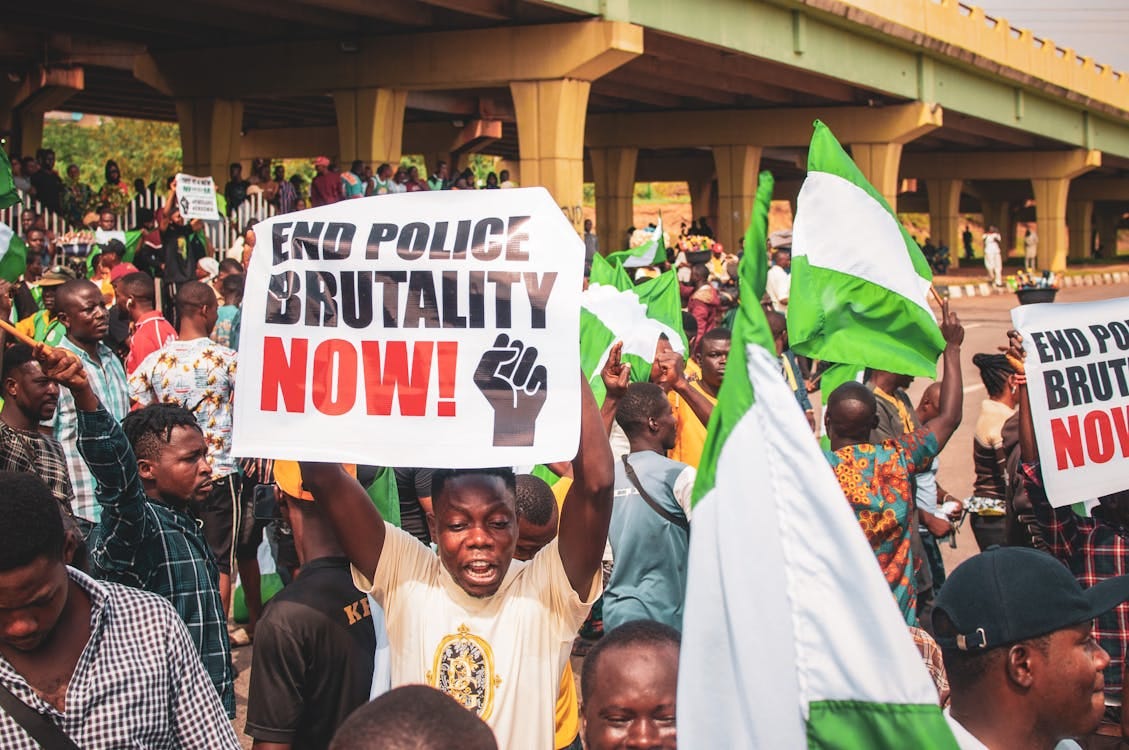
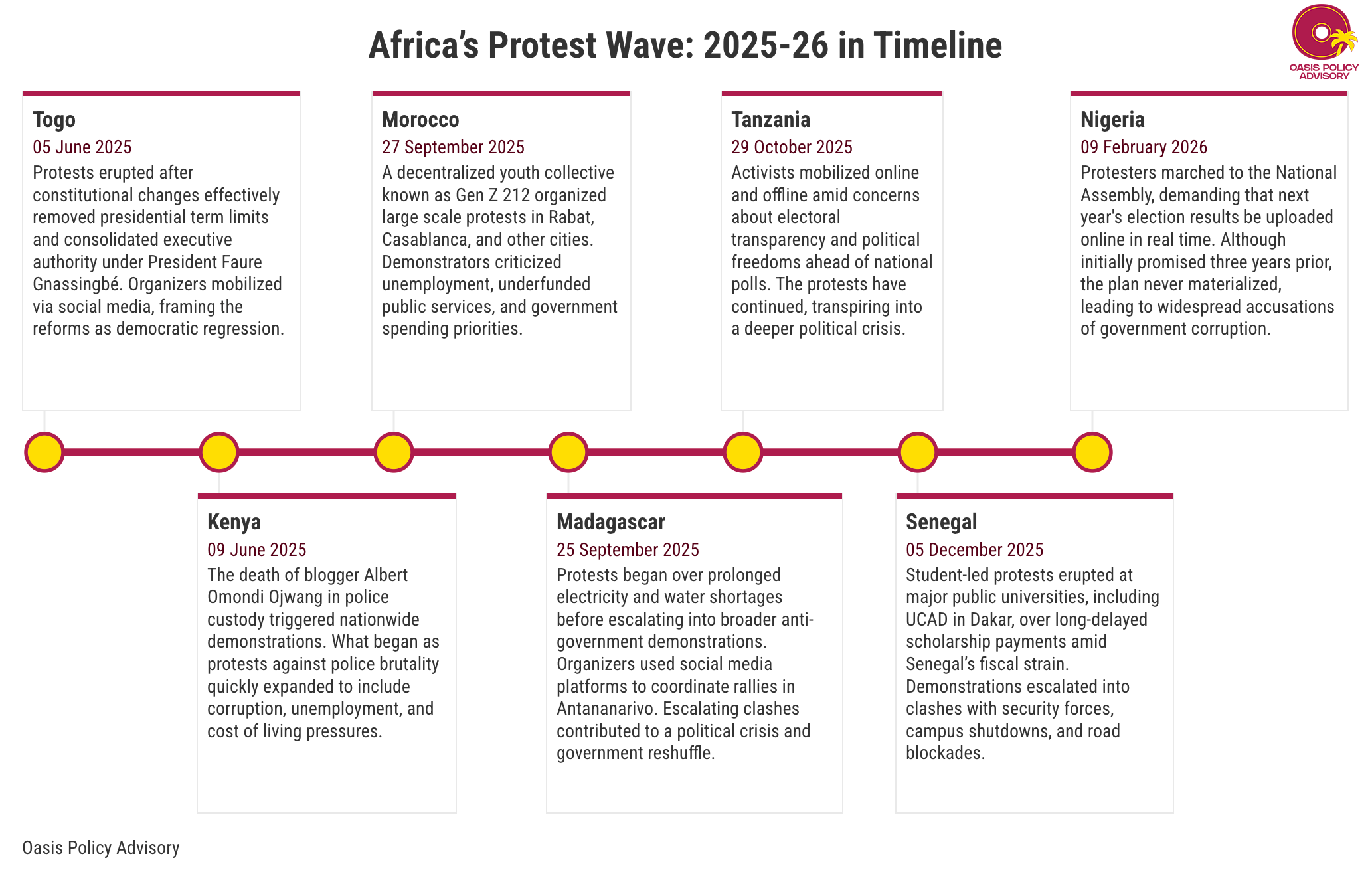
However, the sudden eruption of primarily youth-led protests that took the country by storm late last September has called that portrayal into question. Sparked in the aftermath of the deaths of eight pregnant women at Hassan II Hospital in Agadir, young Moroccans took to the streets and online to voice their frustrations with what they perceived as public failures in addressing nationwide grievances, particularly as the country invests up to $41 billion in infrastructure for the upcoming 2030 FIFA World Cup, according to Arabian Gulf Business Insight. For protestors, that amount should be used on improving the country’s healthcare and education.
This eruption of protests—predominantly led by the youth—is far from exclusive to the terrains of North Africa, though. In Senegal, student frustration has turned the prestigious Cheikh Anta Diop University (UCAD) into a battlefront, with video footage showing a building on fire and reports of security forces utilizing tear gas. A student died during the most recent clashes, according to Reuters.
In Madagascar, protests erupted on the streets of the capital of Antananarivo, sparking clashes between protestors and security forces. The protests eventually culminated in a coup d’état.
From Togo to Kenya, the pattern is the same. Frustration among the populace leading to protests on the street, from which violence and chaos ensue.
The question international onlookers are now asking: what is driving this surge in protests across the continent?
The Perfect Storm
While the protests have attracted individuals from all age groups, the most prominent participants are those of Gen Z, typically those born between 1997 and 2012. Africa is home to the world’s largest Gen Z population, with over 70% of the population under 30, according to the UN Office of the High Representative for the Least Developed Countries, Landlocked Developing Countries and Small Island Developing States. That population is expected to grow, with UN Africa Renewal projecting it to double to over 830 million by 2050.
Yet this explosion in youth has not been equally met with a rise in economic opportunities. A report from the African Development Bank Group states that a third of Africans aged 15 to 35 are unemployed. Even South Africa, the strongest economy in Africa by GDP, also had the highest youth unemployment rate in Sub-Saharan Africa according to the World Bank at 60.2%.
Global shocks have only amplified these economic difficulties. The Russia-Ukraine war has significantly stressed African food imports; 27% of Ukrainian wheat exports were delivered to North Africa according to the Council of the EU, sparking food insecurity across the region. The outbreak of COVID-19 also played a significant role; West African exports of crude oil fell sharply by 30% in March 2020 as a result of the pandemic, cutting a key revenue source for an already struggling region in war. For the youth, this has created a strong sense of dread over their economic futures.
Despite this, Declan Galvin, Managing Director of Exigent Risk Advisory, cautions against viewing these movements through too narrow a lens. “What I think is important is it’s being incorrectly framed as a Gen Z movement,” he explains. “When in reality what we’re seeing in most cases is a whole of society alignment around a problem set.”
The root of the problem, according to Galvin, goes deeper than local economic conditions. “The macroeconomic systems across emerging markets in Africa are not able to serve the aspirational expectations of people,” he notes. “The global financial system is not formed fit for emerging markets.”
Crossroads for a Continent
A key player in stoking these protest tensions has been social media. Not only have protestors produced and disseminated protest content across platforms such as TikTok and Instagram—drawing greater international attention to the movements—but Discord has been used to rally and organize protestors in Madagascar and Morocco. In this regard, governments may take steps to curtail social media access, as occurred in Sudan during the 2019 protests, when the regime shut down online connectivity completely.
Galvin predicts varied responses across the continent. “Some of them will unquestionably go a repressive route,” he warns. “If we look at what just transpired in Uganda with the election, they shut down the internet. This was even before polling day.”
But not all governments will choose outright repression. “Other countries may begin to look at this from a perspective of, ‘how can we actually kind of co-opt some of these movements?’” Galvin explains.
An example of such can be seen in Morocco, where King Mohammed VI unveiled a new bill to boost government spending on education and healthcare to $15 billion in response to protestor demands.
Looking ahead, Galvin identifies one region as particularly critical to watch. “I think that we need to be really closely monitoring these Sahel governments and seeing whether local pressure overthrows these regimes, whether there’s more coups or if they manage to hack it,” he says.
Mali, Niger, and Burkina Faso are now governed by military juntas that derive legitimacy primarily from security narratives rather than electoral mandates. Yet despite promises of stabilization, militant violence remains entrenched, fiscal space is constrained, and international isolation has deepened following their withdrawal from ECOWAS and realignment away from Western partners.
This creates a structural vulnerability. The region combines some of the world’s youngest populations with limited formal employment pathways and rising living costs. If economic frustration converges with declining confidence in military leadership, protest movements could evolve from anti-government demonstrations into broader regime legitimacy crises. Unlike in electoral democracies, where dissent can be partially absorbed through institutional channels, Sahelian juntas face a narrower margin for political accommodation, raising the probability that unrest, if triggered, is met with repression rather than reform.
Ultimately, Galvin frames these movements as rooted in universal human aspirations rather than political ideology. “People want enough money to take care of their children. People want to grow wealth,” he reflects. “And you have political and global economic systems which are preventing that from happening.”
This reporting may be cited with attribution to Oasis Media Collective. For licensing, republication, or extended use, contact here.