

How Syria's New President Crushed Kurdish Forces in One Week
Everything changed in northeastern Syria in just 10 days.

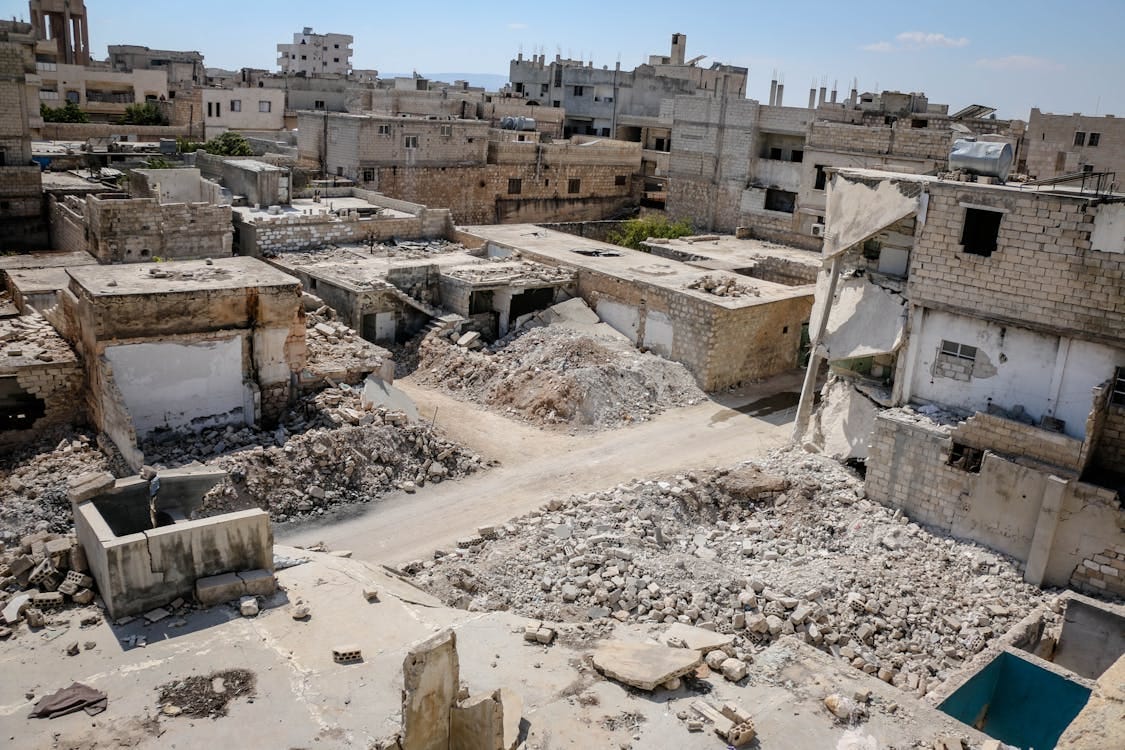
What Happened
On January 13, 2026, Syria’s transitional government under President Ahmed al-Sharaa launched a major military offensive against Kurdish-led Syrian Democratic Forces (SDF) positions across northeastern Syria, fundamentally reshaping the country’s post-Assad political landscape.
The operation was proceeded by SDF drone strikes targeting Syrian Defense Ministry vehicles in the city of Aleppo on January 5. In response, Syrian forces swiftly moved into Aleppo on January 6, capturing the neighborhood of Sheikh Maqsood, culminating in the withdrawal of SDF forces under an American-led ceasefire. What followed was a remarkably swift campaign: by January 17-18, the SDF had retreated from the city of Deir Hafer, handing over critical oil fields, border crossings, and detention camps holding ISIS fighters—including the notorious Al-Hol camp with its 24,000 ISIS-linked detainees.
U.S. mediation produced a 14-point ceasefire agreement on January 18 to last four days, brokered by presidential envoy Tom Barrack, which integrates the SDF into the Syrian Army and recognizes Kurds as a fundamental part of Syrian society, with Kurdish elevated to national language status. Furthermore, the Syrian Army will assume control of the provinces of Raqqa, Deir Az Zor, and Hasakah from the SDF.
However, the ceasefire remains fragile. The Syrian Defense Ministry reported that seven soldiers were killed in an SDF-linked drone strike in Hasakeh; the SDF denied carrying out the strike. Furthermore, the chaos enabled prison breaks, with estimates ranging from 120 to 1,500 ISIS fighters escaping from Al-Shaddadi prison in Hasakeh during the SDF withdrawal. The U.S. has begun transferring up to 7,000 ISIS detainees from SDF prisons to Iraq.
Why It Matters
This offensive represents a significant consolidation of Syrian government control since the fall of the Assad regime at the end of 2024, with profound implications for Syria’s political future, regional stability, and the fight against ISIS.
The transitional government under al-Sharaa is attempting to establish unified control over a country fragmented by years of civil war and foreign intervention. The offensive exploits momentum from Damascus’s 2025 southwestern victories and leverages divisions within the SDF coalition, particularly local Arab tribes that have since drifted closer to the orbit of the new Syrian regime. The 14-point agreement’s recognition of Kurdish rights and language represents a potential blueprint for post-war Syria, but only if it holds.
Syria now controls facilities holding tens of thousands of ISIS fighters and their families, including Al-Hol. The prison break during the offensive underscores the volatility of this situation. With U.S. envoy Barrack admitting that the SDF’s anti-ISIS role has “largely expired” and positioning Damascus as the new security guarantor, responsibility for preventing an ISIS resurgence now falls to a transitional government still establishing its authority.
Across the Atlantic, Washington’s mediation signals a pragmatic acceptance of Syria’s new reality. Both the American-led 14-point ceasefire and the transfer of ISIS detainees to Iraq suggest the U.S. is managing its exit from northeastern Syria while attempting to prevent catastrophic outcomes. The acknowledgment that the SDF’s counterterrorism mission has ended marks a dramatic shift from years of U.S. partnership with Kurdish forces.
Most concerning is that the offensive tests whether Syria can reintegrate without triggering broader conflict. Alawite protests in Latakia and Tartous in late December 2025, demanding minority protections, demonstrate the sectarian tensions still simmering.
What’s Next
The coming days will determine whether Syria moves toward integration or descends into renewed fragmentation.
The SDF has four days from the January 20 ceasefire to integrate remaining Kurdish-majority enclaves. If talks break down, Damascus may resume its offensive, potentially triggering the ethnic conflict that analysts have warned about and displacing populations already strained by years of war.
Syrian forces must also content with the returning ISIS threat. The US transfer of 7,000 detainees to Iraq removes some pressure but more remain. If Damascus cannot secure relevant camps and detention facilities, ISIS could reconstitute amid the chaos, undoing years of counterterrorism efforts.
The 14-point agreement’s provisions for Kurdish rights offer a framework, but implementation will prove everything. Can al-Sharaa’s transitional government deliver meaningful autonomy and cultural recognition while asserting central control? Failure risks alienating not just Kurds but other minorities watching to see if post-Assad Syria will accommodate diversity or impose uniformity.
The northeastern offensive has given Syria’s transitional government control of resources and borders, but the hard work of building a functioning, inclusive state from these military gains has only just begun. The next few weeks will reveal whether the 14-point agreement represents a genuine path forward or merely a pause before the next round of conflict.
Oasis Media Collective goes where the headlines don’t by reporting on overlooked conflicts and geopolitical shifts with a data-driven lens. Follow for more to receive our intelligence briefs, visual explainers, and deep-dive reporting.
Have questions or want to discuss opportunities directly? Connect with us here.