


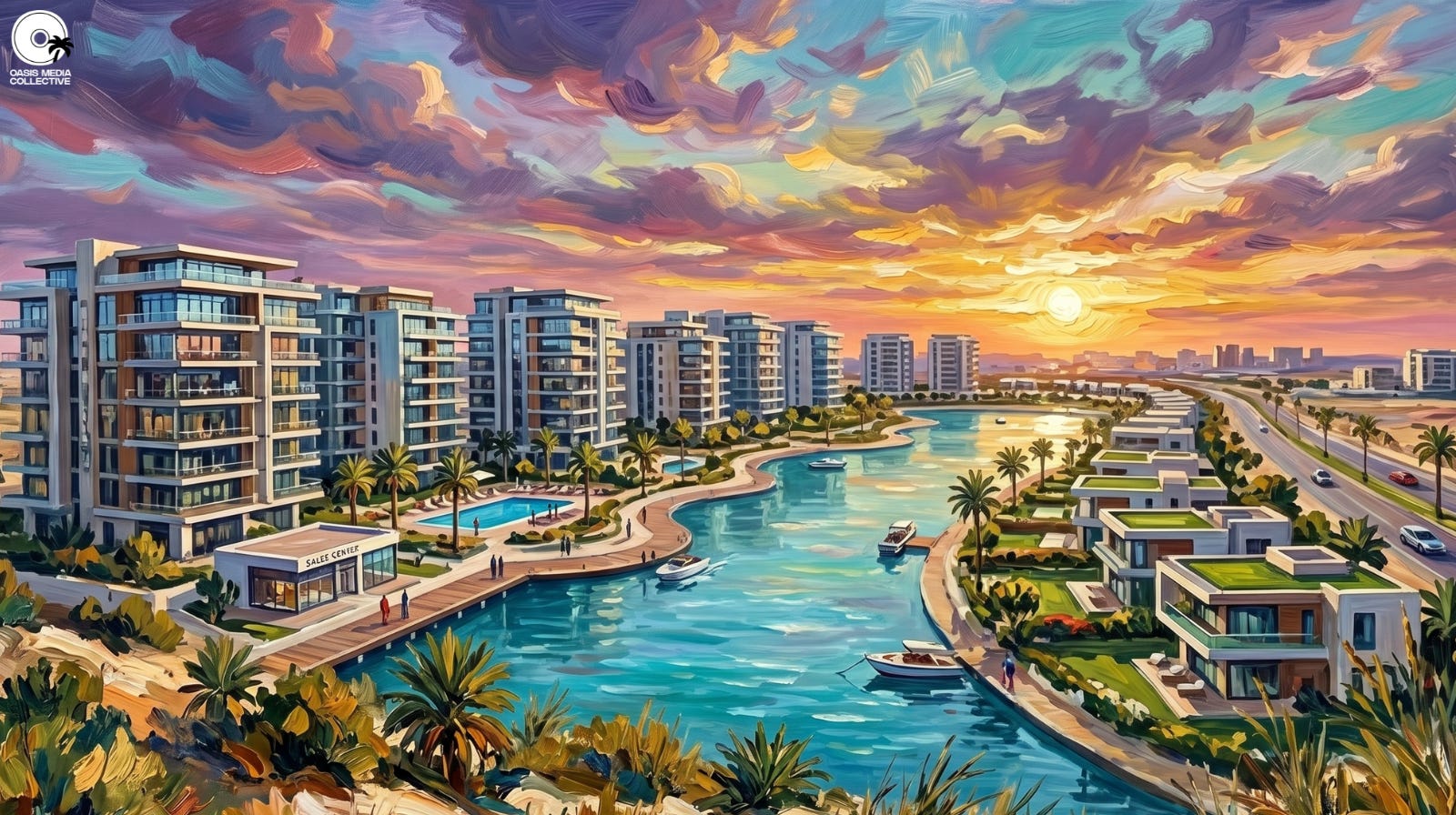
Four thousand years before the first foundation was poured in the New Administrative Capital, Egypt was already in the business of building at a scale the world had never seen. The pyramids of Giza were the original statement of what the pharaohs understood: that stone, sand, and sovereign ambition combined produce something that outlasts everything else.
That’s a lesson Gulf sovereign wealth funds are now rediscovering.
Egypt’s real estate market is experiencing a significant boom: currently valued at $1.62 trillion and expected to rise to $1.98 trillion by 2030, according to Statista. And while this upsurge has been a long time coming, 2024 marked a turning point, spurred in significant part by foreign investment.
That February, UAE-based ADQ secured development rights over Ras El-Hekma–an emerging smart city under construction on Egypt’s Mediterranean North Coast–for $24 billion. The agreement was one of several that helped lift Egypt’s net foreign direct investment (FDI) from $9.8 billion in 2023 to $46.1 billion in 2024, with approximately 76% concentrated in real estate.
With Egypt’s population rising rapidly and its tourism sector expanding, what role has the GCC played in the country’s burgeoning real estate market, and what comes next?
The Gulf’s Growing Footprint in Egyptian Property
Having recently ranked sixth on Business Insider Africa‘s list of the top ten best-performing African economies, Egypt has attracted a substantial surge of foreign investment this decade, from $5.9 billion in 2020 to an estimated $11 billion in 2025.
And while that FDI has been cross-sectoral, Egypt’s housing market remains a focal point. Between September 2021 and September 2025, quarterly net real estate services FDI averaged $312.50 million. That momentum was accelerated by Egypt’s exchange rate unification in 2024, enabling real estate services FDI to reach a quarterly peak of $852 million in March 2025.
The Gulf has been a primary driver of that growth. Official figures from the Central Bank of Egypt (CBE) show that in FY 2023/24, the UAE alone accounted for 68.7% of total inward FDI flows to Egypt, largely driven by the Ras El-Hekma deal. Egypt’s largest real estate development group, Talaat Moustafa Group (TMG), has similarly recorded a growing commercial presence from Saudi Arabia and Kuwait, while Qatari capital has aggressively re-entered the market through sovereign-backed subsidiaries.
Gulf involvement in Egyptian real estate extends well beyond the ADQ deal. CityGate, an in-progress sustainable city backed by Qatari Diar, covers over 90 million square feet and encompasses 300 residential units, with a projected value exceeding $12 billion. The development is estimated to generate over 200,000 direct and indirect jobs upon completion. Projects of this scale have contributed to TMG recording approximately $10 billion in total real estate sales in 2024, a 3.5-fold increase from $2.7 billion in 2023.
Maged Salah, managing director at real estate investment firm Misr Abu Dhabi, told Arabian Gulf Business Insight that Cairo’s streamlined approvals process has enabled “faster approvals and more transparent regulations” for incoming investors.
It’s this updated regulatory framework, according to AGBI, that has helped fuel the rise of branded residences, luxury homes affiliated with hotel or lifestyle brands, such as the Ritz-Carlton. According to Knight Frank’s Destination Egypt 2025 report, 81% of Gulf buyers expressed interest in such properties.
For Gulf enterprises, investors, and individual buyers alike, Egypt’s appeal is reinforced by its cost competitiveness. Occupancy costs for Class A office space average $723 per square meter, a fraction of the $1,603 recorded in Dubai or $1,561 in Riyadh. That gap is enough of an incentive for GCC firms considering establishing regional operations in Egypt.
A Market With More Room to Build
While 2024 marked a record high for Egypt’s real estate sector, the same year saw only 25% of hospitality projects originally scheduled to open actually reach completion. For Gulf investors, Cairo’s undeniable property potential still has considerable ground to cover before it’s fully realized.
The disconnect between the high-end, luxury developments favored by GCC developers and the purchasing power of Egypt’s domestic population also risks slowing progress. The secondary education sector–closely tied to mixed-use luxury residential developments–illustrates the tension clearly: more than 182 new private schools entered the Greater Cairo market in 2024/25, yet only 7% of local households can afford annual tuition fees exceeding EGP 65,000. Premium supply is outpacing domestic affordability, and that gap cannot be bridged by foreign capital alone.
The pressing matter for Gulf investors today is whether the foundations being laid now are broad enough to support what comes next. If the gap between luxury supply and local demand narrows, and project delivery catches up with ambition, Egypt’s real estate story may prove as durable as the monuments that started it.
This reporting may be cited with attribution to Oasis Media Collective. For licensing, republication, or extended use, contact here.