



Welcome to “Wall Street Foreign Desk.”
On the agenda today:
IRAN. The energy crisis continues to accelerate, with Tehran effectively checkmating the entire global economy.
U.S. 10-year Treasury yields have hit 5% for the first time since 2023, adding to an uneasy dilemma for the Federal Reserve.
ARTIFICIAL INTELLIGENCE. In a shock move, OpenAI CEO Sam Altman confirmed that the company will not be going public on safety grounds.
Houthis Seize Control of Bab el-Mandeb Strait as Oil Surges Past $100
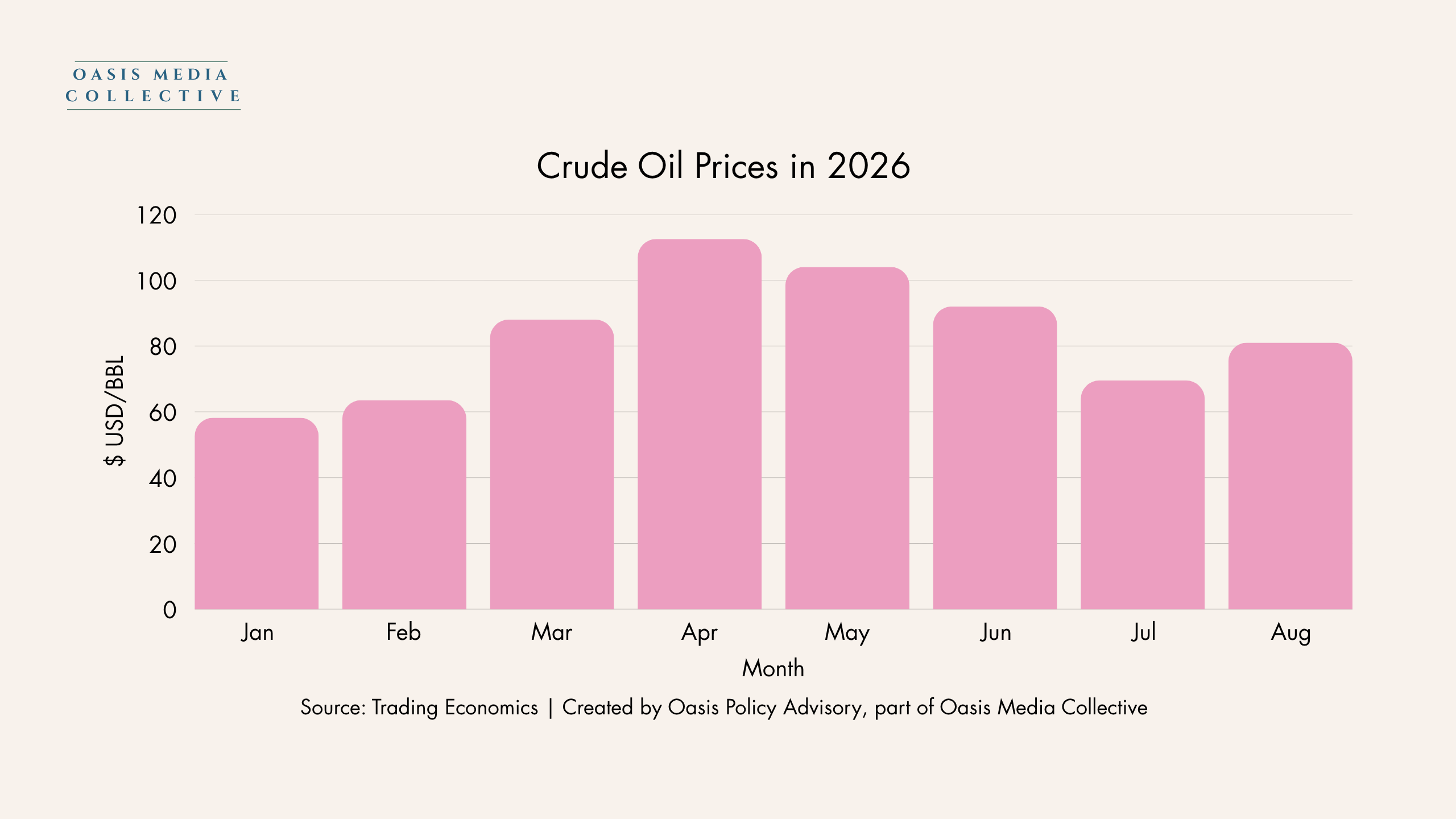
The Iran-backed Houthis in Yemen seized control of the Yemeni port city of Mocha. Located just right next to the Bab el-Mandeb Strait, the capture means that Iran effectively controls two of the world’s most important oil passageways, given that the Red Sea is where 5-7% of global energy passes. Meanwhile, weekend shipping through the Strait of Hormuz has fallen to single digits, and Saudi Arabia has temporarily shut its East-West pipeline following a drone attack, removing an alternative route.
The ensuing chaos has pushed Brent crude upward by over 3%, topping $108. The Hormuz disruption alone threatens roughly 20% of global supply; the added upheaval along the Red Sea and the Saudi pipeline are drawing that figure closer to 30%, while war-risk insurance and freight costs are also elevating.
So in short:
Saudi East-West pipeline temporarily offline.
Hormuz traffic is dramatically below normal.
Houthi control around Bab el-Mandeb is increasing.
Diesel has already moved above $6/gallon in the U.S.
Gulf diplomatic talks have been postponed.
The Three-Way Breakdown:
Catalyst: Gulf shipping and infrastructure are being attacked.
Ripple: Fewer safe routes, higher insurance and freight costs.
Transmission: Energy inflation boosts everything from transport and food costs to central bank policy.
The 5% Treasury Threshold Has Returned
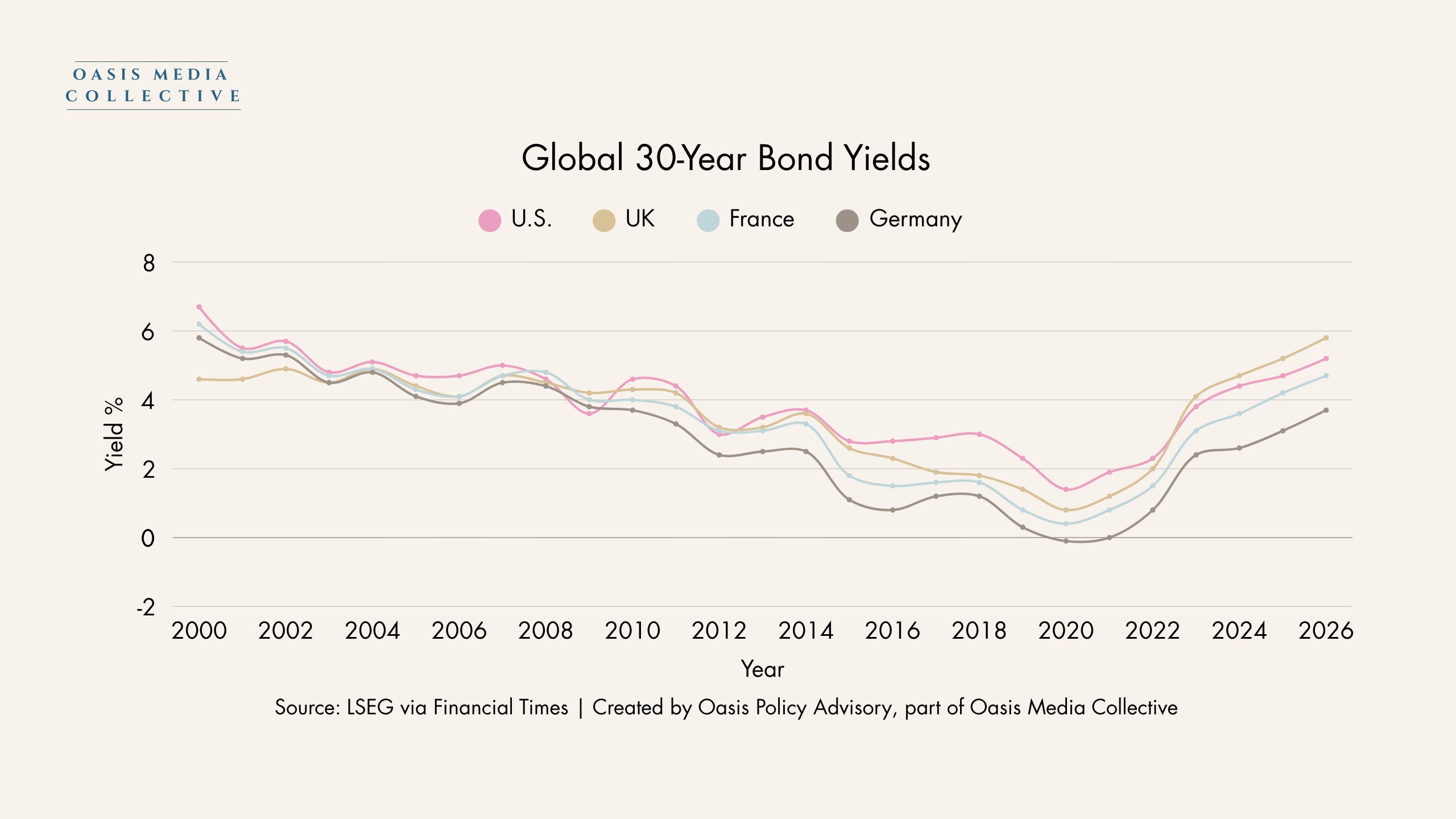
For the first time in three years, 10-year Treasury yields in the U.S. have reached approximately 5%, as markets increasingly price a Federal Reserve rate hike this week. All of this occurs against a backdrop of bond yields exploding worldwide, hot U.S. inflation, and spiking oil prices, creating uneasy headlines for an increasingly unpopular administration entering the midterm elections.
The development matters given that Treasury yields are the reference price for borrowing not only across the entire U.S., but the entire global financial system. A 5% government benchmark changes the calculations for mortgages, corporate debt, private equity, infrastructure financing, and more. Throw in the other fiscal pressures, the global market is essentially facing a feedback loop: oil raises inflation, which boosts rates, causing government borrowing to become more expensive, and everything else with it.
So in short:
10-year Treasury briefly reached roughly 5%.
Markets assign around a 90% probability to a Fed hike Wednesday.
The move follows stronger-than-expected inflation.
UK and German long-term yields are also elevated.
Higher government funding costs make fiscal deficits more expensive.
The threshold matters more as a signal than as a magical number.
The Three-Way Breakdown:
Catalyst: U.S. borrowing costs rise.
Ripple: Markets demand higher compensation to hold government debt.
Transmission: Borrowing costs across the entire economy become more expensive for professional investors and everyday people.
OpenAI Delaying IPO Due to AI Safety Concerns
Going against the grain, Sam Altman confirmed that OpenAI will not be going public this year as expected. Citing the amount of work required around AI safety, Altman described going public in 2026 as an “ill-advised moment.” Markets had been expecting potentially blockbuster IPOs from both OpenAI and Anthropic this year; OpenAI’s pivot while it deals with the technological and regulatory implications of increasingly capable AI is likely to kickstart recalculations across Wall Street.
The timing of the safety justification is noteworthy; former OpenAI and Anthropic employee, Jacob Coxon, made headlines last week with a viral X post, warning that AI could “kill us all” by the end of the decade. It’s a sentiment that’s been echoed by others across Silicon Valley, prompting calls for greater AI regulation, even from the likes of Anthropic CEO Dario Amodei. However, President Donald Trump has rejected these calls, bringing into question whether further immediate regulation will take shape in the U.S.
So in short:
OpenAI will not go public in 2026.
Sam Altman cited AI safety and alignment concerns.
Anthropic is reportedly still pursuing a 2026 IPO.
The decision keeps OpenAI outside public-market valuation for now.
AI investors are increasingly questioning the pace and capital intensity of frontier-model development.
The Three-Way Breakdown:
Catalyst: OpenAI delays its 2026 IPO amid AI safety concerns.
Ripple: Emerging AI development is facing greater scrutiny.
Transmission: Investors may start reassessing the enormous capital needed to fund the AI infrastructure boom while DC policymakers debate regulation.
Honorable mentions:
BRICS adopts the New Delhi Declaration. A major component of the piece calls for more financial transactions using the domestic national currencies of BRICS members rather than third-party currencies, worrying some to the rising trend of de-dollarization.
India’s inflation pipeline is reopening. Speaking of New Delhi, its August retail inflation jumped to 4.82%, while wholesale inflation reached 9.92%. The added pressure of the Red Sea disruption likely means more woes for India’s tight fiscal picture.
Japan’s monetary pivot. The Bank of Japan is expected to consider another rate hike this week as energy inflation, a weakening yen, and rising borrowing costs. This signals that the popular yen carry trade strategy is running out of room.
Join the Collective decoding markets, policy, and power for the investors of today and tomorrow.
To partner with Oasis Media Collective, contact here.