


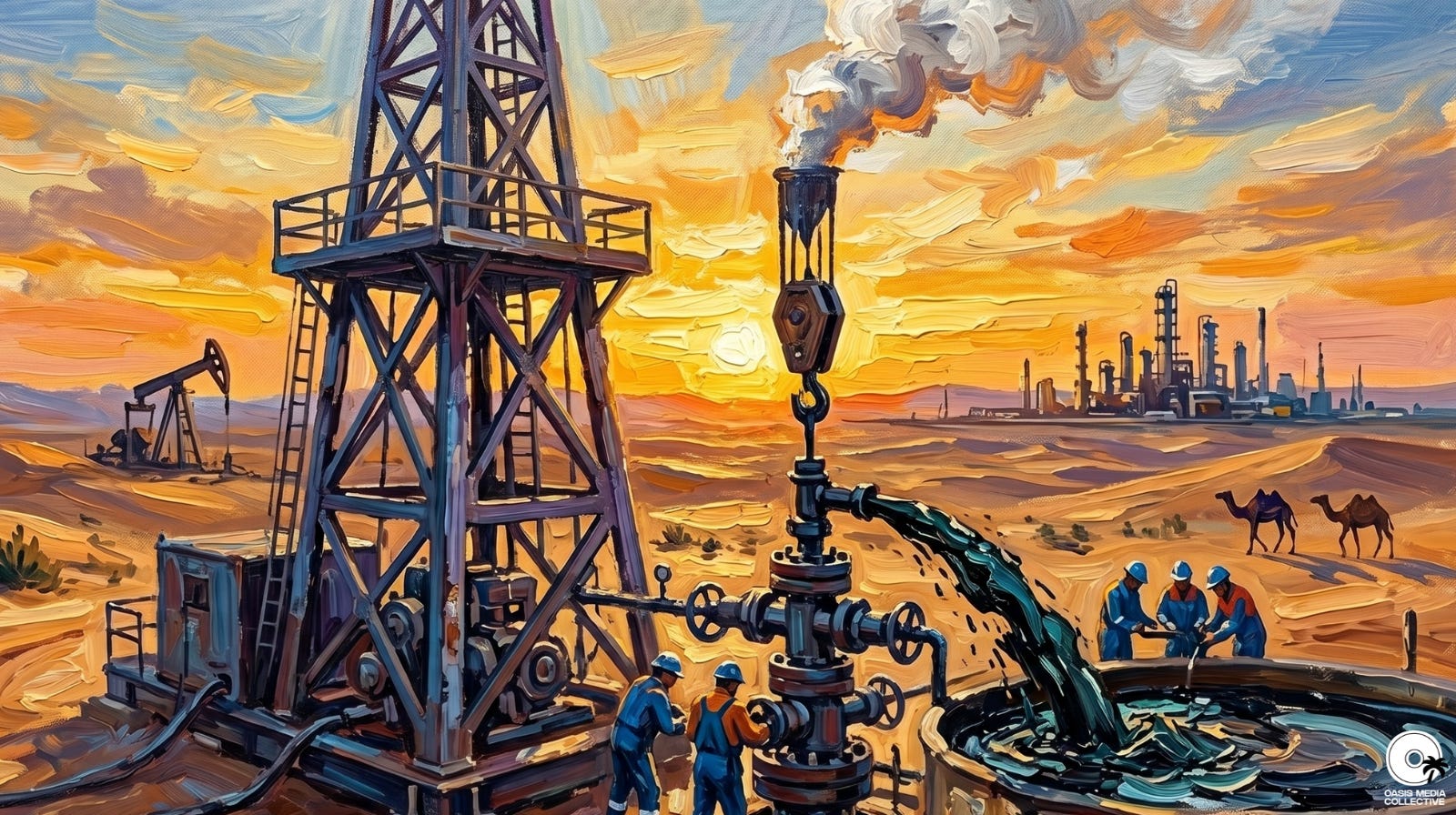
2026 has been both a blessing and a curse for Egypt, energy-wise. Like much of the world, Egypt’s gas and oil supply has become strained due to the Iran war. The country has lost key Kuwaiti supplies, now turning to its neighbor Libya as an alternative. Egyptian Prime Minister Mostafa Madbouly also reported that the country’s energy bill had increased by $1.1 billion since the start of the war.
Yet with this downturn has come also new energy momentum. The year has seen Egypt make a string of new gas discoveries. In April, Denise West, an offshore Mediterranean well, was uncovered, containing an estimated 2 trillion cubic feet (TCF) of gas. Similarly, the South Bostan-1X was found in the Western Desert, holding an estimated 330 billion cubic feet (BCF) of gas.
Egypt’s LNG terminals sitting on the Mediterranean coast, built to export Egyptian gas, are importing foreign molecules to keep the lights on. But is the country’s energy sector on a new trajectory towards independence?
From Boom to Blackout
Contrary to what’s claimed by skeptics, Egypt’s ongoing energy woes are largely a recent phenomenon. The late 1990s and early 2000s saw Cairo experience an offshore exploration boom, especially in the Nile Delta basin. New gas discoveries prompted new energy infrastructure, such as the Arab Gas Pipeline (AGP) in 2003 and the Damietta and Idku liquefied natural gas (LNG) plants.
Yet as the decade turned into the 2010s, so too did Egypt’s energy fortunes. The country’s skyrocketing population growth–currently hovering at just below 1.5%–significantly accelerated its domestic fuel demand, while the political instability of the January 25 revolution saw heightened insecurity in the Sinai Peninsula, leading to repeated sabotage of the AGP and other key gas infrastructure.
While the 2015 discovery of the supergiant Zohr gas field by Eni, which holds an estimated 30 TCF of gas, had restored hopes of a return to Egypt’s energy glory days, shortages continued into the 2020s as demand grew.
By 2024, national natural gas production had collapsed by over 17% year-on-year to 47.47 bcm, forcing a complete halt to summer LNG exports and a return to extensive electricity load-shedding across the country. Egypt’s efforts to become a regional, self-sufficient energy hub are thus meant to be a cushion for not only the present, but a guaranteed future.
Winning Without Gas
Egypt’s saving grace is infrastructure built for a different era. While the Idku and Damietta liquefaction terminals were constructed to export Egyptian gas to Europe and Asia, they remain the only operational LNG export facilities in the Eastern Mediterranean.
Neither Israel’s Leviathan field nor Cyprus’ Aphrodite and Cronos fields can liquefy gas on their own; Egypt’s infrastructure can, amplifying the Eastern Mediterranean’s gas reach and making it by default the region’s processing node.
Whatever happens underground, Egypt has one energy advantage that requires no drilling: sunlight. The country’s southern desert receives some of the highest solar irradiance levels on earth, typically around 2,000-3,200 kWh/m² of direct solar energy per year.
Coupled with its Red Sea and Gulf of Suez coastlines being among the region’s most consistent wind corridors, Egypt’s solar energy potential is vast and untapped. The Benban Solar Park in Aswan, one of the largest in the world, is an early demonstration of that.
The longer-term bet is turning that natural endowment into an export product. The most ambitious vehicle for that is GREGY, a planned subsea cable stretching roughly 950 kilometers from Egypt to Greece, designed to carry Egyptian renewable power directly into the European grid.
The obstacles to realizing this are real, and they’re hurdles Egyptian officials are actively working to overcome. Transmitting solar power generated in Aswan to the Mediterranean coast requires significant grid upgrades. Furthermore, with a population projection of over 161 million by 2050, renewable energy alone will likely not be enough to sustain rapidly rising demand.
The honest assessment is that this pathway is long, but one where Egypt can leverage its natural advantages to become an exporter on its own terms.
Wired for Ambition
Egypt’s energy woes are real, but the ambition they have created runs deeper. While re-emerging as a sovereign hydrocarbon exporter will be challenging in the near-term, its infrastructure has the potential to transform Eastern Mediterranean gas dynamics.
As gas companies and European countries turn to North Africa as a new reliable hub for all things energy, Cairo refuses to be left behind.
This reporting may be cited with attribution to Oasis Media Collective. For licensing, republication, or extended use, contact here.
Great piece. The most underappreciated point here is that Egypt’s value is not just what is under the ground but what is already built above it. Being the only country in the Eastern Mediterranean that can liquefy gas is a structural advantage that no new discovery can replicate quickly.