


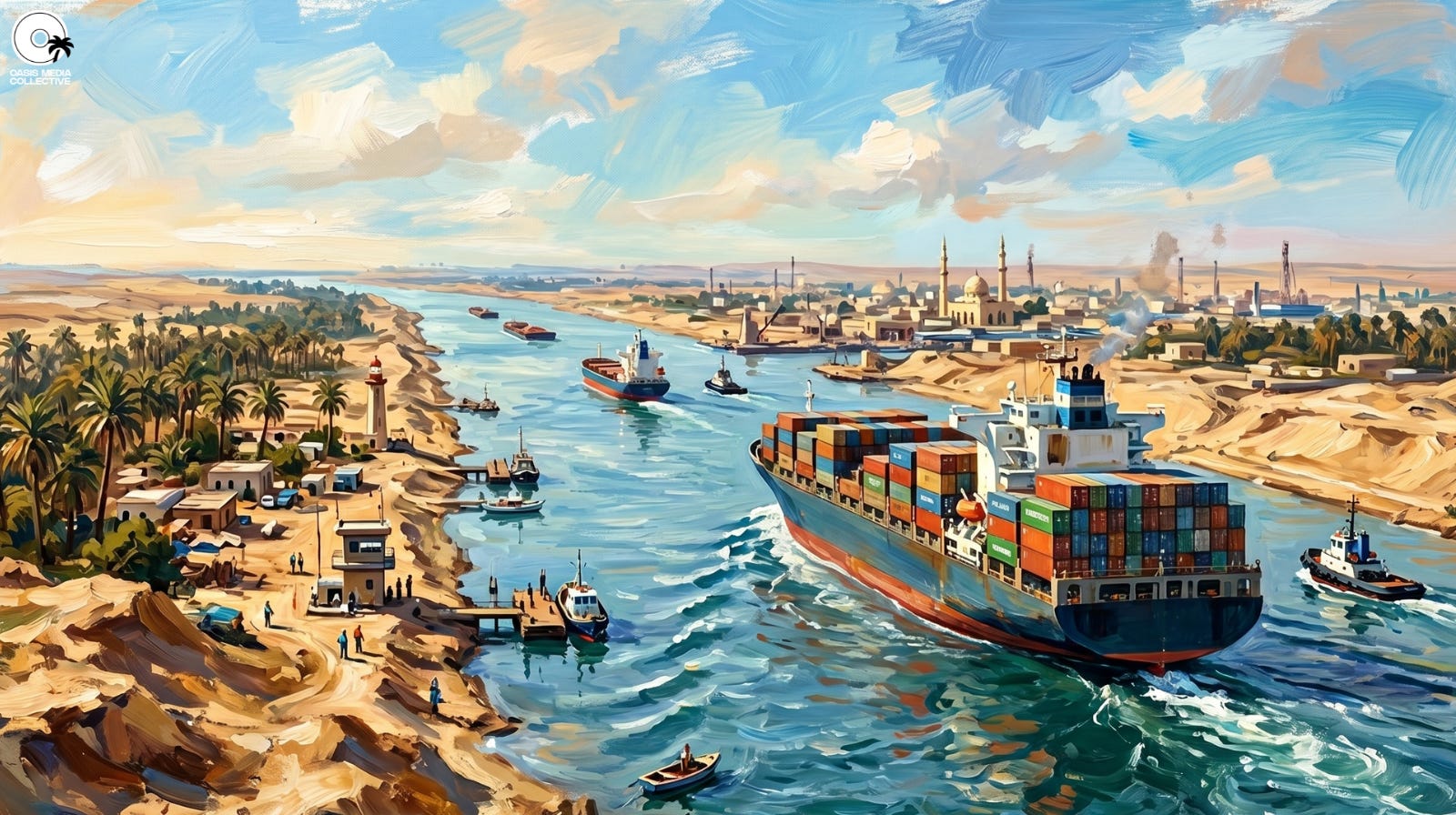
NORTH AFRICA: Egypt Suez Canal Traffic Surges
WHAT HAPPENED?
The Suez Canal experienced an increase in the number of oil tankers in April, up 14% from the same period last year, attributed to shipping companies traversing away from the Strait of Hormuz.
WHY IT MATTERS?
The Suez Canal represents one of the most strategically important maritime trade routes and a critical revenue stream for Egypt, serving as a cushion for the country’s ongoing economic stresses.
WHAT’S NEXT?
Shipping companies are likely to remain uncertain even if a ceasefire with Iran is secured; Tehran has also signaled its intent to exert control over the Hormuz long-term, driving more maritime profits to Cairo.
EAST AFRICA: Ethiopia spending to rise next fiscal year
WHAT HAPPENED?
Ethiopian Finance Minister Ahmed Shide announced that overall spending will rise in the 2026/27 fiscal year from 1.92 trillion birr ($12.92 billion) to roughly 2.34 trillion birr ($14.69 billion), attributed to the ripple effects of the Iran war.
WHY IT MATTERS?
Ethiopia remains a cornerstone for Gulf investments in East Africa; sustained fiscal pressure may deter further GCC collaboration.
WHAT’S NEXT?
Ethiopia is likely to accelerate its ongoing bond restructuring efforts to limit further fiscal pressure.
CENTRAL AFRICA: Chinese Cobalt Production Plummets
WHAT HAPPENED?
Financial Times reported a fall in cobalt metal production by China since the beginning of last year, dropping from over 80% refining capacity utilization to under 20%, attributed to export curbs on mined cobalt hydroxide by the Democratic Republic of Congo.
WHY IT MATTERS?
Cobalt hydroxide remains fundamental to modern technologies such as batteries; limited supply coupled with soaring input costs will likely drive rising end-product prices.
WHAT’S NEXT?
For Gulf mining organizations, China’s production fall represents an opportunity to deepen its mining foothold, but also serves as a warning sign for market entry.
WEST AFRICA: IMF Cautions of $5 Billion Nigeria-UAE Derivatives Agreement
WHAT HAPPENED?
The IMF has alerted Nigeria against its derivatives agreement with First Abu Dhabi Bank (FAB), under which FAB will lend Nigeria $5 billion to cut borrowing costs, citing transparency concerns.
WHY IT MATTERS?
Nigeria is emerging as the critical node in the UAE’s growing West African commercial footprint. A pivot away could decelerate the Emirates’ strategy.
WHAT’S NEXT?
Although the IMF has argued for Nigeria to issue eurobonds instead, Abuja is likely to proceed with the agreement following its Senate approval in April.
SOUTHERN AFRICA: Zambia Obtains Bondholder Backing for $1.36 Billion Eurobond
WHAT HAPPENED?
Zambia has passed the 75% participation mark needed to repurchase its $1.36 billion Eurobond, made possible in part by a $600 million loan from the African Development Bank.
WHY IT MATTERS?
After defaulting on sovereign debt in 2020, this effort marks a significant acceleration in Zambia’s debt restructuring and could act as a model for other African states such as Ethiopia.
WHAT’S NEXT?
The move will reduce uncertainty for Gulf investors looking to partner with Zambia, particularly in its copper-rich mining sector.