

Central African Republic Votes as President Touadéra Seeks Controversial Third Term
Millions head to the polls amid peace accord and international scrutiny, with the incumbent aiming to extend his rule after constitutional changes.

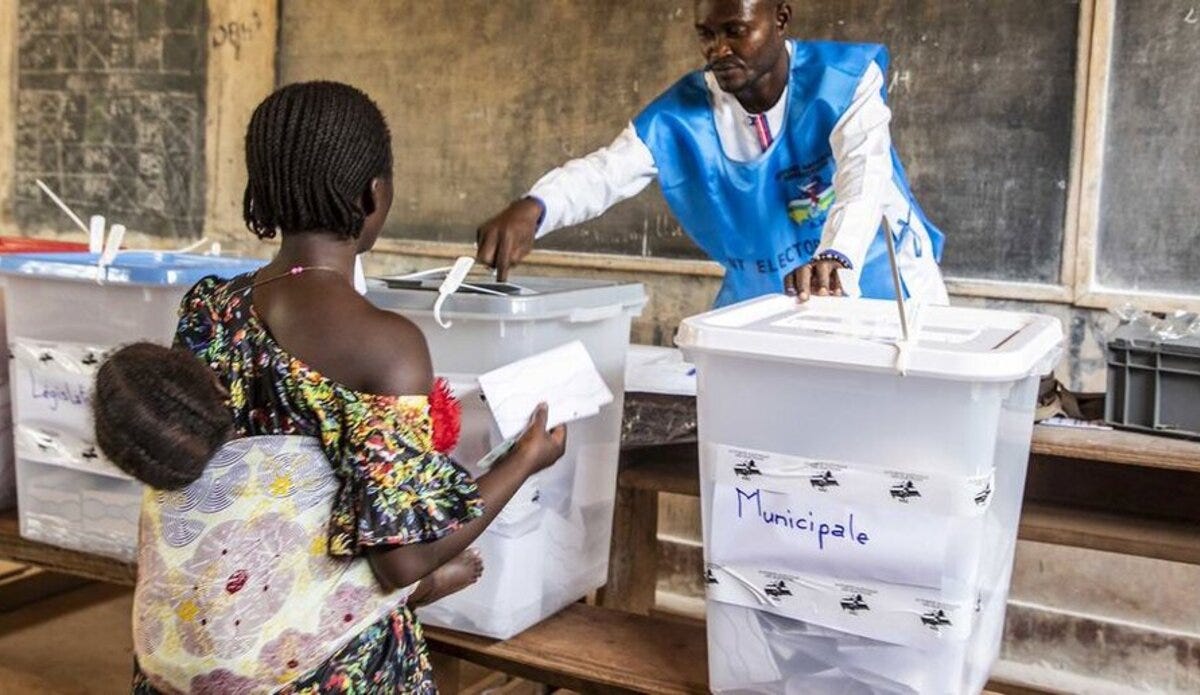
Voters in the Central African Republic (CAR) went to the polls on December 28 2025 in a major electoral exercise that included presidential, parliamentary, regional and municipal contests, with incumbent President Faustin‑Archange Touadéra campaigning for a third term in office.
Approximately 2.3 million registered voters cast ballots at more than 6,700 polling stations nationwide, according to the National Elections Authority and domestic observers, with voting proceeding in a generally peaceful and orderly atmosphere despite logistical challenges in rural areas.
Touadéra, in power since 2016, is widely seen as the favorite and expected to extend his tenure following a 2023 constitutional referendum that removed presidential term limits and extended the length of mandates from five to seven years. Despite initial opposition disqualifications, seven presidential candidates, including former prime ministers Anicet‑Georges Dologuélé and Henri‑Marie Dondra, remained on the ballot.
The election took place against a backdrop of fragile stability following a peace accord with armed groups earlier in 2025 and an ongoing United Nations peacekeeping presence that helped secure major population centers. Domestic election monitors and international observer missions—including those from the European Union and African Union—reported a largely smooth voting process, though concerns remain about access to voter information and infrastructure gaps in remote regions.
Touadéra’s administration has drawn criticism from opposition parties and international rights groups for perceived state advantages and constraints on campaign freedoms. Critics say his reliance on foreign security partners such as Russian‑aligned forces and Rwandan troops underscores broader political and security dynamics that could shape CAR’s future.
Preliminary results are anticipated in early January 2026, with a runoff scheduled if no candidate achieves an outright majority. The outcome is likely to have implications for both CAR’s fragile peace process and the influence of external actors in the country’s governance.
For more on the intersection of geopolitical strategy and venture capital across Africa, follow and share Oasis Media Collective.