

Central Africa | Floating LNG Plant Off Congo Begins Supplying Europe, Signaling Industry Shift
Oasis Media Collective | Central Africa Wire | February 17, 2026

KEY FACTS
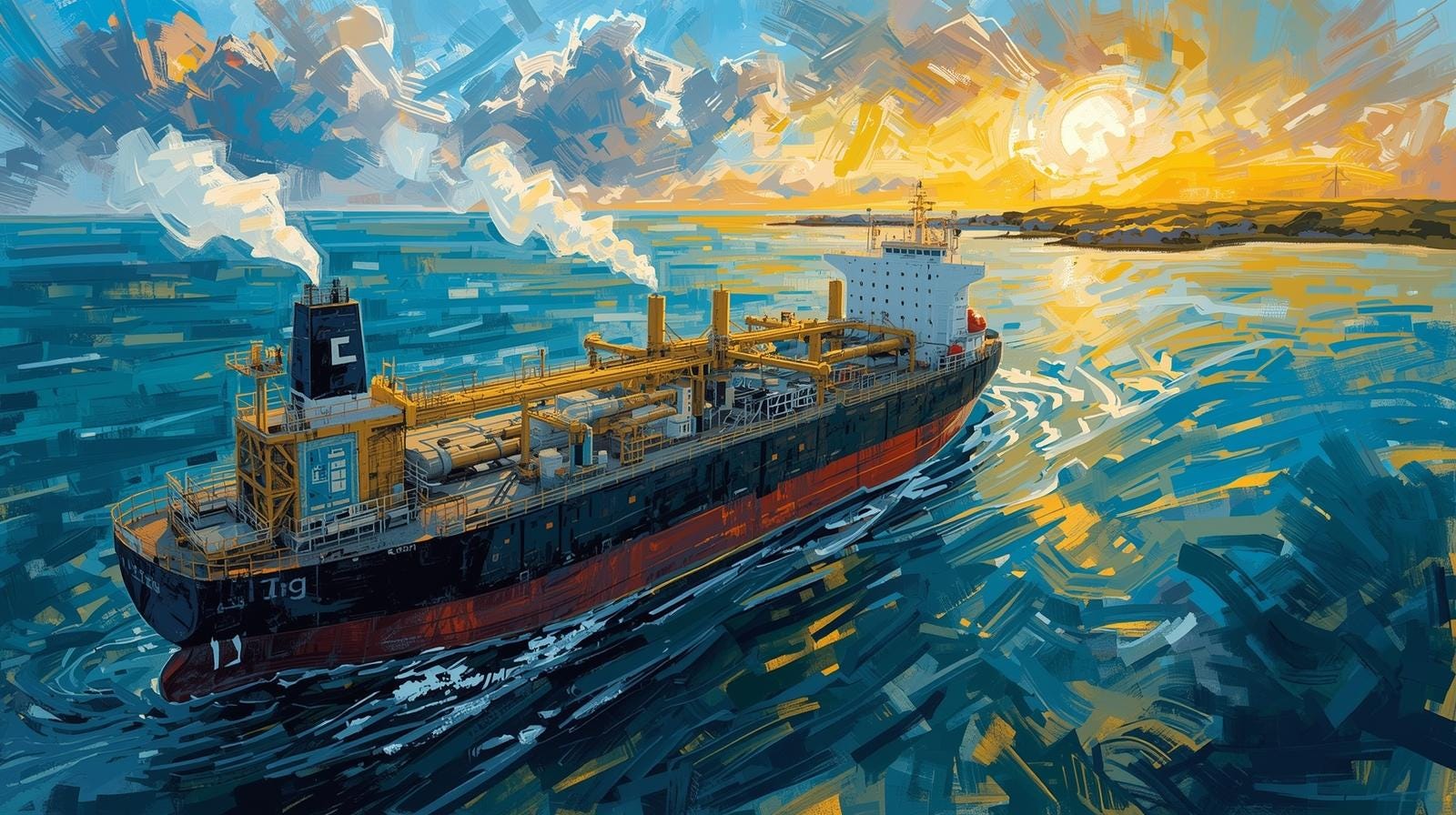
The Nguya is a floating liquefied natural gas vessel operated by Eni that has begun exporting gas to Europe.
The facility is moored offshore in the Republic of the Congo, processing gas directly at sea rather than on land.
The project is designed to supply European markets, particularly Spain and Italy, while reducing exposure to onshore security and infrastructure risks.
A colossal floating liquefied natural gas (LNG) facility operated by Eni has begun exporting gas to Europe from offshore waters in the Republic of the Congo, marking a significant step forward for floating LNG (FLNG) technology once considered commercially unviable.
The vessel, named Nguya, is longer than the largest US aircraft carrier and capable of processing several million tons of gas per year. It extracts natural gas from offshore fields, cools it to -162°C to liquefy it, and loads it onto tankers bound primarily for Spain and Italy. The plant was constructed in under three years by China’s Wison, a relatively rapid timeline compared to conventional onshore LNG terminals.
For decades, LNG production has been concentrated in vast land-based terminals in countries such as the US, Qatar, and Australia. Attempts to move liquefaction offshore faced setbacks, most notably Shell’s costly Prelude project in Australia, which suffered delays and operational challenges.
Eni now argues that the economics have shifted. According to Financial Times, chief executive Claudio Descalzi estimates capital costs for FLNG have fallen by up to 40% in recent years to below $1 billion per 1 million tons of annual capacity. While the total cost of the Congo project is higher due to upstream conversions, the company maintains that offshore liquefaction can be cheaper and faster than building onshore plants, particularly in countries with limited industrial infrastructure.
Security concerns are also reshaping investment decisions. In neighboring Mozambique, a $20 billion onshore LNG project led by TotalEnergies was delayed for years following a 2021 insurgent attack. In contrast, Eni’s Coral South floating plant in Mozambique has remained operational since 2022 despite unrest on land.
African coastal states have emerged as focal points for FLNG, combining significant offshore gas reserves with political and security risks that complicate large land-based developments. Leasing models offered by companies such as Golar LNG—which operates an FLNG unit offshore Mauritania and Senegal—are lowering financial barriers for producers.
Industry executives caution that floating plants face limitations, including weather constraints and environmental trade-offs compared with newer electric-powered onshore facilities. Nonetheless, major oil companies including ExxonMobil and Chevron describe the technology as increasingly viable where speed, flexibility and security are priorities.
As Europe continues to diversify energy supplies, the launch of Congo’s floating plant suggests LNG infrastructure may be entering a more modular and mobile phase, with African coastal stats at the wheel.
This reporting may be cited with attribution to Oasis Media Collective. For licensing, republication, or extended use, contact here.