


KEY FACTS
WHAT HAPPENED? Iranian strikes on Gulf energy infrastructure have compounded Europe's post-Russia supply crisis, pushing its supply chains toward Africa
WHY IT MATTERS? Falling FLNG costs and over 100 billion barrels in reserves make Africa an increasingly viable energy partner for Europe
WHAT’S NEXT? Africa's energy momentum is real, but active insurgencies, suspended mega-projects, and Russia's growing Sahel footprint raise serious questions about its reliability
What Happened
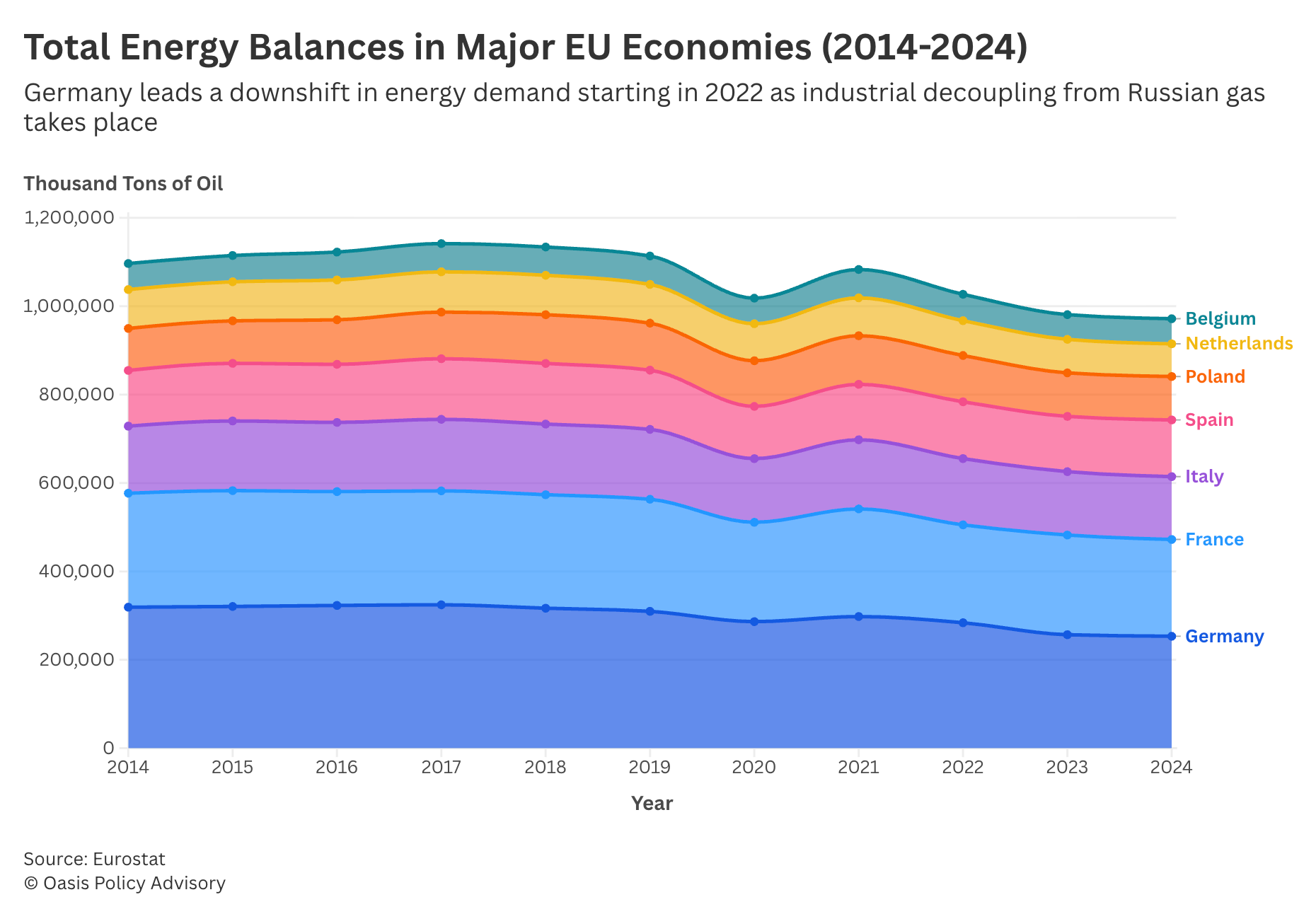
The unfolding conflict in the Middle East is threatening turmoil across energy markets and supply chains worldwide, particularly for Europe. The continent’s energy map was redrawn when Russia invaded Ukraine in 2022; Moscow was Europe’s leading energy provider, supplying roughly 40% of its gas. The severing of ties with the Kremlin has strangled Europe’s energy supply, with balances down roughly 9% since 2021.
Since then, Europe has leaned heavily on the Gulf; yet, as Iranian strikes increasingly target the region’s energy facilities, anxiety is mounting. QatarEnergy—the world’s leading liquefied natural gas (LNG) producer—has temporarily paused production, which alone has caused UK natural gas prices to jump 40%.
“Iran is targeting oil and energy facilities in order to put more pressure on the US and Israel,” said Bassel Doueik, an analyst with The Levant Lens.
Complicating matters is that both the Strait of Hormuz and the Red Sea now face pressure from Iran and its allies, spooking shippers from traversing these vital passageways.
“We’re on an escalatory ladder and I don’t think we’re at the end of this conflict,” Doueik warned.
As the continent’s energy supply chains come into question, executives and policymakers across Europe are turning southward toward Africa. Can the continent once dominated by Europe be its new energy lifeline?
Why It Matters
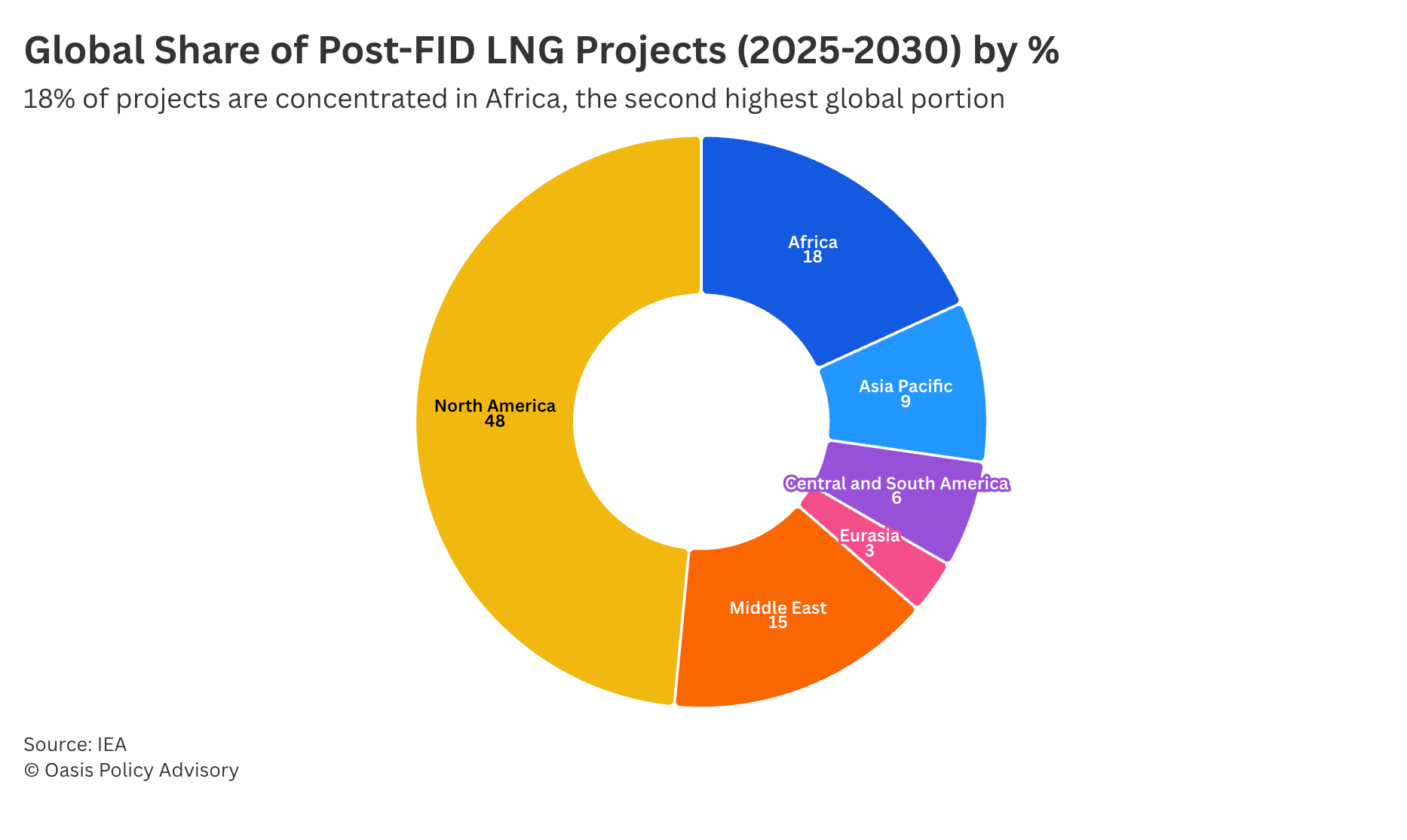
Africa’s energy potential has long drawn outside interest. Six of the top thirty countries with the highest oil reserves are in Africa—Libya, Nigeria, Algeria, Sudan, and Egypt—totaling over 100 billion barrels, with three sitting along the Mediterranean for swift European access.
Africa has also become a proving ground for floating liquefied natural gas (FLNG). Eni began exporting gas to Europe last month via its FLNG vessel, Nguya, from the Republic of the Congo, and operates the Coral South plant in Mozambique. According to the Financial Times, Eni chief executive Claudio Descalzi estimates capital costs for FLNG have fallen by up to 40% to below $1 billion per million tons of annual capacity.
Several other FLNG projects are advancing across the continent, including BP’s Greater Tortue Ahmeyim Phase 1 in Senegal and Perenco’s Cap Lopez in Gabon.
“The longer the Middle East conflict goes on, the sharper Europe will be pushed into US dependency,” said Shraddha Bhandari, founder of Confluence Consultants. “Africa has several competitive advantages: geographic proximity, flexible contract structures, pipeline and LNG optionality.”
Individual European states are also moving. Germany, which saw a 22% post-invasion drop in energy balances, is among the most aggressive.
“Germany is rapidly building LNG terminals such as Wilhelmshaven and Brunsbüttel and diversifying supply,” said Bhandari. “Potentially becoming the largest marginal buyer of African LNG in the 2030s.”
What’s Next
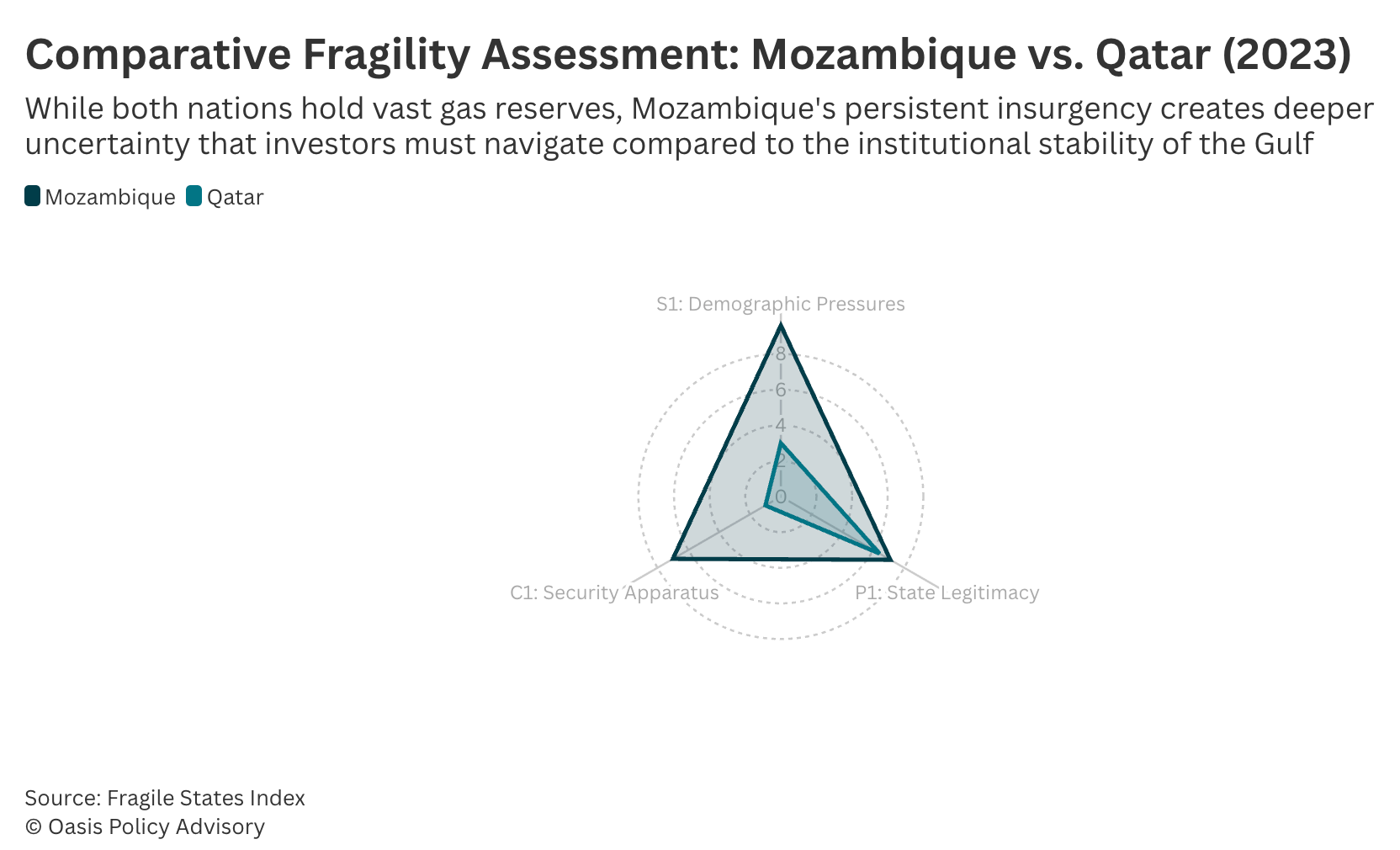
Africa’s promise masks serious concerns. Countries home to active FLNG projects, like Democratic Republic of Congo and Nigeria, battle insurgents willing to strike energy infrastructure. A $20 billion TotalEnergies project in Mozambique was suspended after a 2021 insurgent attack. Russia’s Africa Corps paramilitary group, embedded with military governments across the Sahel, compounds the picture.
“Security, stability, governance, and conflict create a complex risk scenario, so no easy choice for European buyers,” said Bhandari.
Africa’s emergence as an FLNG hub is real and accelerating. But whether Europe can bank on it as a long-term anchor—rather than a volatile supplement—remains the defining energy question for both continents.
“The future outcome could be a new energy geography,” said Bhandari. “Atlantic LNG flowing into Northern Europe, and African LNG anchoring Southern and Mediterranean markets, reinforcing Africa’s role as Europe’s near-shore energy partner.”
This reporting may be cited with attribution to Oasis Media Collective. For licensing, republication, or extended use, contact here.
Beautifully written 👍
Let's connect 😁